Open Scholarship
Curtin’s Open Scholarship Policy
The Open Scholarship Policy was implemented in 2024, adding Curtin University to the growing movement of international universities supporting the retention of authors’ rights. The aims of the Policy include:
- Supporting the dissemination and preservation of scholarly outputs by making them openly accessible in our institutional repository
- Ensuring authors retain the copyrights to their work
- Encouraging the creation of Open Educational Resources (OERs) to make teaching material openly accessible in our institutional repository
Take action on Open Access
Want to incorporate Open Access into your teaching, research and learning? Check out our guides:

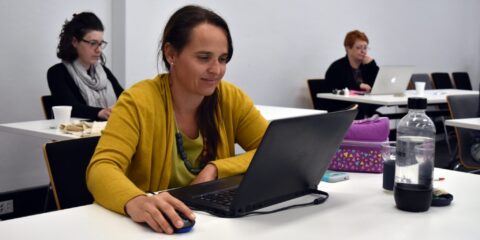

We support Open Access
Curtin Library is committed to supporting open and FAIR practices in research, learning, and teaching. We do this by:
- Managing Curtin’s institutional repository, espace, where Curtin researchers can deposit their research outputs and have them discoverable by Google Scholar and other online discovery services.
- Enabling the discovery and publication of Open Research data via the Curtin Research Data Collection.
- Providing the tools and training to help Curtin researchers find quality Open Access (OA) journals, book publishers and repositories for their work
- Working with Curtin teaching staff to explore the use of open educational resources
- Exploring innovative ways of supporting open publishing, including read and publish agreements that offer fee-free OA publishing to Curtin authors and by participating in innovative publishing models such as subscribe-to-open.
- Supporting OA infrastructure by financially contributing to innovative services and platforms such as DOAJ, OA Australasia, and UnPaywall.
Do I have to comply with the Open Scholarship Policy even if I am not the corresponding author of the work?
Yes. The policy applies to all Curtin University staff and students listed as authors of the work.
I have external collaborators and co-authors, does the policy apply to our collaborative output?
Yes. Discuss the requirements of this policy with your collaborators early on.
I published in a journal that has an open access agreement with Curtin University Library. Is this sufficient to fulfil my obligations under the Open Scholarship Policy?
No. To facilitate the dissemination and preservation of scholarly work the policy still requires you to deposit your accepted manuscript or a link to the Version of Record to the Institutional Repository.
Can I request an embargo for my work?
An embargo is a period of restricted access. Embargoes can be considered if the material contains commercially, culturally, politically or otherwise sensitive data which the author has given an undertaking to the source not to disclose for an agreed period of time, typically 1-2 years.
Embargo requests pertaining to future publication plans from theses are addressed in Section 13 of the Guidelines for Deposit of Final Thesis. Please note that having your thesis available in the Institutional Repository does not equate to publication If you require an embargo you can request a waiver, from the Library.
What is an Open Educational Resource? (OER)
An Open Educational Resource (OER) is an educational resource that can be freely used, shared and adapted with no or minimal restrictions. OERs come in many formats, including textbooks, learning objects, videos, images, etc. OERs benefit academics and students by:
• Reducing student costs – textbooks are often expensive
• Allowing all students to access resources simultaneously when they need it
• Academics can edit and update the resource e.g. if they want to make case studies more locally relevant
• Contribute to a global pool of open knowledge
Can I publish my work as an OER and still comply with the Open Scholarship Policy?
Yes. Per the Open Scholarship Policy, staff and students are encouraged to publish OERs. However, it is important to ensure that the OER created is also compliant with Curtin’s Disability Inclusion Policy. The Library can provide support in reviewing OERs for disability inclusion and identifying tools and platforms to help produce an OER in accordance with the Disability Inclusion Policy.
Does publishing my work as an OER forfeit my ownership of the copyright for my work?
No. We advise that you publish your OER under a Creative Commons license. There are several types of Creative Commons licenses under which you retain ownership of the copyright for your work, and grant permission to others to use the work under specific conditions or in specific ways. The Library can help you select the most appropriate Creative Commons license for your OER.
When should I contact the library regarding publishing my work as an OER?
Contact the Library as soon as you have decided to publish an OER. We can support you throughout the process, including helping you to:
- Identify a publication tool or platform,
- Select an appropriate Creative Commons license, and
- Ensure that third-party content, like images and graphs, is copyright-compliant and suitable for your chosen Creative Commons license.
Open Research success stories


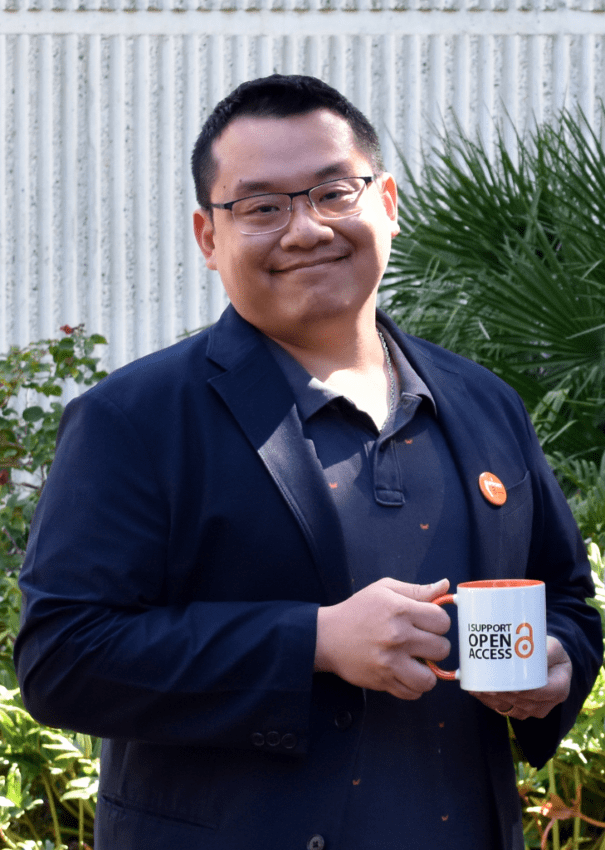

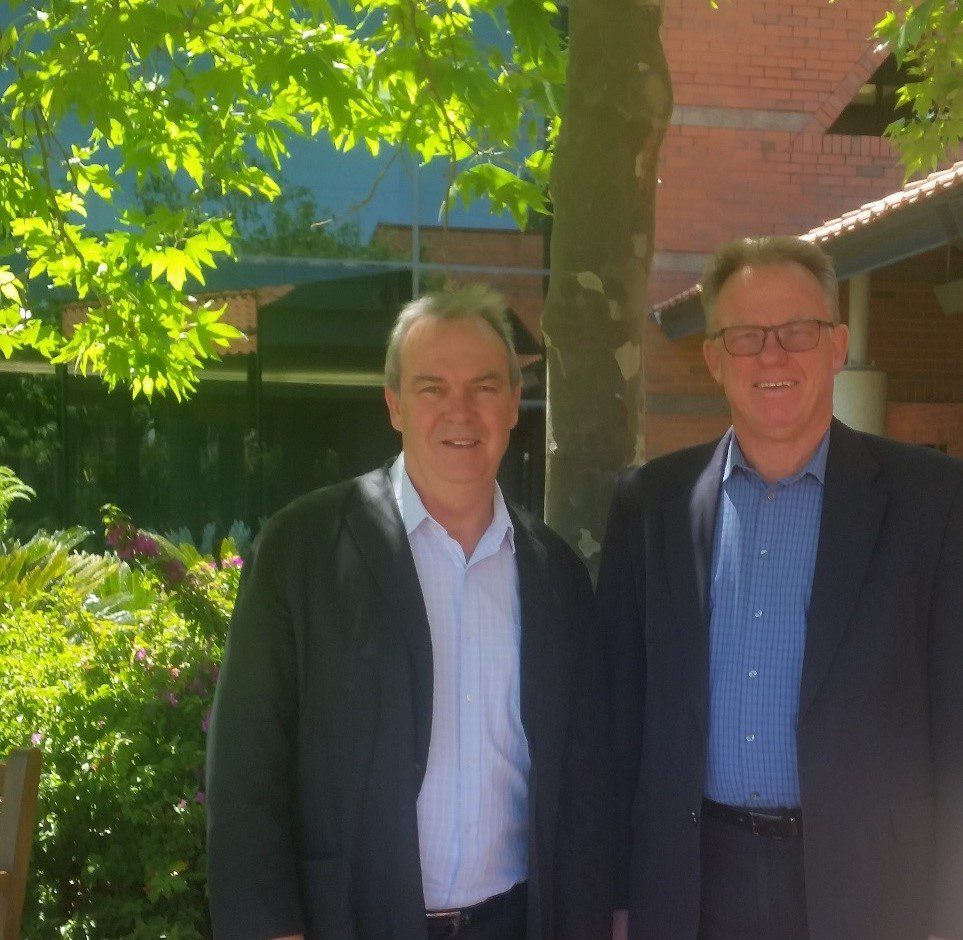




Professor Steven Tingay, Executive Director, Curtin Institute of Radio Astronomy
“In astronomy, Open Access is significantly boosted by the existence of arXiv, a large-scale repository for pre-prints… These services greatly increase the visibility and accessibility of my work and the work of my team.”
Dr Hendra Gunosewoyo, Senior Lecturer, Curtin Medical School
“We are fortunate to be the very first Curtin authors to take advantage of the Open Access agreement between CSIRO and Curtin…”
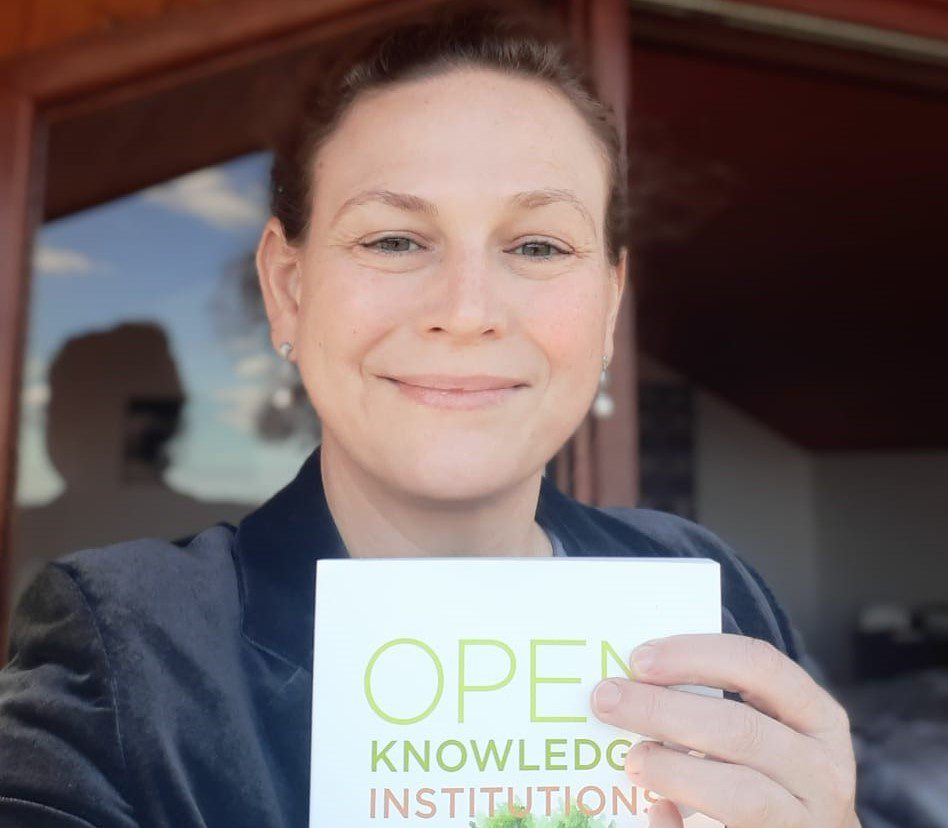
Professor Lucy Montgomery, Professor of Knowledge Innovation, Centre for Culture and Technology
“In 2021 our collaboratively authored book Open Knowledge Institutions: Reinventing Universities was published as a fully OA book.”
John Curtin Institute of Public Policy
Dr Martin Whitely (Research Fellow) and Professor John Phillimore’s (Executive Director) open access short note in the Medical Journal of Australia won Curtin’s most newsworthy academic article award.
Key Open Access statistics
Check out our Open Access statistics and find out how Open Access can benefit your academic career.
FAIR
8 steps to make your data more Findable, Accessible, Interoperable, and Reusable.
Where can I get help?
Strategic Publishing guide
More detailed information on Open Access publishing.
Email us
Contact OpenAccess@curtin.edu.au for all queries about Open Research.
Open Research FAQs