Reading Time: 8 minutes
Aimee Darias-O’Hara’s path to a PhD has taken her from seal rehabilitation in Ireland to the depths of the Southern Ocean. Now, she’s using decades of underwater recordings and machine learning to decode the distinctive calls of Antarctic minke whales, translating ocean soundscapes into insights that could shape future conservation policy.
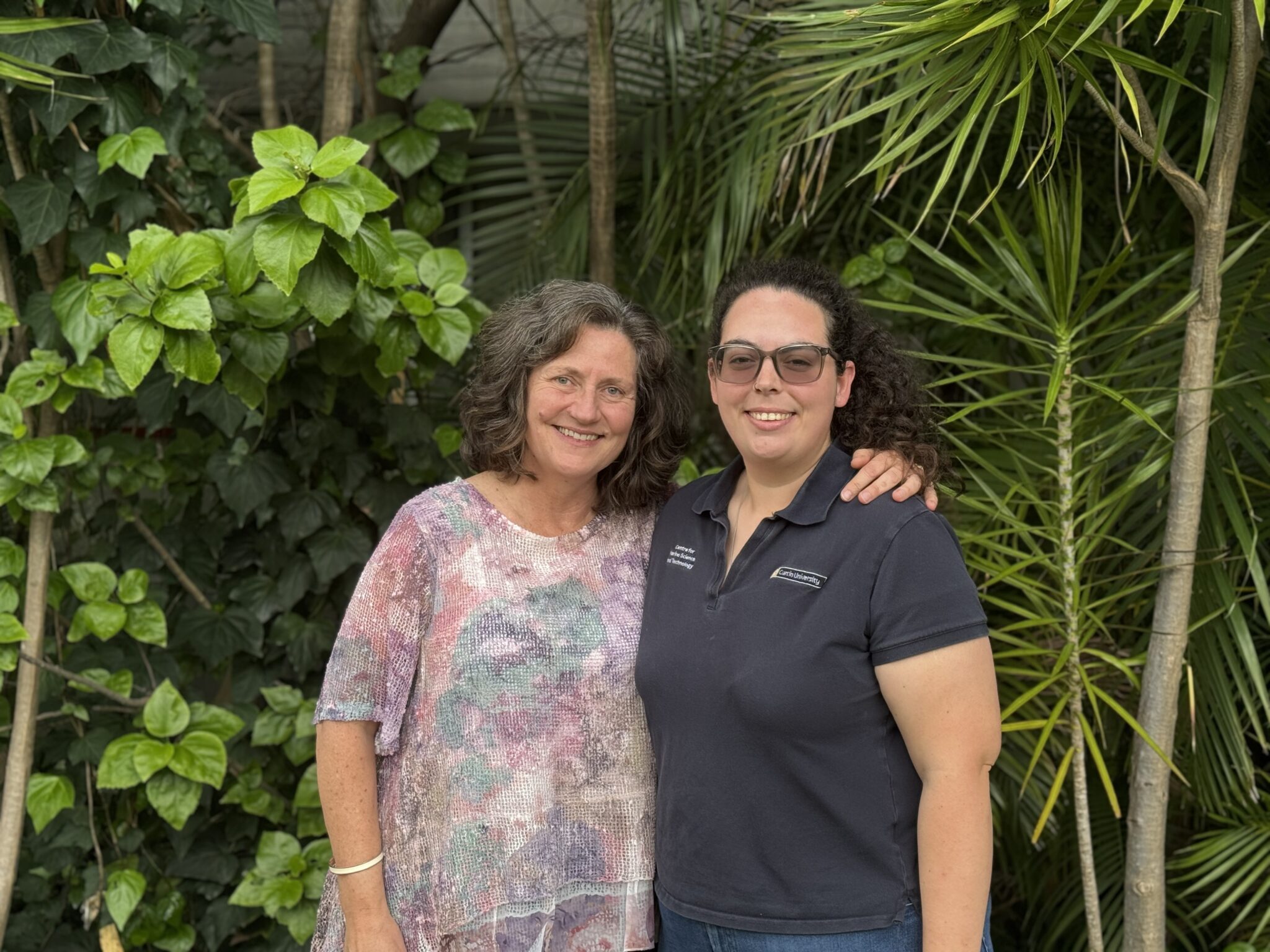
Aimee is completing a PhD in the Curtin Centre for Marine Science and Technology (CMST), co-supervised through CMST by Professor Christine Erbe, Dr. Paul Nguyen Hong Duc, Dr. Cristina Tollefsen, Professor Robert McCauley and through the Australian Antarctic Division by Dr. Brian Miller. Aimee and Christine reflect on the research journey, its challenges and highlights, and their supervisory relationship.
Aimee:
My PhD examines the acoustic ecology of Antarctic minke whales in East Antarctica and Western Australia. These animals produce a really unique vocalization called a bioduck – you can think of this like an acoustic fingerprint. My PhD looks at over 20 years of underwater recordings across nine geographic locations, from the Pilbara in Northwest Australia, all the way down to East Antarctica. This is a large database, so I’ve trained a machine learning detector to help me automate this and to advance this acoustic monitoring of this species. Using these detector outputs, I’ve been looking more in-depth into these calls and their structure. These calls are highly variable, and they produce different bioducks depending on the site and time of year, which is really interesting from a behaviour perspective. The next part of my thesis looks at seasonal movement patterns of these animals.
When are they present in Western Australia versus East Antarctica? Are there differences throughout the year or over time? Has that changed?
This is important because our oceans are rapidly changing and we need to understand how these changes are affecting these animals. What this PhD aims to do is fill in some of those data gaps for Western Australia and East Antarctica to better the understanding of these animals. I hope that we can help to translate some of the science into policy as to how we can better manage these populations given these rapid changes that are happening in our ecosystems. Working towards effective management and conservation of this whale species which people don’t know a lot about is a massive driver for me.
Both a great thing and a challenge is – we have mountains of data. One of the challenges for me at the start was to really narrow down what is feasible within the PhD timeline. I’m a person who gets excited by everything and I’m super passionate about what I do, so if I’m not careful about setting the boundaries for myself, the project would just blow completely out of time.
Uncovering the sheer variability of these calls and really unlocking how interesting these animals are vocally and how much they differ, has been a highlight. I’ve realized just how complex these animals are. For this species that I work with, these datasets are just this untapped resource, so you can really dive in and see how variable the acoustic behaviour of these animals is, depending on sites.
My journey toward my PhD has involved a lot of networking and just getting very excited about things, asking questions, constantly being curious and wanting to learn!
I’m originally from Ireland, so at 17, I packed up and moved to Wales for my undergraduate in marine vertebrate zoology. I took an internship with Seal Rescue Ireland working hands on with harbor and gray seals, which led me to an Honours thesis researching the link between their maternal experience and how they were getting on in rehabilitation. Doing this thesis and seeing the findings be implemented into the rehabilitation process was my real step into marine mammal science.
From that research I was contacted by Dr. Debbie Russell at the Sea Mammal Research Unit at St. Andrews University, who told me about their master’s degree in marine mammal science. This is when I discovered the world of acoustics through my MSc thesis supervisor, Prof. Peter Tyack.
By the end of my master’s, I had been offered a job with SMRU Consulting at the University of St. Andrews. They had a project with the German Environmental Agency that looked at the effects of noise in Antarctic marine mammals. I thought it was such a cool project so, in classic Aimee fashion, I went to the project leads and asked if I could be involved in any way. We went to Berlin, where Christine was one of our experts. I’d read a lot of Christine’s work, so I introduced myself to Christine and asked her lots of questions. I really enjoyed discussions with Christine, so I eventually emailed her about the possibility of a PhD. We started discussing the entirety of Antarctic minke whales designing the project from there. I applied for a scholarship at Curtin University and now I’m here!
Being part of the CMST lab has been a huge highlight and unlike anything I’ve experienced before. It’s such a fantastic supportive environment and I get to learn from my supervisors and other people at CMST without feeling the pressures of academia. I just love it so much at the lab, and that definitely is a credit to Christine.
One of the main things I’ve learn from Christine is how to be a leader, which is so important as a woman in science. Watching how Christine interacts with her students and constantly instills confidence in them is something that I’ve really taken onboard because I ultimately would like a career in academia and to work with students.
I know if I had a bad day, I could talk to one of my supervisors, and that they all care about me as a person first and my project second. And that is so important because PhDs are hard. You do get burnt out, so you need to have your supervisors around you and a safe environment.
I get excited everyday with my PhD. And that’s a credit to the supervisory team that I have and to the setting in the lab as well. I think your PhD is the one time in your life that you can solely focus on one project. So, I try to enjoy the journey – this is like the best part of my life so far!
Christine:
Aimee’s working at the Centre for Marine Science and Technology at Curtin and with our partners at the Australian Antarctic Division. Both entities have been collecting underwater acoustic recordings for decades by deploying underwater acoustic recorders that sit on the sea floor for a year at a time and record sound. When you analyse these recordings in the lab, you get everything that happened in that soundscape during the year and can get insights into what was happening in the ocean and the behaviour of different animals. Echoing Aimee, the biggest challenge is handling the terabytes of data – you’ve got 17 years of recordings across 9 sites.
If you come in from a biology background, being faced with big data can be overwhelming, so the way that Aimee has managed the thesis is absolutely impressive.
All students who come in really want to make a difference, so they plan to achieve way more than what is realistic in three and a half years. Aimee has also been really clever in finding smaller stuff along the side that could be achieved. She’s been supervising two Advanced Science project students who’ve taken on a small portion of the data set and explored a side question. I don’t know if Aimee realises that what she’s achieved is absolutely mind boggling!
Aimee’s success is not just a matter of having the confidence to network and talk to people and ask questions. She has the character, the background, and the skill to back it up. When we first met at the workshop in Berlin, Aimee understood the significance of science. She knew that in our current world, we don’t really do science just for the sake of science anymore. It needs to have a pathway to impact.
At CMST, our PhD students all have at least four supervisors. I do that quite deliberately because acoustics is so interdisciplinary. Another reason why is I have to deal with many different projects and clients, so I’m quite hands-off as a supervisor. I want to make sure make sure that, whether it’s about science or personal, the student can talk with someone. I try to set the right environment where the student can succeed, do outings and lunches, so they feel comfortable to talk to me about anything personal that might affect their learning or their progress.
You need to build trust, be able to listen and not be afraid to communicate. Students and supervisors are on an equal plane and need to work together to achieve. If a student thesis doesn’t progress, it’s also a failure for the supervisor. We’re a team and that only works with communication, respect and integrity.
About the researchers
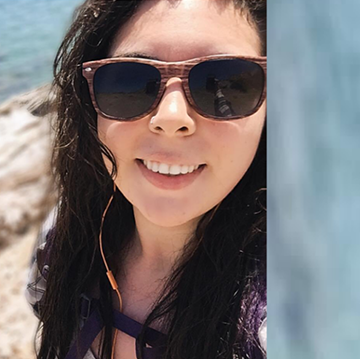
Aimee Darias-O’Hara
Aimee is a marine mammal scientist and PhD student at Curtin University. Her research investigates the acoustic ecology of Antarctic minke whales across east Antarctica and Western Australia. She specialises in passive acoustic monitoring, automated detector development, and behaviour, applying these skills to understand acoustic ecology and assess anthropogenic impacts.
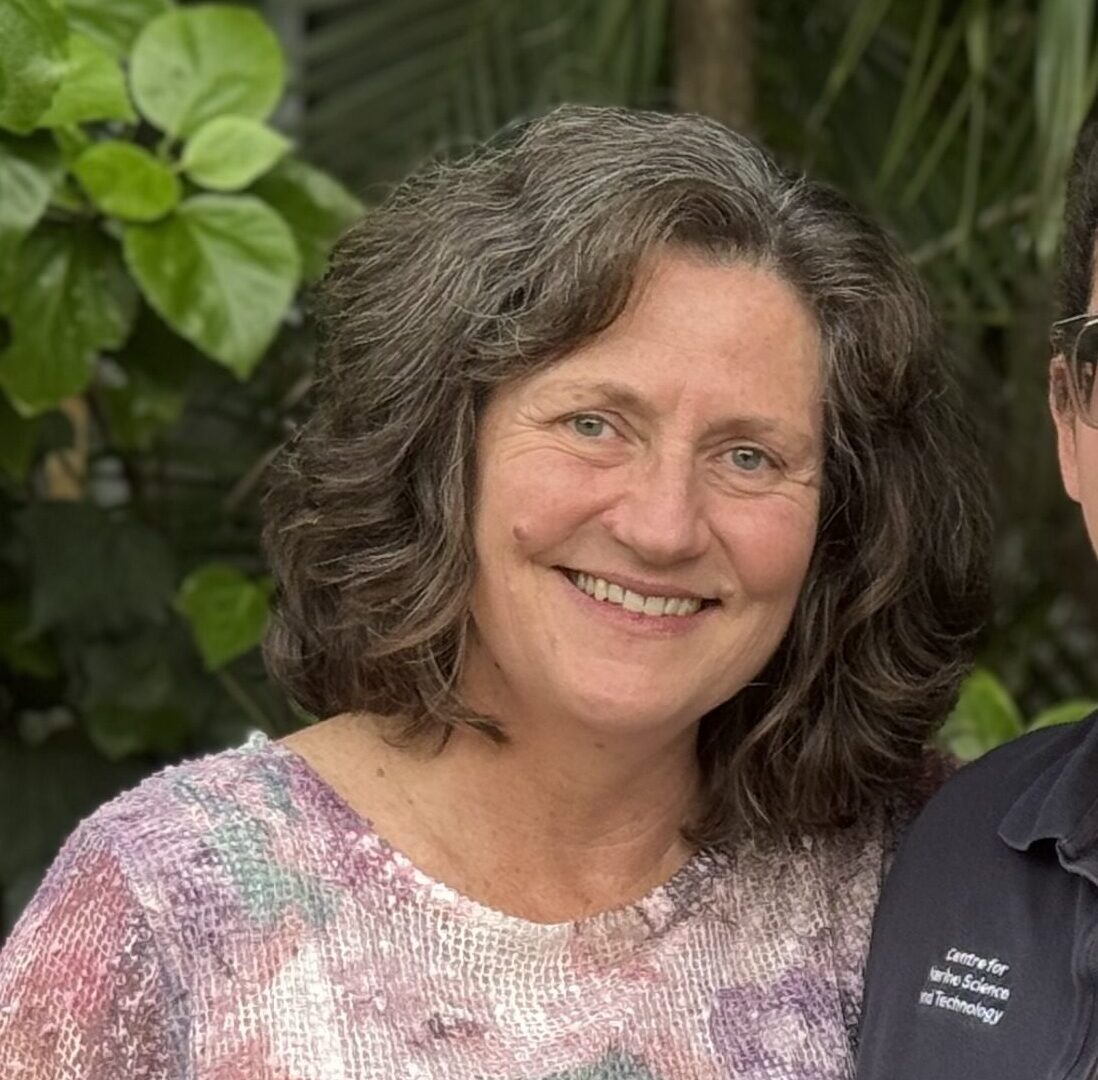
Professor Christine Erbe
Christine holds an MSc in Physics and PhD in Geophysics. She has worked in industry, in government and in academia, and has co-supervised 19 Ph.D., 5 M.Sc., and 7 Honours students in underwater bioacoustics. Christine’s research interests are underwater sound generation and propagation, passive acoustic monitoring, hearing and sound usage in animals, and noise effects on marine fauna.