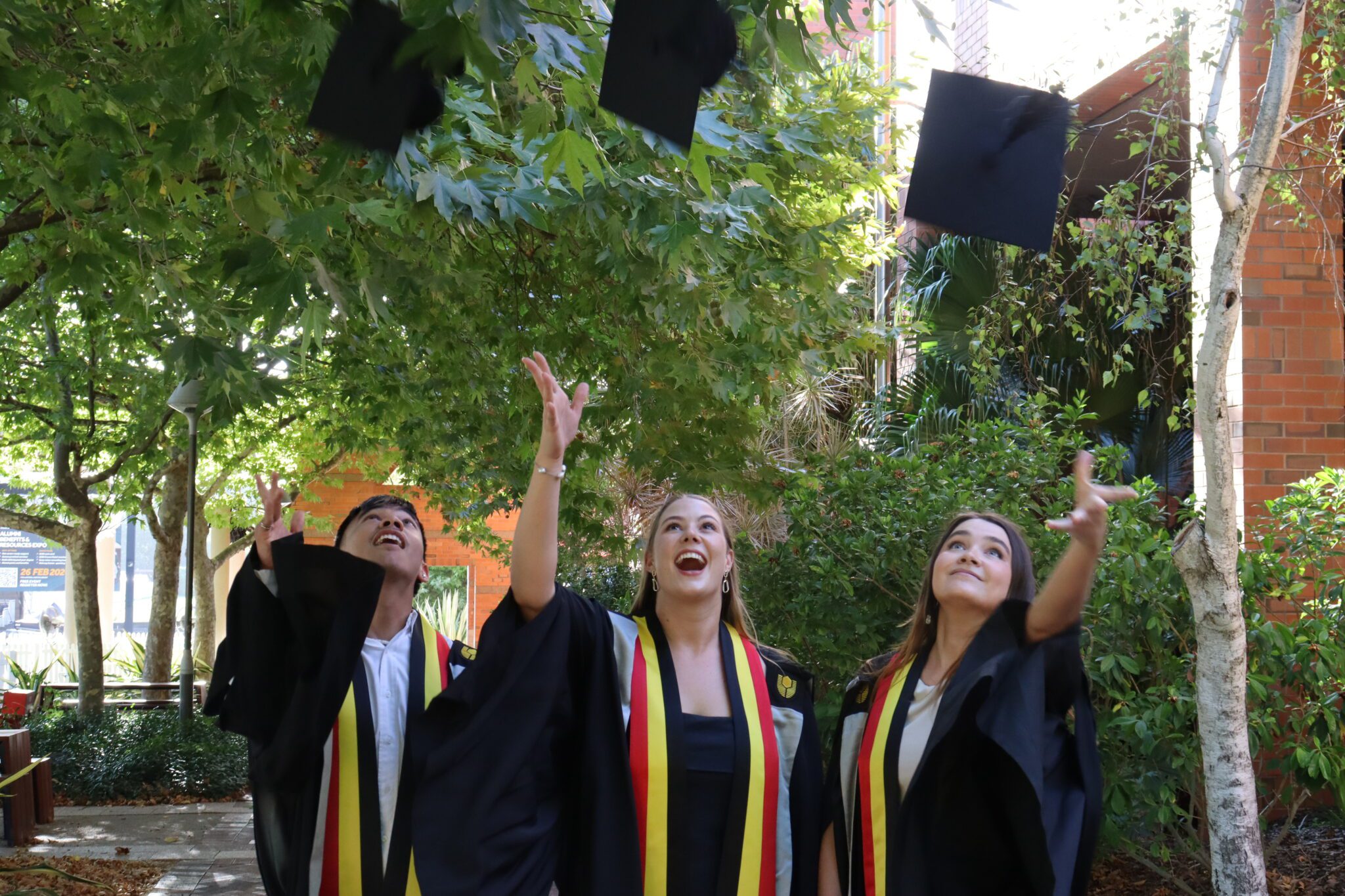
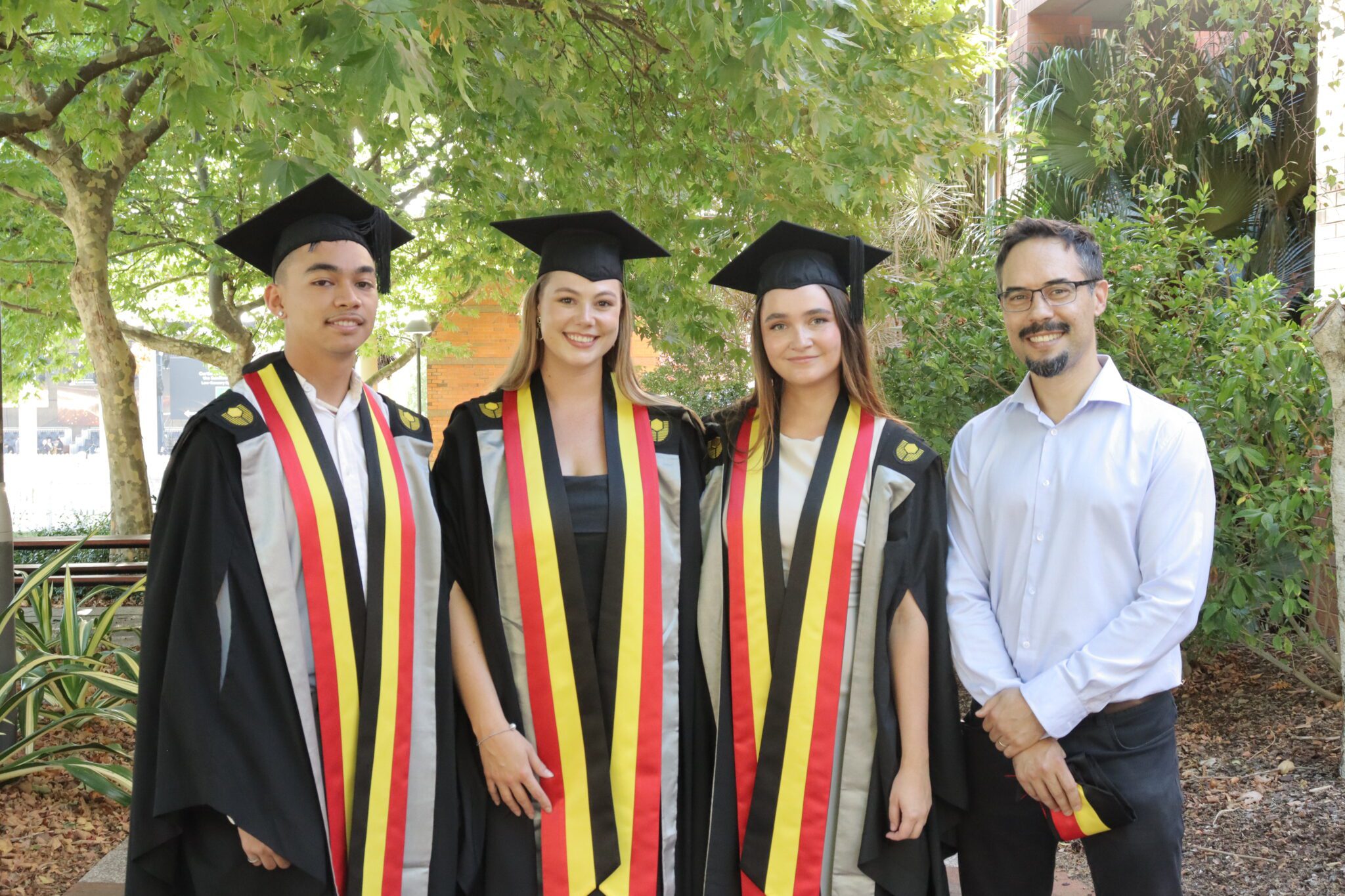
Curtin University has celebrated a powerful milestone this week with the graduation of three Aboriginal doctors, driven by a deep commitment to help Close the Gap and support rural and regional communities.
Jaaron Davis, Daisy Alps and Arkayla McPhee will now begin their careers as doctors, joining Western Australia’s healthcare system at a time of growing demand for skilled and culturally aware practitioners.
The trio completed the five-year, full-time Bachelor of Medicine, Bachelor of Surgery undergraduate degree at Curtin Medical School, on the University’s Bentley Campus.
Curtin Vice-Chancellor Professor Harlene Hayne congratulated the graduates, saying the achievement was a source of immense pride for the University and reflected the importance of widening pathways into medicine.
“Increasing the number of Aboriginal doctors is essential to closing the health gap, strengthening culturally informed healthcare and inspiring the next generation of Aboriginal and Torres Strait Islander health professionals,” Professor Hayne said.
“The graduation of Arkayla, Daisy and Jaaron from Curtin Medical School is not only a personal triumph for each of them, but a significant moment for our healthcare system and the Curtin community looks forward to seeing what these remarkable graduates achieve as they embark on their medical careers.”
Kalkadoon, Waanyi, and Eastern Arrernte graduate Jaaron Davis said becoming an Aboriginal doctor was a deeply meaningful moment.
“It stands as a testament to resilience and the enduring belief that education can create real change. For my family, this is not an individual success but a collective one, grounded in culture and community. It represents the realisation of dreams carried across generations and reflects the strength of my Filipino and Aboriginal heritage,” Dr Davis said.
The 23-year-old will begin his medical career in Broome.
“I wanted to become a doctor because my life has been shaped by walking between different worlds and witnessing the stark inequities that exist between them,” he said.
“Growing up in the Kimberley, and later navigating life in the city, taught me that the people and places around you shape who you become. That realisation transformed my motivation into purpose.”
Quandamooka Ngugi graduate Daisy Alps said she chose to study medicine to support her people, the way they have always supported her.
“There are still huge inequities within the healthcare system and part of that is having such a small number of healthcare staff being representative of the communities they’re treating,” Dr Alps said.
“My cultural understanding and knowledge can help create a safer space for Aboriginal patients in healthcare settings, and I want to be an advocate for patients.”
The 25-year-old plans to specialise in children’s or women’s health.
“Being a doctor has a lot of influence in the medical space, so I hope I can use this to advocate for better healthcare for my people and culturally secure healthcare,’ Dr Alps said.
Yamatji and Njamal graduate Arkayla McPhee said she had her heart set on becoming a rural generalist.
“My plan is to gain a wide range of clinical skills and experiences in the city to build my clinical confidence, before returning to work in rural and remote settings. I’m particularly interested to pursue additional training in areas such as critical care and Aboriginal health,” Dr McPhee said.
The 27-year-old knew she wanted to become a doctor after working as a medical receptionist not long after finishing high school.
“In this role, I was confronted with the realities of end stage chronic disease in a way I had never seen before. It sparked a strong desire to work in healthcare and to give back to my community,” Dr McPhee said.
“Throughout my studies, I developed a clear sense of purpose to become a clinician who delivers culturally safe, compassionate, and equitable care. I want to support my Aboriginal and Torres Strait Islander patients during vulnerable and challenging times and create positive healthcare experiences.
“As an Aboriginal doctor, I want to be part of meaningful change and contribute to Closing the Gap for our communities.”
Curtin Medical School welcomed its first students in 2017 with a strong emphasis on primary care to position graduates for rural and remote practice, as well as outer suburban locations, where there is an acute shortage of doctors.
More than one in five Curtin Medical School graduates this year were supported by scholarships, including some funded through the University’s generous philanthropic community.
“We deeply value the impact of these scholarships, which empower tomorrow’s leaders to pursue their studies, stay focused on their goals and realise their dreams,” Professor Hayne said.
The graduates worked closely with Aboriginal alumni from Curtin Medical School who provided mentoring and cultural guidance.
All three doctors officially crossed the stage on 3 February 2026 at a graduation ceremony held on the University’s Bentley Campus.
For more information about Curtin Medical School, visit here.