
With more than half of the world’s population living in cities, and urban areas responsible for over 60% of greenhouse gas emissions, it’s clear we need to be smarter about urban planning and development.
The term ‘smart city’ seems ubiquitous when it comes to urban sustainability discourse and practice, but what does it actually mean?
To find out, The Future Of podcast team spoke with Dr Courtney Babb, a senior lecturer in the School of Design and the Built Environment. They explore what makes a city ‘smart’ as well as the possibilities and potential risks of using ‘intelligence’ to improve the quality of life for urban citizens.
Read a snippet below or listen the full episode.
Q. What is a ‘smart city’?
A. Essentially, a ‘smart city’ is about information and, more accurately, about data. It’s about capturing the data from all the different systems that are used to assist living in urban areas, such as security cameras and sensors, and using that data to help make a better, more liveable city for current and future residents.
The term gained a lot of traction from the 1990s onwards with the acceleration of the internet, but by the early 2000s, the ‘smart city’ concept began to include an environmental component, given that cities are major consumers of resources.

Q. Can you give us an example of a smart city?
A. Singapore kicked off smart cities earlier, but Songdo in South Korea is a good example of a mature, smart city. It was purpose-built in the early 2000s and more than 40 per cent of it is open space and parks. It also has water recycling and sensors and cameras everywhere.
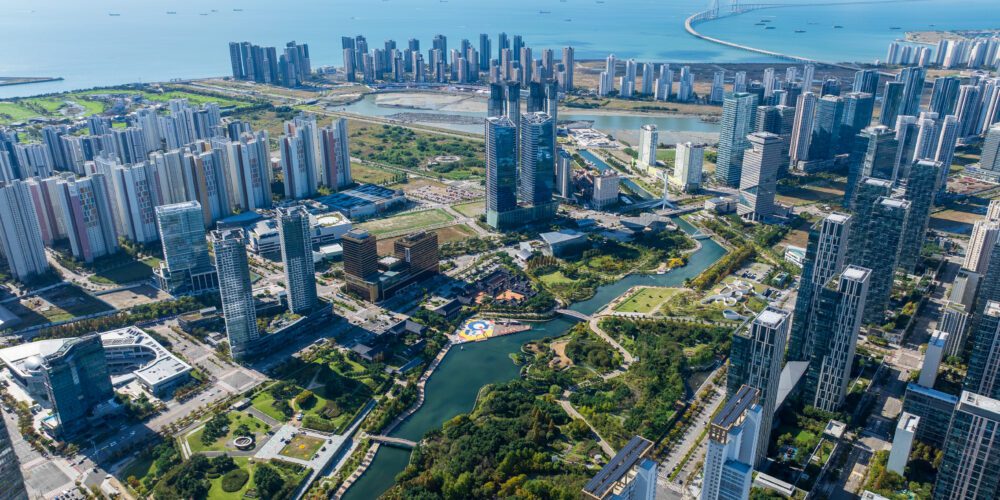
All this data is collected in real time at what is, basically, an AI command centre, where operations can respond to activities and direct services where needed, such as in an emergency.
Locally, the Wharf Street Basin in Cannington is WA’s first-ever smart park. It was originally a fenced-off stormwater drain, but through the Smart Cities and Suburbs Scheme, it has been transformed into an interactive, inclusive and green community space.
Q. Can any city become smart?
A. We should move away from thinking about smart cities as this total, utopian vision like Songdo and look instead at the more subtle ways that technology can be integrated into cities.
This is because urban development is a lot messier than the process in Songdo, as a progress is incremental and involves a lot of stakeholders. We need to embrace this messiness and look at how we can include smart technology in smaller projects, such as the Wharf Street example.
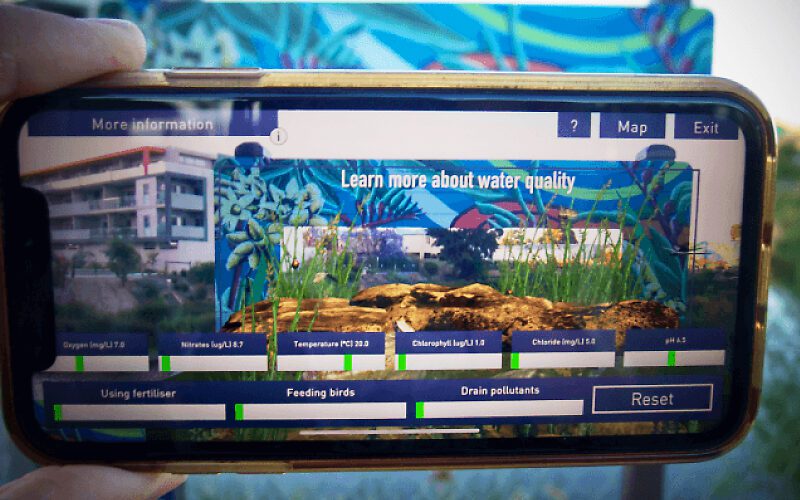
Examples of smart city initiatives
- Barcelona: sensors in the city’s streetlights can change illumination based on pedestrian presence and the time of day, helping the city save significant power.
- Amsterdam: the Edge building uses aqua thermal energy harvesting and consumes 70% less electricity than similar buildings.
- Shanghai: a virtual representation or ‘digital twin’ of the entire city has been created to predict infrastructure performance and gain insight into future planning.
- Perth: RAC’s air quality monitor shows hourly changes to the city’s air quality and is the biggest of its kind in Australia.

Q. We give out a lot of personal information when we use smart technology. Is our data safe?
A. That’s a really good question. And I think the best way people can get involved in any smart city development is to ask questions like: is my data being secured safely? Are there protocols in place that respect my privacy? Am I fully made aware of the way my data will be used?
Smart cities is a great term in that it draws attention to some of these technologies that are being rolled out. But sometimes they’re being rolled out outside the smart cities label.
With any urban development project, it’s important to ask: is technology necessary? Is there a solution that doesn’t require it? Who’s benefiting from this and who’s losing out?