Get the full story
Hear Tama unpack the ban, why messaging apps are exempt, what young people should expect, and why generative AI is the next frontier for online safety.

By now, you’ve probably heard the Australian Government is set to ban young people from social media – a world-first move aimed to protect those under 16 years old from the pressures and risks of life online.
But with a flurry of information circulating, many parents, carers and young people are asking the same question:
“What do I actually need to know before 10 December?”
To get some answers, we sat down with subject-matter expert Professor Tama Leaver on The Future Of – a podcast powered by Curtin University, where experts share their vision of the future and how their work is helping shape it for the better.
Professor Tama Leaver is a renowned Curtin academic and expert in the world of social media. This article will highlight four of Tama’s key insights from the conversation to help young people, parents and carers get answers to FAQs and navigate this transition.
You can listen to the full conversation on The Future of Social Media.
Tama: Parents should be mindful that their child or children will experience this ban in different ways. It won’t all happen at once, and it may happen differently even if your kids are of a similar age.
It might be that on December 10 you’re off Instagram, but you’re still on Snapchat … then a few days later you lose Snapchat.
It’s going to be like ripping off a Band-Aid really slowly. And for the people whose social media is their social world, that eventual ripping off could be really traumatic.
For parents and carers, it’s crucial to have conversations with young people about anything they might experience during this transition.

Tama: It’s important to emphasise that the law puts the onus on platforms, not kids.
If kids find a way around this, they have not broken the law. Young people should still feel comfortable communicating with parents or other trusted adults about what they experience online – especially if they see something that they find traumatic.
If young people lose the confidence that they can talk to someone, that would be the absolute worst outcome of this process.
Tama: When this ban comes into action, it won’t be that you can’t look at any social media content if you’re under 16, you just can’t have an account.
You can still view a lot of your favourite content without an account, but you won’t have it algorithmically fed to you in a feed – that’s the only real difference.
If you’re a young person who is a K-pop fan and you’re subscribed to 15 K-pop creators on YouTube, you can still bookmark those pages, come back to them every day and see if there’s new content.
However, it’s essential to know that if I use YouTube – and many other platforms – without an account, it will start to infer what it thinks I like based solely on that interaction. The algorithm is still active; it just refreshes each time I visit rather than remembering my behaviour.
This matters because if you’re not logged in, the platform has no way to infer that you might be a child, which means there are no protections it can offer you. It’s an important flipside to banning young people from creating accounts, and one that hasn’t been well thought through.
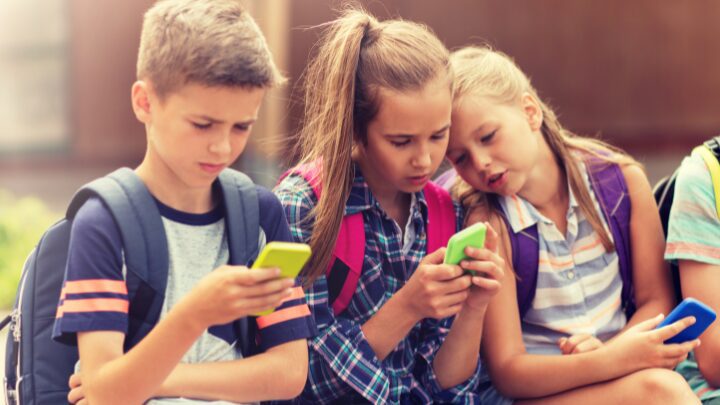
Tama: This ban does not mean that the job is done. We need to ensure that when these kids turn 16, they aren’t suddenly thrown into social media, not knowing what to do. We really need to prepare them.
The best possible outcome is a massive investment in digital literacy programs to help kids become really robust digital citizens.
If schools and other youth programs allow young people to model, simulate and experience digital scenarios, kids can become really robust digital citizens.
We’ve seen some hints of educational investment, but nowhere near the scale needed to make that time really worthwhile.
Hear Tama unpack the ban, why messaging apps are exempt, what young people should expect, and why generative AI is the next frontier for online safety.

With almost 80% of Australian students using generative AI tools like ChatGPT and Microsoft Copilot, the role of AI in…
Meet Dr Francesca Perugia – housing researcher on a mission to turn data into action, ensuring communities and policymakers are…

Born and raised in Chicago, Professor Joseph Siracusa, veteran historian and Curtin’s Inaugural Professor of Global Futures in the Faculty…