Reading time: 4 minutes
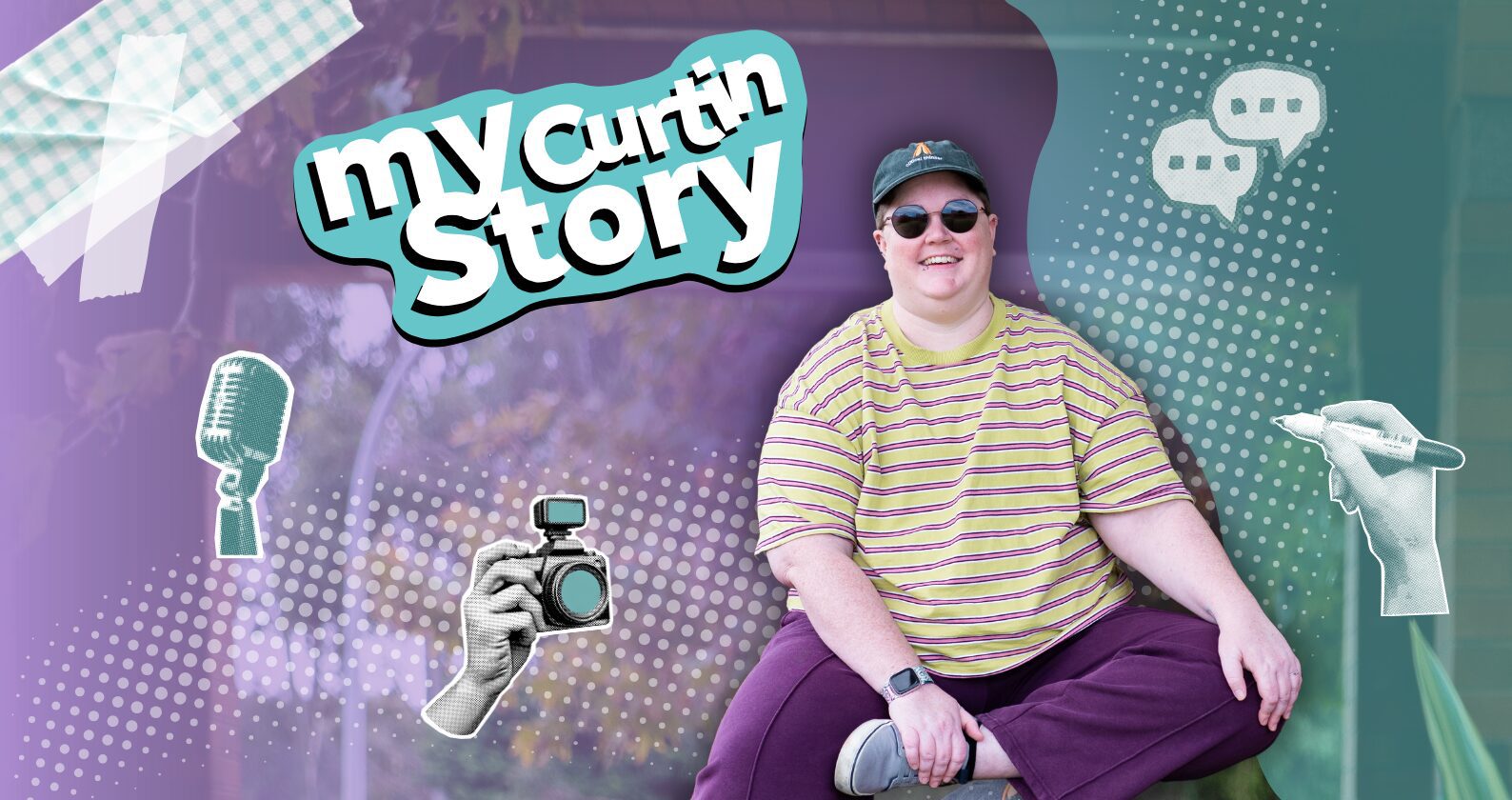
Kim’s journey at uni has revealed that the world isn’t built for people with disability. But, with the help of DAIP and Kim’s own experience, they hope to see changes so that those with disability will no longer have to adapt to the mainstream way of living.
Starting their psychology degree at uni in 2005 at only sixteen, Kim struggled. Uni wasn’t like school, but no one had warned them otherwise. Working and studying full-time, they took ten years to complete their first degree without the right support system and resources in place.
“There wasn’t really someone you could reach out to. If you’ve got a problem, it’s your problem, and you just deal with it.”
Upon graduating with their psychology degree, after trying out a few different subject areas along the way, Kim realised what they actually wanted to study was sexology, specifically at Curtin.
“Curtin was the only one in Australia that the Kinsey institute recommended, so I had always felt like it would be here that I would come to do it, but I just talked myself out of it for a very long time.”
Though Kim’s sexology classes were mostly held in accessible buildings during regular study periods, they noticed that during their block weeks, this was not the case.
“We were given whatever building could hold us for two weeks–most of them were far flung, inaccessible, unable to walk from.”
These experiences, along with already being an active advocate for disability, led Kim to the DAIP (Disability Access and Inclusion Plan) Reference Group. While Kim states that there is a lot they’d like to see change within the university system and campus for it to be more accessible to those with disability, they particularly note making university websites more accessible is their passion area.
“Honestly, there were times when I thought I wouldn’t find the information, and Googling was the quickest way to end up finding the page that I needed, which is just outrageous. Every piece of information that’s released by universities is not accessible.”
Kim highlights that all information, even beyond university, such as the law, should be written in a way that is accessible to more of the population, rather than gatekeeping a basic understanding that we all should have access to.
“If we simplify the information and we actually make the information accessible, we reach more people, and we give more people the opportunity because most people with disability have the greatest bloody ideas about stuff.”
As a sexology student with a disability, Kim advises others to find their community, which they have benefited from being part of the cohort.
“In all the degrees that I’ve studied, everyone’s always had their little cliques, and that’s how it’s worked. Whereas in sexology, everyone is here for a shared purpose.”
Kim hopes that in the future, universities will also take steps to reach out more to students who need assistance and resources to support them throughout their degree, rather than leaving them to seek these resources themselves.
With Disability Pride Month coming up in July, Kim advocates for sustained change that aids people with disability, rather than for companies to commercialise those months for their own financial benefit.
“I have walked into my Woolworths on a Tuesday at 10am and worked out that they do a sensory morning where they turn their lights down, and they turn the music off, and that’s great. But where are we advertising this, how are we telling people, and why is that not standard? It’s also somewhat of an ableist time because you’re assuming that we don’t work, which is an interesting assumption that we should maybe look into.”
For their PhD, Kim is focused on building consent resources for people with disability aged 12 to 16 and hopes to expand these resources to younger ages and other topics after graduation, as well as pushing WA to adopt more affirmative consent laws.
“In my opinion, consent is at the centre of everything, so it’s the thing that needs to come first. Once we understand consent properly, then everything else falls into place a little bit more, a little bit smoother.”
Kim hopes that the resources they create will be adapted to be used in mainstream teaching, and that future resources will be built with people with disability in mind, rather than adapting mainstream resources for people with disability.