At a time when our society is challenged to think differently about our care systems, Curtin researchers are driving positive change.
The Curtin enAble Institute is helping people lead independent and healthier lives, the Curtin Medical Research Institute is advancing medical discovery, and the National Drug Research Institute is helping minimise the social, cultural and economic harm of alcohol and other drug use.
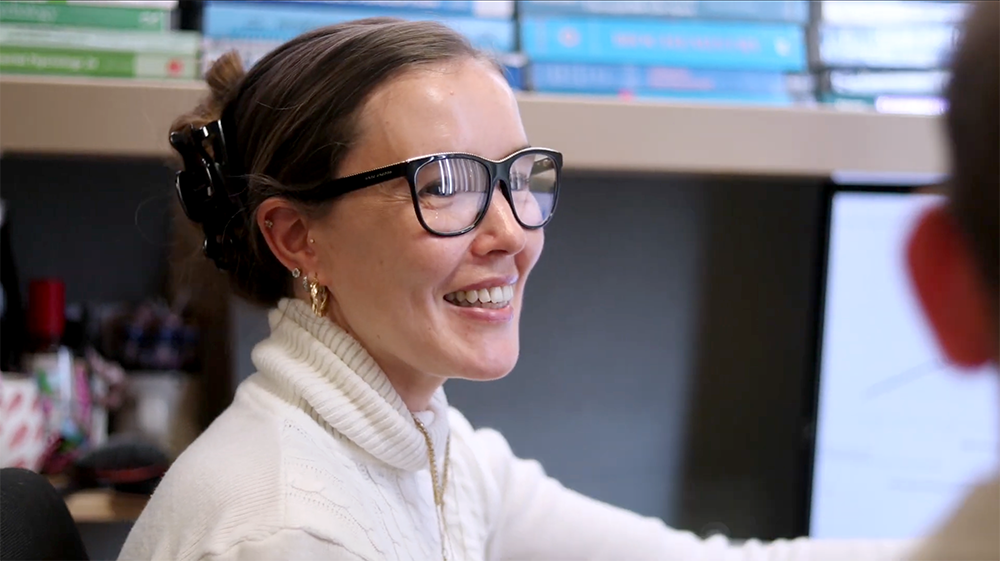
Improving the lives of those impacted by cancer: Dr Chloe Maxwell Smith
Dr Chloe Maxwell-Smith’s research seeks to understand how we can improve quality of life for people living with cancer, and their families, carers and health care professionals.
Our strengths
Disability and inclusion
The enAble Institute is conducting research that enables people with disabilities to access equitable opportunities for health, wellbeing and inclusion.
Our findings inform policy and practice related to the prevention of health and injury related disabilities, and enhance therapeutic and social-inclusion-related services for people with disabilities and their supporters.
Areas of research include autism spectrum disorders, Developmental Language Disorder, injury rehabilitation and more.
Dementia and ageing
Dementia negatively impacts the lives of many Australians and is a major contributor to healthcare utilisation and costs.
Now, the Dementia Centre of Excellence – a cornerstone of the enAble Institute’s dementia research – is producing the knowledge needed to help people with dementia live healthier and happier lives in their homes.
Research teams are helping to reduce the risk of physical injury and falls, develop strategies to treat other conditions of ageing associated with dementia (such as Parkinson’s disease) and improve community-based systems of care for people living with dementia.
One example is the ground-breaking research and development behind “Jim” the virtual avatar, a digital entity that simulates agitation and distress in people with dementia, and effectively teaches students how to respond to and manage people living with dementia.
Mental health
Mental health researchers at the enAble Institute are producing tools and providing strategies to help people cope with the pressures of modern living, so they can enjoy better health and an improved quality of life.
Together, they are working on projects designed to prevent mental health challenges, help people recover quicker from mental health difficulties, prevent the risk of suicide and self-harm, and improve access and quality of care for people who have mental health challenges.
One example of this work is the Aussie Optimism program. Based on extensive Curtin research, this school-based preventive mental health program promotes mental wellbeing and builds resilience in children and pre-adolescents. More than 40,000 students have taken part, and evaluation research indicates the program reduces anxiety and depression symptoms and disorders, reduces suicidality, and increases family functioning, social skills and mental health in young children and pre-adolescents.
Fundamental and discovery science
Researchers at the Curtin Medical Research Institute are conducting research to understand the basic mechanisms underlying health and disease, often without an immediate clinical application. They focus on uncovering how the body works at a molecular or cellular level, providing the knowledge that is crucial for future diagnostics, treatments, and prevention.
Researchers are investigating the fundamentals of Alzheimer’s Disease, cancer, neurovascular diseases, brain trauma and more.
Clinical and translational research
At Curtin Medical Research Institute, clinical and translational research is conducted across a number of diseases and knowledge areas, including neurotrauma, neurodegenerative disorders, pain, iron metabolism, gastroenterology, nutrition and metabolism, supportive care in cancer, cardiovascular imaging research and artificial intelligence in medical radiation sciences.
Together, clinical and translational research form a continuous pathway that links the fundamental science, patient studies, and everyday healthcare, with the ultimate goal of improving prevention, diagnosis, treatment, and overall health outcomes.
Drug development and therapeutics
Researchers at the Curtin Medical Research Institute study how diseases develop to identify new ways to treat them. They work towards safe and effective therapies that can prevent illness, improve health outcomes and enhance quality of life.
The team’s expertise includes synthetic biology and gene therapy, infectious disease pharmacology, medicinal chemistry and organoids.
In 2026, Curtin Medical Research Institute researchers won a Diabetes Australia Research Grant for a two-year project looking at why people with type 2 diabetes and a gene variant called apoE4 face a much higher risk of memory loss and dementia, and whether this can be stopped with simple, affordable pills. They will use a world-first Curtin-developed model to test two treatments: probucol, an existing cholesterol drug being repurposed for brain protection, and HA-1, a new compound they’ve patented. Alongside a simple blood test, the goal is to catch and prevent dementia early, making treatment easier to access for regional, culturally diverse and disadvantaged communities.
Indigenous health and wellbeing
Aboriginal and Torres Strait Islander people and communities continue to face challenges that impact on all facets of life. Our Indigenous-led research projects are combining multidisciplinary knowledge — both ancient and new — to develop solutions that will improve the wellbeing and support the aspirations of Aboriginal and Torres Strait Islander people across Australia.
Professor Cheryl Kickett-Tucker is investigating how Aboriginal and Torres Strait Islander content is taught in Australian schools and the impact it can have on the identity and self-esteem of young children. Professor Rhonda Oliver is exploring the benefits of using translanguaging in the classroom and developing more culturally appropriate assessments to improve, celebrate and nurture the literacy and communication skills of Aboriginal children in remote and regional areas.
Dr Robyn Williams is leading a community-codesigned framework to improve how healthcare workers understand and respond to Fetal Alcohol Spectrum Disorder in Aboriginal Medical Services – with Aboriginal families at the centre.
Professor Anne-Marie Eades from our School of Nursing is heading the Closing the Vaccine Gap initiative – protecting pregnant women, babies and adolescents in communities where hospitalisation rates for vaccine-preventable diseases are nearly three times the national average.
Minimising drug and alcohol harm
The Curtin-based National Drug Research Institute (NDRI) conducts studies on drinking habits and risky behaviours, with findings contributing to Australian policies that prevent and reduce harms arising from alcohol and other drug problems.
Current research teams are looking at social and environmental factors where alcohol and other drug use occurs; ways to improve the management of alcohol and other drug problems; and ways to prevent initiation and progression of alcohol and other drug use among young people.
Recently, NDRI’s research into rising nitrous oxide use prompted a national and state-level public health response, culminating in TGA reclassification of nitrous oxide from Schedule 4 to 6, new WA sales restrictions, and clinician education resources.
NDRI’s evaluation of the WA Police Naloxone Pilot found that police willingness to administer Naloxone at the scene of an overdose increased by 33% after training. That training was subsequently rolled out statewide and is now being used by police elsewhere in Australia.
Where we work

enAble Institute
Our research enables people to live happier and healthier lives within their communities.
Learn more
Curtin Medical Research Institute
MRI’s research spans cancer, inflammation, infectious disease and wounds, neurodegenerative disorders and vascular and metabolic disorders.
Learn more
National Drug Research Institute
NDRI is one of the largest centres of alcohol and other drug research expertise in Australia.
Learn morePartner with us
By partnering with Curtin, you’ll gain access to a network of experts and specialised facilities that can help your business become more efficient, sustainable and profitable. There are also opportunities for investment, licensing, mentoring and employment.
Reach out to Curtin’s Research Partnerships Team using the form below.

New pathways offer more ways to live, work and study in the Goldfields
More people in the Goldfields with an interest in healthcare will be able to further their careers without having to…

Mental health, sleep disorders among risk factors for long-term concussion symptoms
A new Curtin University study has found almost half of people who experience a concussion still experience problems a year…

New Curtin study highlights opportunities to strengthen bereavement support in Australia’s paediatric intensive care units
Only two of Australia’s 11 dedicated children’s intensive care units provide formal follow-up support for families after the sudden death…

New resource helps people protect brain health and reduce dementia risk
With Western Australia projected to record the nation’s fastest growth in dementia cases, a new Curtin University-led resource aims to…