No-one will ever ask, what’s the point of a science degree? What they’ll ask is, which science degree is right for me?
Who doesn’t feel grateful for science innovation – today, it could be the carbon-fibre composite of your bike; tomorrow, who knows? Of course, most science research isn’t motivated by the desire to create awe. Endeavours usually begin with a desire to know more or a problem to solve – necessity is still the mother of invention.
Humanity is shaped by 6,000 years of scientific breakthroughs and innovations … the wheel, the microscope, penicillin, electricity, AI. But thinking about the critical challenges that now confront the world – climate change, sustainable energy, water, food security, mutating viruses and more – how could we possibly solve these without scientists?
What is a bachelor of science?
Scientific exploration is considered to have begun in Ancient Egypt and Mesopotamia (now Iraq) in the disciplines of mathematics, astronomy and medicine. However, the first university science qualifications, bestowed in the medieval universities of western Europe, were in medicine, expanding into fundamental disciplines like biology, chemistry and physics. Five hundred years later, the world’s newest science disciplines include ‘nutrigenomics’ and ‘cliodynamics’.
These days, Bachelor of Science degrees (BSc or BS) are offered in universities all around the world, many of which developed their science programs in tandem with technology. Curtin University, for example, began as the Western Australian Institute of Technology, known for its expertise in physics and geosciences, and for research that served major Western Australian industries – such as mineral resources and agriculture.
Curtin now delivers courses in more than 30 areas of science, technology and engineering (plus about 20 more that fall under the realm of ‘health sciences’). They encompass the major disciplines that involve scientific theory, scientific inquiry and practical application – including space and planetary science, physics, mathematics, chemistry, computing, data science, biology and environmental science.
Science careers
The advice of Australia’s former chief scientist Dr Alan Finkel, AO, highlight that a science degree is not just about science. It’s about becoming a creative problem-solver and an innovator, ready for today’s challenges and those on the horizon. He said that:
“Australians who have studied science, technology, engineering and mathematics (STEM) are helping to solve the problems of the future – meeting electricity demand and generation needs, adapting to the changing climate, integrating AI into society and optimising healthcare for ageing populations.”
And, according to Australia’s National Skills Commission, jobs in STEM (Science, Technology, Engineering and Maths) are among the fastest growing in the country. So, a BSc is an excellent investment for students who want to be competitive in a dynamic, global job market.
Perhaps one of the underrated benefits of a Science degree is adaptability. Whatever science major you choose at Curtin, you’ll gain comprehensive knowledge and skills that will set you up for rewarding careers across industry and government. Whether you start with one major and shift to another, combine science with business or computing, or pivot careers later in life, the foundation you build through a BSc will stay relevant. It also cultivates a lifelong curiosity – the core of scientific thinking. You learn not just facts but how to explore, question and test the world around you. In a society where information is everywhere but insight is rare, those who can think like scientists are invaluable.
Future-proof your career
One of the most compelling reasons to study a Bachelor of Science at Curtin is the sheer extent of careers it can open up in these areas and more:
- Agriculture and water resources: Major global challenges with food security and water availability highlight the importance of scientists working across agriculture and primary resources.
- Environment and sustainability: Environmental and climate science is arguably the world’s most critical area for knowledge and innovation. (Side-note: sometimes we have students who are interested in sustainability and environmental studies asking whether a science degree or an arts degree is the better choice for them. The difference lies in the focus: a BSc is more technical and research-oriented, offering deeper immersion into scientific methods and data analysis; whereas an arts program will include more sociological and cultural aspects of sustainability and environmental studies.)
- Computer and data science: Growth in the Internet of Things (IoT) is continuing and cybersecurity threats are ever-evolving, and the Australian Academy of Science advises that jobs in artificial intelligence (AI) are expected to surge.
- Health and medicine: Biomedicine and genetics are very exciting areas of advancement for disease diagnosis and treatment.
- Mineral processing and geoscience: The global transition from fossil fuels to green energy will continue to impact the demand for expertise and innovation across geoscience, materials science, energy engineering and many intersecting disciplines.
- Space and planetary science: The World Economic Forum has forecasted that the global space economy will soar to $1.8 trillion by 2035 – which translates into more career opportunities across space and planetary science industries.1
Which science degree is best?
Think about the school subjects that you loved, as well as the science stories that grab your attention. You might be drawn to stories about new materials, or about newly discovered species. And what about the environments that are happy places for you – would they be well-equipped laboratories, or outdoor locations where you’d make observations or collect samples?
Also consider which area of science and technology that you’d like to contribute to. Would you like to devise new instruments for planetary exploration, or provide new knowledge in quantum physics, for example? Perhaps you’d like to work with industry and deliver a breakthrough to a longstanding problem like crop diseases. Both kinds of knowledge and research – fundamental and applied – are inherent in Curtin’s extensive range of science programs, across:
- Actuarial Science and Mathematics
- Agriculture Science and Agribusiness
- Earth Sciences and Marine Science
- Applied Geology and Surveying
- Chemistry and Biochemistry
- Data Science
- Environmental Science and Environmental Biology and Ecology
- Food Science and Technology
- Mining and Mineral Processing
- Physics and Space and Planetary Science
Advanced Science for aspiring leaders
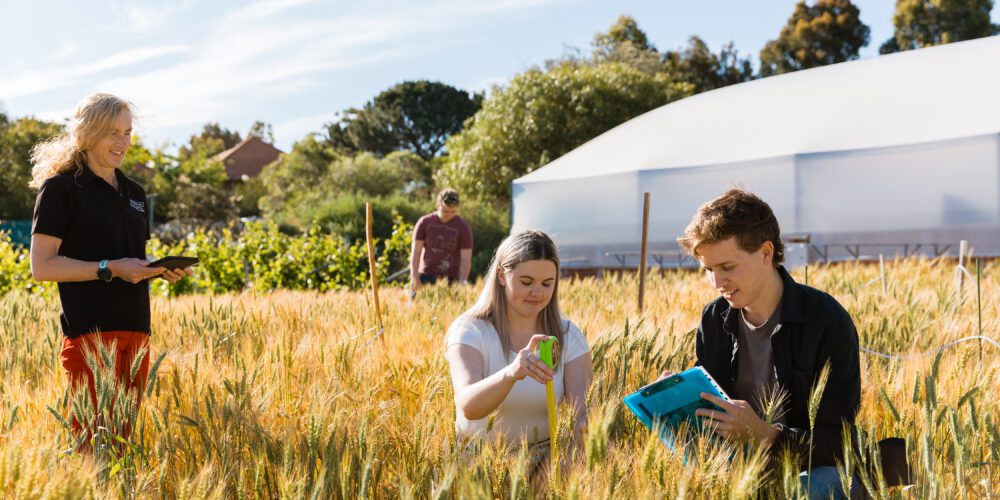
Curtin’s range of Advanced Science courses is another innovation in science education from the University. The Advanced Science versions are designed for students who’d like to add research, leadership and entrepreneurial skills into their qualification. Curtin’s 13 Advanced Science majors are all honours degrees – they include a fourth year of study that involves completing a research project, so that you can start contributing new knowledge to your science discipline. In essence, the Advanced Science degree is designed for students who aspire to lead science endeavours that address global science challenges.
Multidisciplinary Science could be your pathway
Curtin also offers a ‘multidisciplinary’ science degree that teaches various science disciplines. If you’re not sure which are of science interests you most, you could begin your studies with Multidisciplinary Science, and then switch to another science course when you sure of the area that’s right for you. Multidisciplinary Science is also ideal if you didn’t get the school results you need for your preferred science course. You can simply complete the required units in Multidisciplinary Science and then switch to your preferred science degree.
Study science at Curtin
First and foremost, Curtin is a global university – we have six international campuses, in Western Australia, Malaysia, Singapore, Dubai, Sri Lanka and Mauritius; and numerous education partnerships worldwide. So, as a Curtin student, you can take advantage of the diversity of international study opportunities that we offer.
Gain a degree from a world-ranked Australian university
Curtin ranks in the top 1% of universities worldwide, based on the ShanghaiRanking’s Academic Ranking of World Universities. (There are various international ‘university ranking’ organisations and systems, of which the ShanghaiRanking is one of the best known.) In the Global Ranking of Academic Subjects, Curtin tops the charts in Australia for Earth Sciences and is in the top five for Mathematics.2 We also have impressive rankings in other science disciplines – including a place in the global top five for mineral and mining engineering, and in the top 50 for Geology, Geophysics, and Earth and Marine Sciences.3
Plus, Curtin is one of only 20 universities in the world to achieve the international QS Stars highest rating of 5 Stars Plus! It means that we received top ratings for all categories that are assessed: teaching, facilities, internationalisation, inclusiveness, employability, research and innovation.
But here’s the clincher: Demonstrating top industry respect for Curtin, in the Australian Government’s last employer satisfaction survey, Curtin graduates were rated the best in Western Australia!4 With top rankings and industry respect, it’s no wonder that so many Australian and international students choose Curtin for their degree.

Curtin degrees provide complete expertise
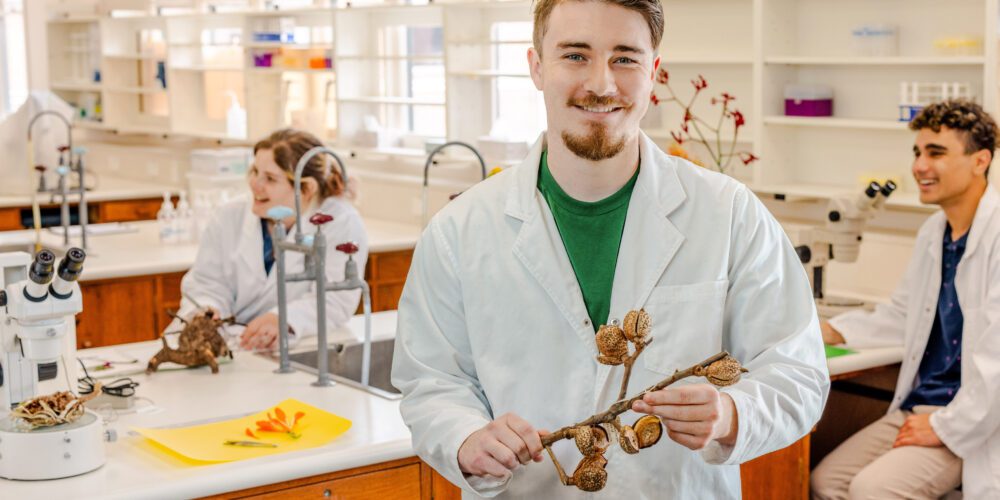
Curtin’s science degrees are designed not only to give you high-level knowledge but also to cultivate your scientific curiosity and awareness of real-world problems – so that you feel empowered to ask the bold questions that lead to solutions! Our courses integrate theory with hands-on experience, lab work, field studies and research opportunities – which ensures that you finish uni as a job-ready graduate with a determined scientific curiosity.
A BSc also equips you with transferable skills – analytical thinking, scientific literacy, research techniques, digital competency and others that are valued highly across careers and industries. Corporate communication, collaboration and problem-solving are other transferable skills that Curtin teaches, because they’re relevant to every discipline involved in innovation.
In short, a BSc is not just about science; it’s about becoming equipped to tackle today’s challenges and those around the corner.
Benefit from industry connections
The extent and strength of Curtin’s partnerships is a top reason cited by students and graduates as to why they were drawn to Curtin. Our industry partnerships offer valuable opportunities for placements, internships and for-credit work experiences that help you build your résumé while you’re at uni. Not only will you have a respected qualification to show future employers, but you’re also demonstrating that you’re engaged with industry and familiar with the work environment of your chosen career.
Our range of science industry partners include CSIRO, Alcoa, BHP, Landgate, the WA Data Science Innovation Hub, The International Centre for Radio Astronomy Research (ICRAR) and Mineral Resources Limited (MinRes).
Additionally, many Curtin degrees are distinguished with formal accreditation and industry recognition.
Tailor your Bachelor of Science
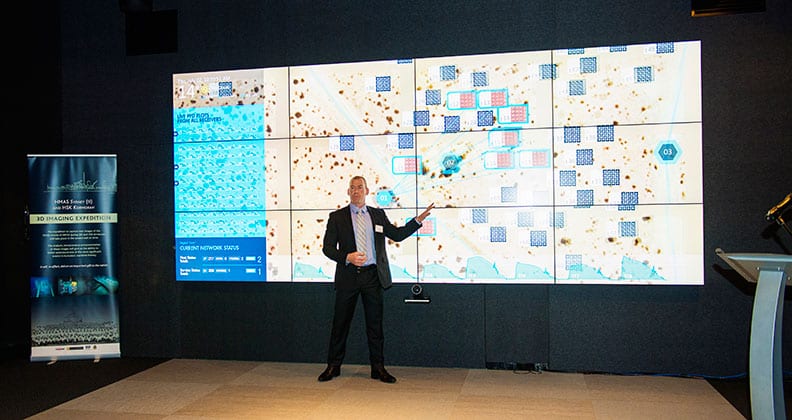
Many exciting, emerging science industries – like synthetic biology, green technology and quantum computing – blend expertise in more than one discipline. Which makes multidisciplinary skillsets a valuable resource. It’s another great reason to choose a Curtin Bachelor of Science. At Curtin, you can tailor your tailor degree with another major, a minor and specialisations, to create a broader skillset to increase your career options and employability, or to build niche, sought-after expertise.
For example, if you’d like to create innovations and establish your own entrepreneurial business, you could combine your science major – in agriculture, for example, with a specialisation in entrepreneurship. Or you could pair Environmental Science with a major in Communications to have the ideal skill sets to not only protect ecosystems but to also promote your work to the world.
A double degree is also a great way of extending your scientific expertise and career opportunities. Curtin has more than 20 science double degree options, which you can explore on our Bachelor of Science webpage.
Learn to use world-class instruments
At Curtin, you get to use advanced laboratories and instruments and collaborate with some world-class research teams.
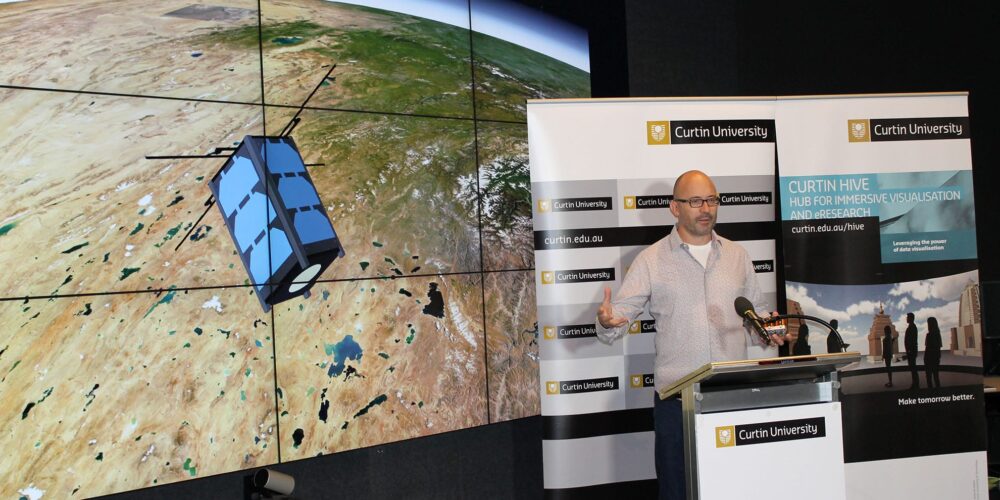
At the Space Science and Technology Centre, for example, students from several science and engineering majors worked on the development of Western Australia’s first satellite, the Binar-1 ‘cubesat’, which was launched to the International Space Station and then deployed into its own orbit. (To learn more about the program, visit binarspace.com). Many Curtin science students also participate in the Desert Fireball Network project.
Other advanced science facilities at Curtin include:
- Resources and Chemistry Precinct: a four-storey science hub with advanced laboratories and interactive learning spaces.
- The John de Laeter Centre: a core research infrastructure facility for geoscience research, with more than $50 million in advanced instrumentation.
- Field Trial Area: a facility for agricultural experiments comprising environmentally controlled plant growth areas that emulate real-world settings.

Trust in science
In a world defined by complexity and change, science is not just a discipline – it’s a way of thinking and a way forward into a career of discovery and innovation.
Choosing to study a science degree at Curtin is a choice to invest in yourself and the future. It’s a decision to develop skills that matter, explore fields that fascinate you, and graduate ready to make a meaningful impact.
Ready to explore? Start your science journey now, at curtin.edu/study.
1 Space: The $1.8 Trillion Opportunity for Global Economic Growth. World Economic Forum and McKinsey & Company (2024)
2 ShanghaiRanking ARWU (2025)
3 QS World University Rankings by Subject (2026)
4 QILT Employer Satisfaction Survey (2024)