This internet browser is outdated and does not support all features of this site. Please switch or upgrade to a different browser to display this site properly.
If all things computing, programming and IT is your jam (or should that be Java?), Curtin has a range of courses designed for people just like you – intelligent, curious and challenge-focused.
And with technology constantly evolving, a computer-based qualification can lead to an in-demand and rewarding career.
So how do you decide which course is right for you? To help, we’ve broken down the differences between three of our popular computer-based courses: computing, IT and technology.
Each one is designed to equip you with the skills needed for a successful career – from cybersecurity to app development to AI engineering – your options are vast.
Computing, IT and tech courses explained
Each course targets distinct skills and career paths, tailored to different strengths and interests.
Here’s a quick breakdown of each:
Bachelor of Computing: Emphasises programming and software development. Choose this course if you: love solving problems and have an eye for tiny details.
Bachelor of Information Technology: centres on applied tech solutions. Choosethis course if you: like to use technology to enhance different activities.
Bachelor of Technology (Computer Systems and Networking): merges hardware development with telecommunications. Choose this course if you: have a knack for seeing the big picture and are curious about going ‘behind the scenes’ of technology.
What is the Bachelor of Computing?
Computing is ideal if you enjoy building operating systems and developing software solutions.
Our computing course focuses on the theoretical foundations of computing and software development. That is, you’ll get ‘into the weeds’ of all the mathematical, logical and algorithmic principles that determine what a computer can and cannot do (which is a powerful skill to wield in the age of AI).
You’ll also learn about data structures and systems design, before choosing to major in either Computer Science, Cyber Security or Software Engineering. You’ll take a deep dive into your chosen discipline and graduate able to meet the demand for specialist computing fields.
For instance, a report from the Australian Cyber Security Centre highlighted that 90% of organisations lack skilled cybersecurity professionals, indicating a pressing need for talent in the industry (as Optus and Latitude Finance can atest).
Accreditation
Your computing wizardry will be officially recognised by the Australian Computer Society, which is the recognised association for ICT professionals.
Graduate Mya Ubalde says she chose the advanced version because she was attracted to its prestige and practicality.
“I was drawn to the impressive degree title and work experience. Curtin’s reputation for technology-based courses and the scholarship I received for my high ATAR score made it the ideal choice,” Mya explains.
“A highlight of the course was engaging in research projects that connected me to other researchers and peers. For my honours project, I collaborated with the Optus 5G lab, Ear Science Institute Australia and Monash University to develop a digital health app.
“I also loved working with the Space Science and Technology Centre in my third year and travelling to Tasmania for a conference!”
What is the Bachelor of Information Technology (IT)?
If you’re interested in how tech actually works in the real world to optimise jobs, you’ll be suited to our IT course. It covers areas including computer programming, network management, database systems, data security and project management.
You have the option to undertake an industry internship such as with Deloitte, CyberCX, Amritsar or Visagio. Or, you can complete a group project where you’ll design, implement and test a software system.
You can also choose an elective unit where you’ll develop broad knowledge in a discipline that complements IT.
This course flexibility reflects the breadth of the IT world – you’re spoilt for choice when it comes to choosing an industry to apply your tech expertise in: AI, finance, space, military and defence, or energy and resources – the list goes on.
Essentially, the Bachelor of IT is ideal if you want to develop expert IT skills and use them to bridge the gap between user needs and digital solutions in an industry of your choice.
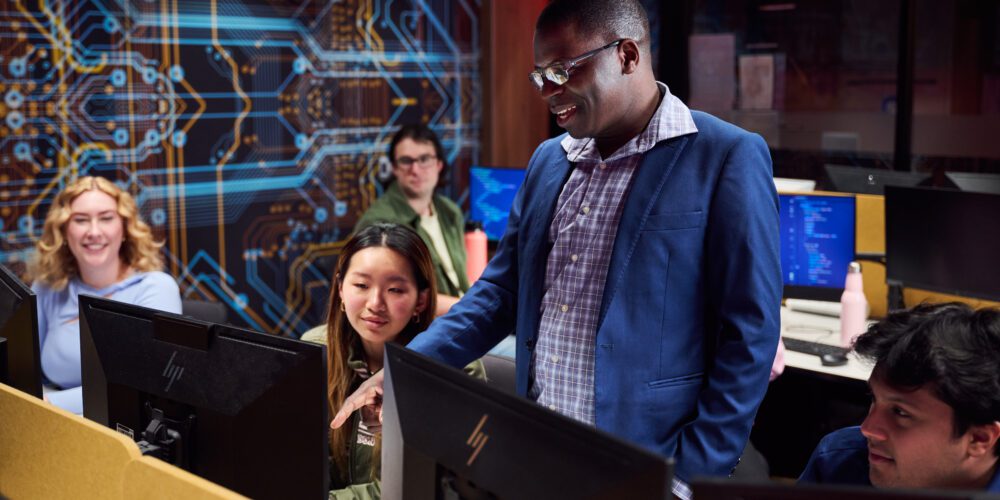
In the IT course, you’ll learn how to bridge the gap between between user needs and digital solutions.
Accreditation
The Bachelor of IT is accredited by the Australian Computer Society, meaning your qualification is recognised nationally (hello travel and working remotely!)
What is the Bachelor of Technology (Computer Systems and Networking)?
Where the Computing and IT courses focus on software, the Bachelor of Technology is a hardware-centred engineering course. That is, you’ll learn how to build and configure computer networks and systems; the ‘behind the scenes’ tech that enables devices like computers, servers and IoT gadgets to communicate, share resources and exchange data.
Computer systems and networks are the backbone of modern digital infrastructure and are therefore crucial to human communication, knowledge and quality of life.
As Nicholas Negroponte, founder of MIT’s Media Lab, once said, “Computing is not about computers anymore – it is about living.”
You’ll enjoy this course if you’re interested in understanding how to build, connect and optimise different technologies to enhance the distribution of information.
This course is accredited by Engineers Australia and is recognised internationally, meaning you could take your career global.
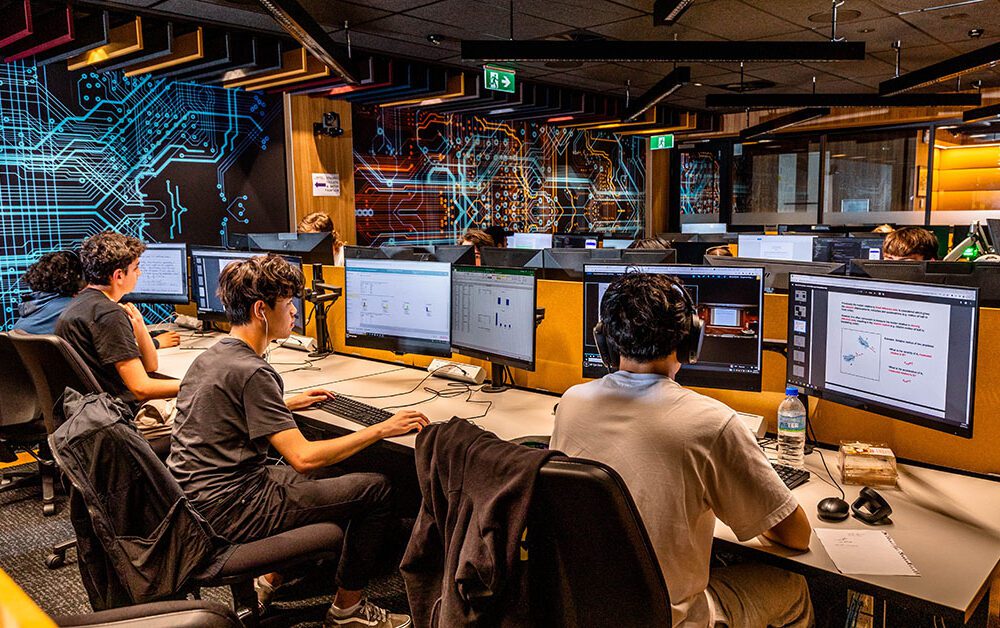
Computer systems and networks are the backbone of modern digital infrastructure.
Careers in computing, IT and technology
Computers and technology are ingrained in all facets of modern life, offering you strong and varied career opportunities as a graduate.
For example, Advanced Computing alumna Mya Ubalde is now a technical consultant with Diversus, a global, Perth-based company that harnesses technology to solve challenges for businesses.
“My day-to-day usually consists of writing and maintaining code for clients, as well as making web apps, hunting for software bugs, reading and writing documentation and talking to clients,” Mya explains.
“Since graduating, I’ve learned a lot about full-stack software development and how different stakeholder requirements all contribute to the design of software architecture.
Mya says web development changes quickly and she needs to stay across the latest software design practices and emerging tech. She says AI can be handy learning tool in her role.
“AI has sped up the rate at which I can produce results, and it’s been a gamechanger for picking up development work quickly, especially when dealing with codebases where I haven’t encountered the language before, or if I need to find a very specific issue in the code,” Mya explains.
In addition to web technician, here are some other examples of career roles you could pursue in computing:
Jobs in computing
Software engineer/developer: design and develop software applications such as mobile apps, gaming graphics or video editing software, content management systems.
Ethical hacker/cybersecurity analyst: break into networks to identify vulnerabilities and design security solutions.
AI engineer: help companies to integrate AI into products, services and work design.
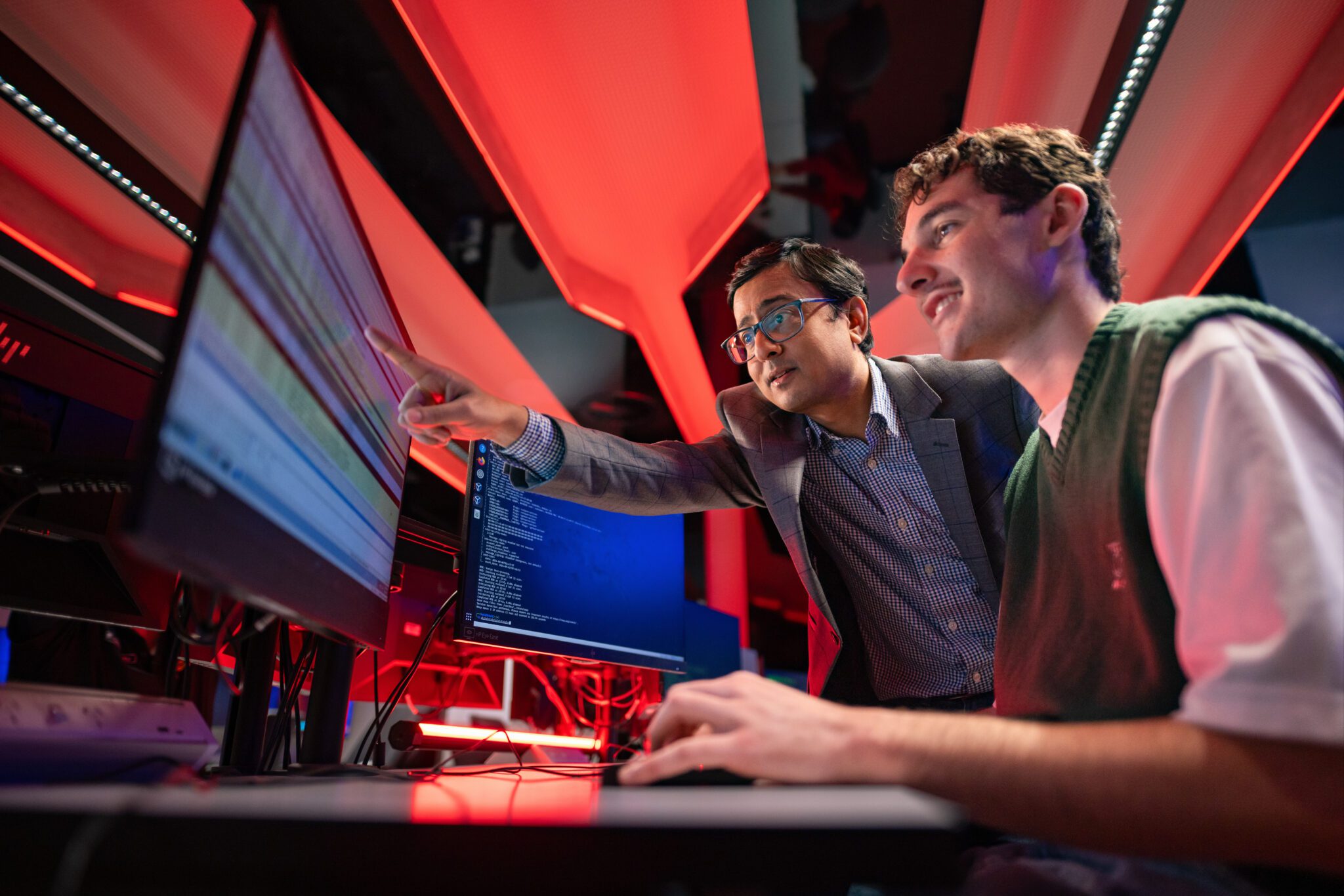
Programming code is a key skill used in a computing career.
Jobs in IT
IT consultant: advise organisations on technology solutions. For example, assist a healthcare organisation to transition patient data to a cloud-based system.
Network administrator: manage and maintain network systems for large companies, such as a bank’s wide area network that connects branches and ATMs to central, high-security servers.
Desktop support analyst: configure hardware setup for companies and give technical assistance to end-users.
Jobs in computer systems and networking
Systems engineer: design and implement complex systems. For example, develop a satellite communications system for an aerospace company.
Network engineer: build and maintain network infrastructures, such as assist a university to upgrade its network systems to support online and regional learning.
Cloud architect: manage and implement cloud-based services (Amazon Web Services, IBM Cloud, for example).
Fast and reliable network connectivity is key to processing vast amounts of data generated by satellites, such as the next-generation SKA.
Ready for a career that clicks with you?
Whether you’ve chosen to study computing, IT or technology, each course can lead you to diverse career opportunities and work that’s always evolving.
Mya sums up how her course prepared her for the dynamic world of computing:
“The most important skill my course taught me is how to learn and learn quickly. I use my problem-solving skills constantly as every day is different.”