Reading time: 5 minutes
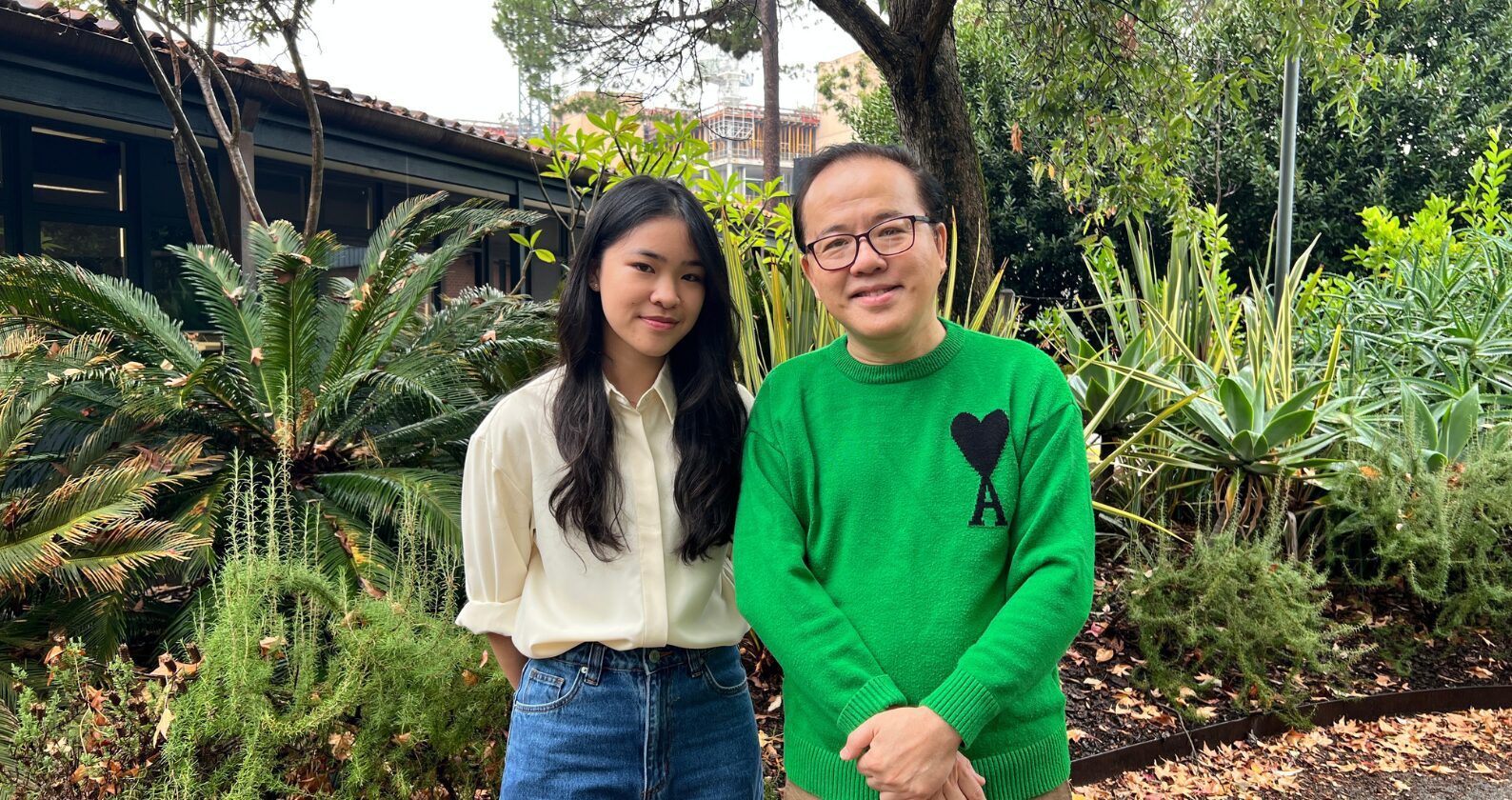
Genesis and Ian look back on the highlights and challenges of the PhD journey so far.
Genesis:
My PhD project sits at the intersection between psychology, art, branding and cultural strategy. What we’re looking at is how we can use art in commercial contexts and how consumers can interpret and perceive the presence of art in commerce. The problem right now is that while it is really popular to use art in commerce, there is no reliable way to measure how, if or when consumers notice and interpret the presence of art. My research solves that problem, in a way, by looking at measuring consumer perception of art.
My end of the PhD will be producing a scale to measure consumer perception of art: Art Infusion, that’s the proper title. But I would also like to highlight the role of art and its role in business, and how it can sustain communities and provide a platform for underrepresented or marginalised communities and artists. We’re still in the process of generating items or how to measure things, so it starts off with interviews for us, and then we come up with themes. When we have themes, we’ll send out surveys to measure.
I was invited to do Honours, and I did pretty well. Ian encouraged me to apply for the RTP (Research Training Program), which is like the annual government-sponsored scholarship. I didn’t get the scholarship, but I was accepted and invited to do a PhD. Ian’s my primary supervisor, but we have another associate professor on the team. His area is more focused on social media, which fits nicely here. Social media is one way of how we can measure, it’s a platform to share our images on campaigns with art and branding, so it was a no-brainer for me.
One major problem I’ve been having with my research is how art is such an ambiguous topic. Because art is different for everyone, it’s hard to narrow down one description or one definition of what art is. How to measure that and what sort of art appeals to a certain demographic depends on a lot of factors, such as socioeconomic factors, so it’s difficult to generalise.
The greatest achievement so far is the research we’ve been doing internationally. We went to Macau last year and the year before, for Honours, we went to Hobart. This year will hopefully be New Zealand. There are lots of things to look back on, many opportunities that I was given and I have taken. I think at the end of the day, I wouldn’t have been in that position if it weren’t for Ian.
One thing that I always say whenever someone asks me what I’ve learned from Ian is that whatever maximum limit I think I have, Ian pushes me to go past that. So, if I think I can do 110%, he makes me do 120%.
And one driving quote or motivation I look to is that science and technology are what build the world we live in, but art and culture are what make the world worth living in.
Ian:
Supervising is really part of the puzzle of my job. I came from the industry before going to full-fledged academia, and in the last three years, I’ve been doing more consulting work.
But the industry has changed as well. The industry is always looking for collaboration with universities, especially with PhD students, and they’re very happy to sponsor or support our projects by using universities to build frameworks to help resolve industry issues. Curtin is known for industry engagement, and I think I’m able to fill that gap a little bit.
My supervisory style has changed over the years, but the fundamentals are still the same. I still believe in teams, so supervisees working together and also working with other supervisors. It’s always good to work with teams with your fellow PhD students. Topics may not be the same, but you can learn from each other’s methodology. I think that what I’m trying to build has been quite successful in the past few years, and then I brought in other supervisors as well because I cannot be good at everything. There will always be something that others are better at than me.
I always remind Genesis that the PhD is probably the biggest research project that she will ever do in her life because after that, even if you go to academia, you’ll be doing some smaller studies.
The PhD is a process, so it is not about the finished product, but it’s the journey that you go through.
I feel that when she gave a presentation at a conference, she faced some difficult questions, but I think she answered them quite eloquently. I think one day she will reflect on it because when you present it again in a second or third conference, it won’t be the same.
And, I would also say that another highlight is her chapter being published. When Genesis started her PhD, she already had a book chapter that had her ideas, her objectives, why she’s doing this particular work, and so on. The book will actually be out this year in July; it’s the Sage Handbook for Luxury.