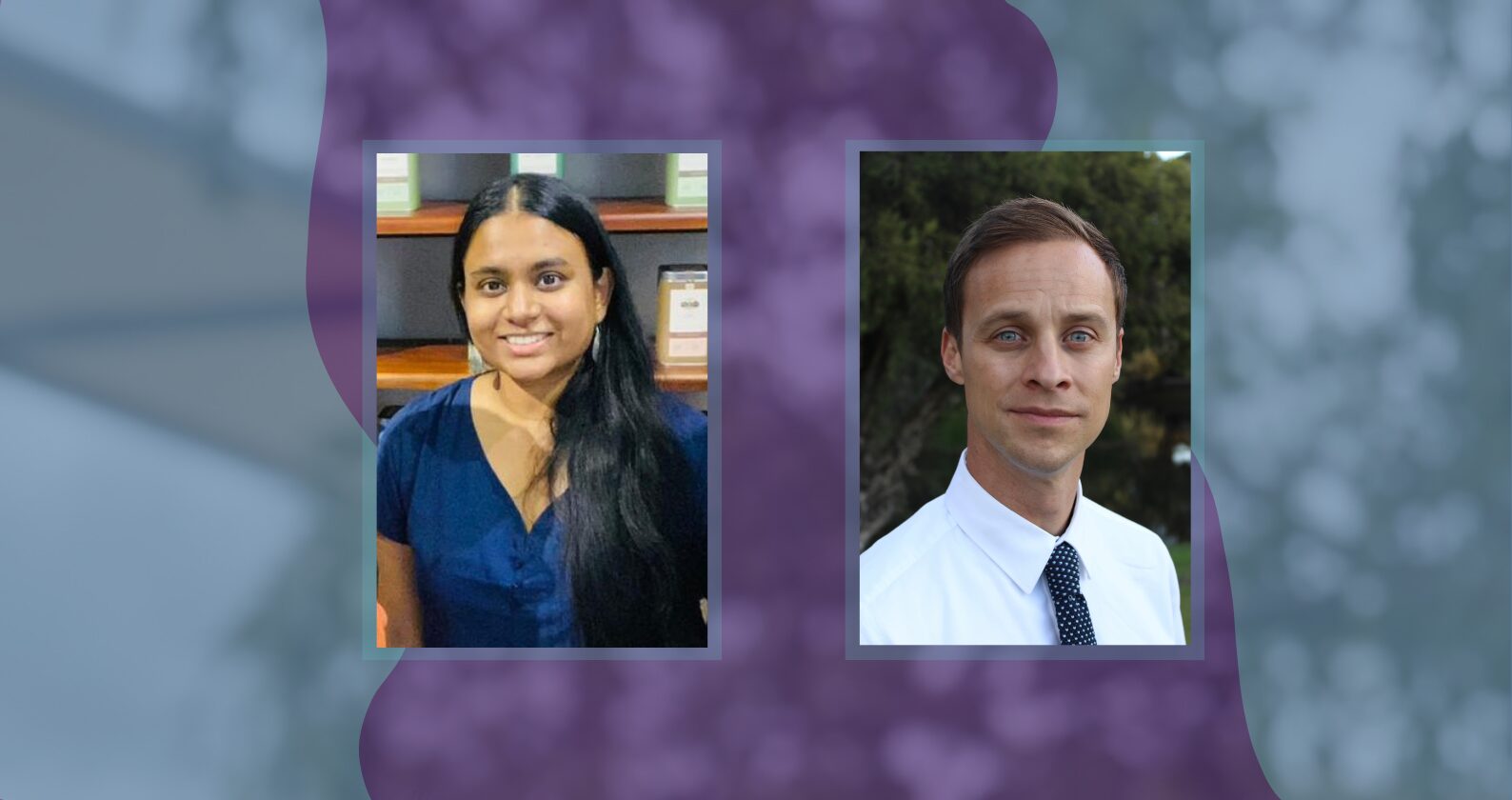
Achala’s goal for her PhD project isn’t purely an academic one. Drawing from her own experiences with epilepsy, her extensive research background and the assistance of her supervisors, she aims to understand her own experiences with epilepsy and nurture spaces for the voices of those with the condition. | Reading time: 5 min
Per and Achala reflect on their relationship as supervisor and PhD student thus far.
Achala
For my PhD project, I’m looking at the lived experiences of epilepsy as a disability in Sri Lanka and in Australia. I want the project to be a space for the voices of people who live with epilepsy, and I’m speaking from experience as well because I had epilepsy when I was a teenager. Within the project, I’m looking beyond the medical interpretations available on this topic and, instead, at how society and culture shape lived experiences and vice versa through autoethnography.
My main goal, on a personal level, is trying to make sense of my experience with epilepsy, because that is a conversation that I’ve never had with myself before I started my PhD.
It was also something that was in the past because I’ve stopped having seizures, but with the pandemic and that sense of vulnerability, it made me question why I hadn’t reflected on my epilepsy experience.
I also wanted to know about what the experiences are like for Sri Lankans and Australians. I hope to see if there are any major differences between how epilepsy is experienced in Australia and how it’s experienced in Sri Lanka.
Before I came to Perth, I earned my BA in English from the University of Colombo in Sri Lanka, and I was working at a private university as an English lecturer. While I was working, I completed a Master’s in English Studies at the same uni as well as a Master’s in Linguistics at the University of Kelaniya. It just made sense that my next step in my academic journey was a PhD because I like the journey of researching.
I brainstormed some ideas along my research interests and found disability studies and the possibility of connecting my experience with my career and my love of writing. This project combines those aspects in a way that never happened during my master’s thesis or bachelor’s dissertation.
I started my PhD journey by contacting supervisors around the globe who had done a lot of research in disability studies, and one of them was Rachel Robertson. Rachel contacted me, and she had CC’d Per on the email, which is how we became this group.
Subject recruitment for my research in Perth was pretty easy for me because I did an internship with Epilepsy WA. Through that, I met my interviewees, and the process was straightforward – I didn’t have to speak to doctors or go to the hospital, and I met a lot of people with epilepsy there who shared their story with me.
But in Sri Lanka, there’s a lot of gatekeeping through hospitals, doctors, and clinics. I’ve spent a lot of time at the epilepsy clinic in Colombo and met people, and they want to take part in an interview, but I find it difficult to schedule a date for the interview. I think it’s also been a challenge because in Australia, compared to Sri Lanka, there are more opportunities and more space for people to share their epilepsy stories and be listened to and not just get advice from other people who don’t know what the epilepsy experience is like.
My greatest achievement so far would be the scholarship application and the M1. For the scholarship application, I received a lot of help from Per, and I don’t think I would have been successful without his feedback. And for my M1, it was accepted without any revisions, and I was really surprised, but it wouldn’t have been possible without Per and Rachel’s feedback and guidance. Regardless of whether it’s written or spoken face-to-face, Per and Rachel’s feedback is always encouraging. It makes the journey easier.
Per
While Achala’s research doesn’t necessarily directly connect to my research area, it really connects to Rachel’s research area, and she and I enjoy supervising together.
When I’m thinking about taking on PhD supervisions, I think hard about how that person is going to be able to support themselves through that degree. So, I’m particularly interested in taking on PhD candidates who I think are serious contenders for a scholarship because it’s hard to finish a PhD when you don’t have that support. When Rachel and I looked at Achala’s CV, it was clear to us that she had excelled through her bachelor’s degree, her two master’s degrees, and had published journal articles. She had a record that would support an application for a scholarship, and as an international student, that is so important.
Achala and I also had a video conversation early in the process, and we connected, and I felt like this was someone I’d really enjoy working with, seeing her evident passion for this subject, and she really convinced me that it was a great idea.
When I take on a PhD candidate, I try to supervise the whole person, not just the researcher, by talking to them about opportunities that are coming up that might be of interest to them, internships, and ways of connecting to some of their fellow PhD candidates so that they’re building up a network.
I’ve been at Curtin for eight years now, supervising PhDs, and I thought I knew what the university had to offer to support our PhD candidates throughout their degrees. But Achala has regularly brought things to me that I didn’t even know we had. I don’t know anyone who has embraced every one of those opportunities like Achala.
I think one of the great successes so far has been the huge leaps Achala has made during this research project.
Going from someone who says that she hadn’t ever spoken to someone with epilepsy before coming to Australia, to someone who now has had this huge range of experiences, done volunteer work and has been out in the community doing advocacy in a wholehearted way is really impressive. It’s exciting to see the change and growth happening right in front of you.
Achala K. Dissanayake
Achala K. Dissanayake is a Sri Lankan PhD student. In Sri Lanka, she worked as a lecturer in English at two private universities. Her research interests include disability studies, literary and media representation, World Englishes and teaching English. Her PhD study combines her love for writing and her epilepsy lived experience.
Per Henningsgaard
Per Henningsgaard is a senior lecturer at Curtin University, where he is also the major coordinator of Professional Writing and Publishing. He has published more than 30 peer-reviewed journal articles and book chapters across six countries. Per’s research interests include editing, publishing and Australian literature. His most recent publication is the co-authored book chapter (with Paige Spence) ‘Considering the “Australianness” of Comic Books and Graphic Novels by Australian Creators’ in Folio: Essays on Australian Comics.