Reading time: 2 minutes
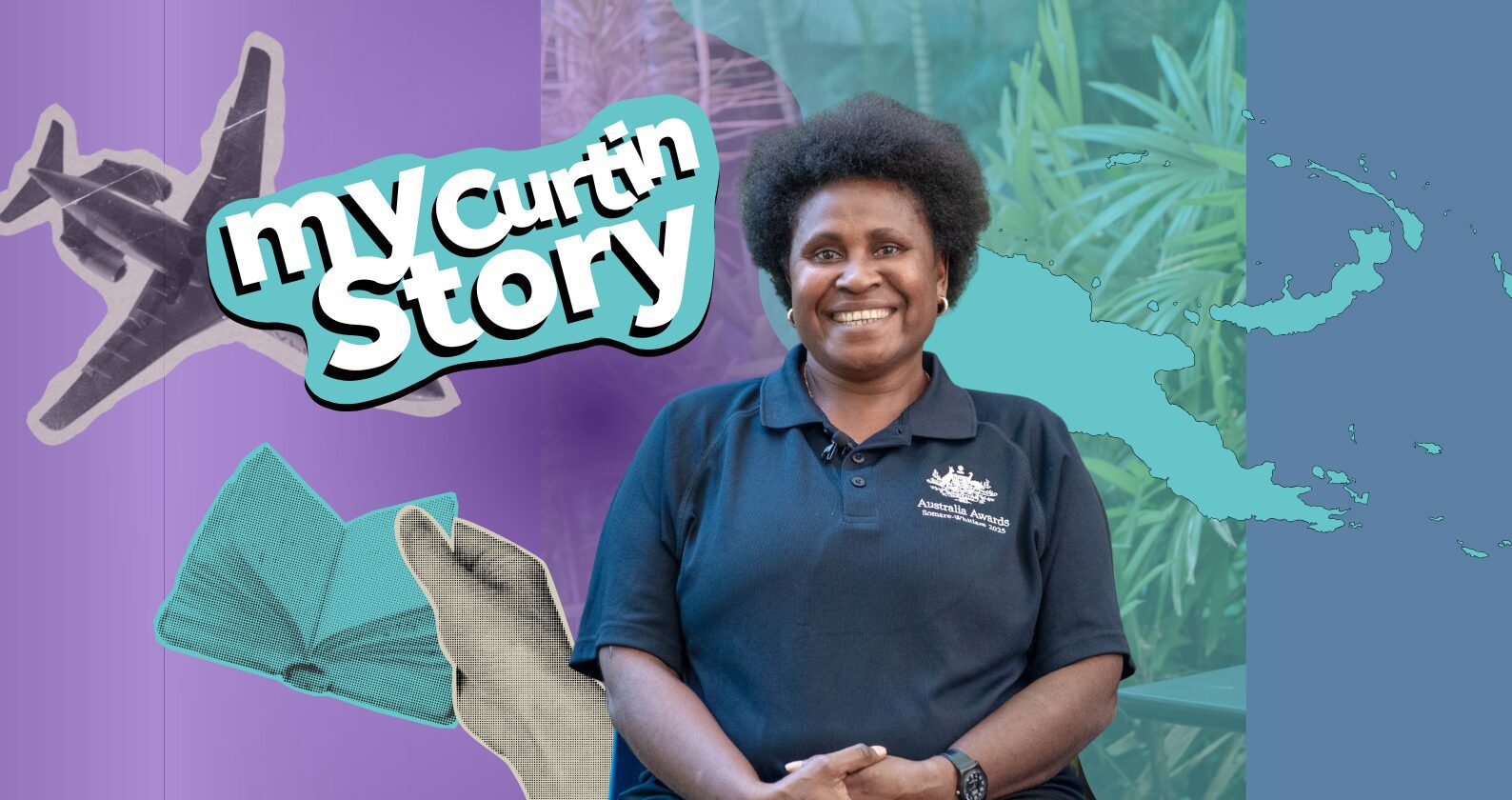
For some, teaching isn’t just a career, it’s a calling. Meet Dulcie, now studying a Graduate Certificate in STEM Education at Curtin through the Australia Awards Program, and on a mission to transform how science and technology are taught in Papua New Guinea. She’s learning to inspire the next generation of problem-solvers.
For Dulcie, the dream of becoming a teacher started early. In primary school, she really admired the way one of her teachers taught and found him to be a role model. Originally inspired to teach in the primary sector, Dulcie’s focus shifted in high school after an experience with one of her Year 12 teachers that was often absent.
“I took that negative situation and thought I should be a secondary teacher so I can correct what people like this can do, and so I can be the best teacher for my students!”
Today, Dulcie teaches physics at the National School of Excellence in Passam, Papua New Guinea (PNG), where students from across the country come together to pursue higher education. Her work now extends far beyond the classroom, as she’s travelled to study a Graduate Certificate in STEM Education at Curtin through the Australia Awards Program Scholarship. This a professional development initiative supported by the Australian Government’s Department of Foreign Affairs and Trade (DFAT) where programs help teachers and health workers in PNG to access courses in Australia that will help develop systems back home.
Through the program, Dulcie and other teachers from PNG are studying STEM teaching pedagogies, learning how to integrate science, technology, engineering and mathematics into real-world problem-solving.
“We can go back and integrate all subjects, technology and engineering together to help our students to identify real life problems that are aligned to our Sustainable Development Goals. We can help to solve certain problems at a local scale, within our school context and then adopt these ideas to solve problems in community.”
One of the highlights of her studies has been exploring design thinking, a topic she plans to take back into her own classroom. Before this course, she gave her students projects, but didn’t always teach them how to approach design thinking itself. Now she understands how important it is to guide them through that process to help them think, plan and create.
She also credits her Leadership in STEM and Digital Technologies units for helping her grow as both a teacher and leader.
“We’ve learned that leadership is about collaboration and communication, and the digital tools we’ve been introduced to are going to make my classroom so much more engaging.”
Outside the classroom, Dulcie has enjoyed the chance to visiting Scitech in Perth’s City West, join extra seminars and have morning coffee talks with lecturers.
“It’s been wonderful to meet the researchers we’ve read about and talk with them. The staff really take care of us and make sure we’re learning but also enjoying our time here.”
When Dulcie returns home, she hopes to become an agent of change for STEM education in PNG. She wants to help build STEM from the ground up, starting from elementary schools through to senior high school.
“We can’t wait until Year 11 to start talking about STEM. It has to begin early.”
Proud of her heritage, Dulcie also wants more people to know the real Papua New Guinea. “We’re a diverse and caring country with over 800 languages, but one shared heart.”
She believes that people from Papua New Guinea are friendly and always ready to learn, just like her students.


