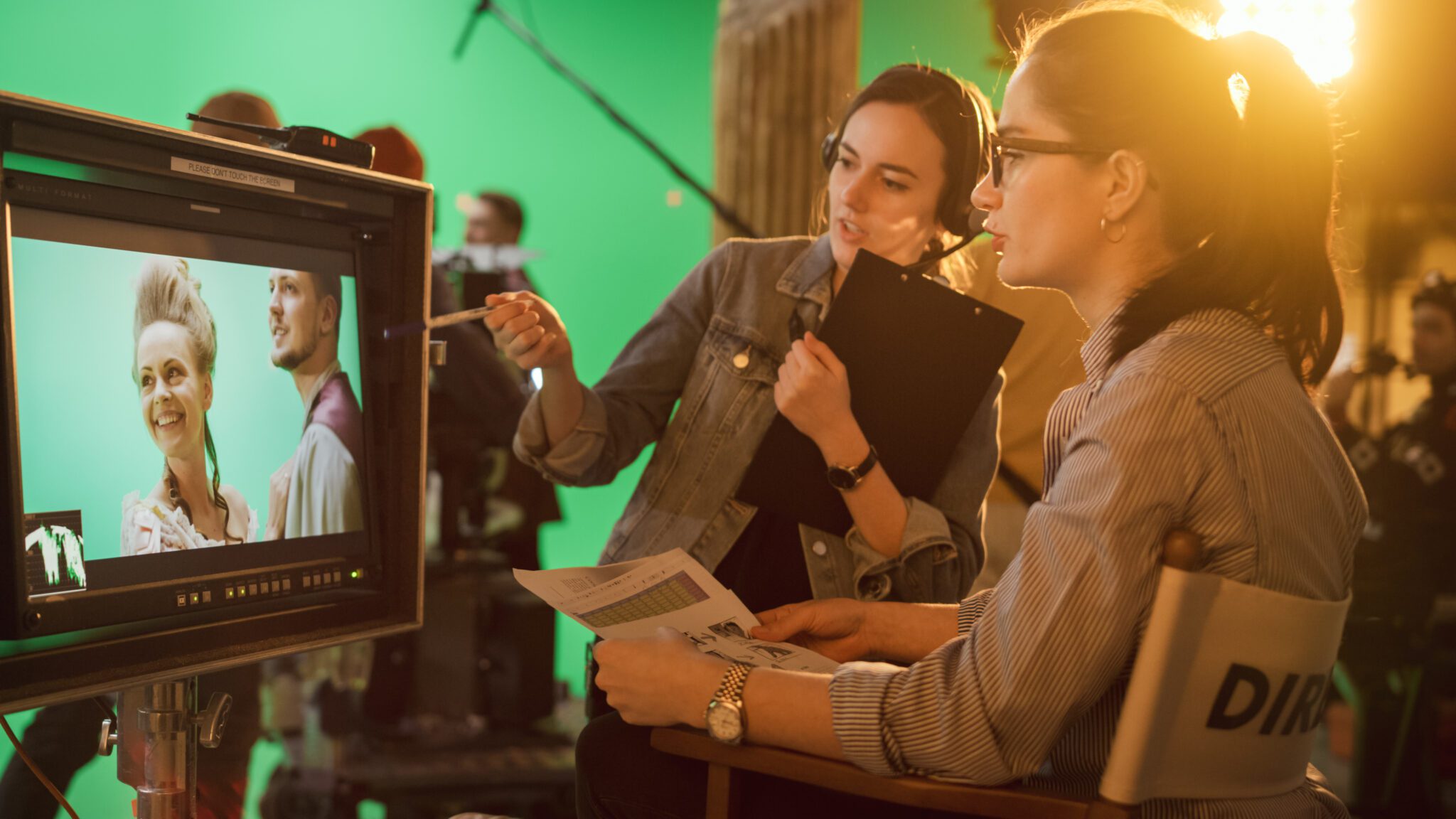
Storytelling is intrinsic to the human experience. With new and evolving technologies available, you have more ways than ever to bring your ideas to life.
Data shows that the creative industry globally is projected to expand from around US$3 billion in 2026 to US$4.6 billion by 2035. In Western Australia, we’re poised to boost our own creative output with the newly opened Perth Film Studios.
To meet this growth, Curtin has launched a new undergraduate degree, the Bachelor of Digital Creative Industries. Designed by industry practitioners and passionate educators, it will teach you how to master the art of digital storytelling.
Digital and Creative Industries: origin story
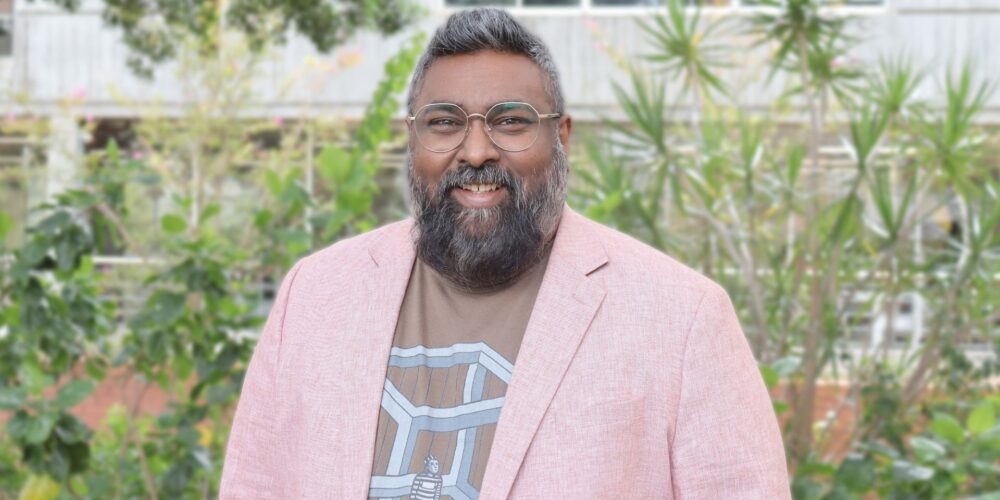
Jonathan Pillai is Head of Program and Dean of Learning Futures in the Faculty of Humanities. He says the curriculum of the Digital Creative Industries course (DCI for short) combines technical mastery, creative foundations and industry engagement. This reflects not only the evolving needs of industry, but also the new needs of audiences.
“Emerging technologies and rapid change are reshaping our world. This transformation touches every aspect of how we live, learn and connect,” Jonathan explains.
“Adaptive transformation in education is no longer a matter of choice – it’s essential.
“With the impact of social media and all these new platforms at our fingertips, the ability for our students to be multimodal and create different types of creative content is so important.”
Watch Jonathan sum up this digital media course in this video.
Choose your own adventure: DCI course curriculum
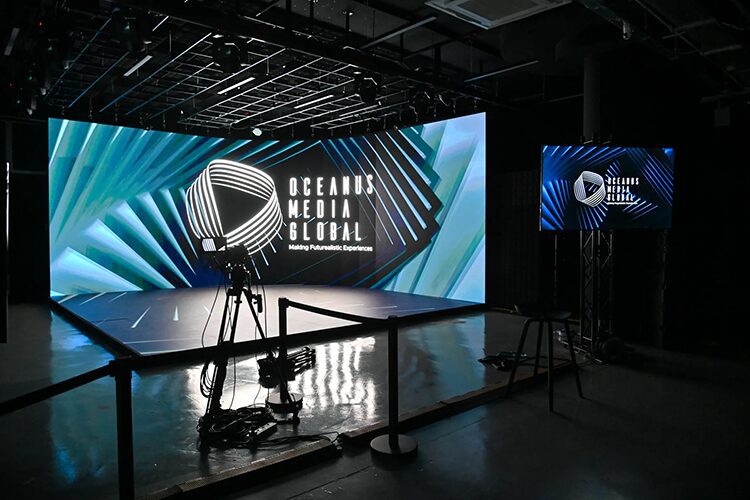
The digital creative industry is massive: it includes well-known giants like DreamWorks, Sony Pictures Animation, Studio Ghibli and Nintendo, as well as smaller firms like indie VFX company Rising Sun Pictures in Adelaide, and OMG, a media tech company based in Singapore.
Its people primarily work in entertainment i.e films, video games, television/streaming, but can also work in areas such as education, health, marketing, retail and journalism.
To cover its breadth, the DCI course has been structured into three majors, each cultivating distinct skillsets and knowledge:
- Animation, Visual Effects and Virtual Production (perfect if you want to apply your digital creativity to feature films, motion graphics, animation and cinematic games.)
- Game Design and Art (for the gamers: you’ll learn the whole production pipeline)
- Immersive User Experience Design (if you enjoy merging real life with digital experiences, from apps to virtual and mixed realities.)
If you’re interested in the DCI course and find yourself struggling to choose just one major, don’t panic – you can choose two (known as a double major). Or you can choose a specialisation from the digital creative field or a different complementary area, such as creative writing or marketing.
Back to the drawing board

Regardless of which major/s you choose, you’ll enhance your talent for storytelling. Jonathan says this skill has become more critical than ever because of the explosion of technology, rather than despite of it.
“You must know the fundamental aspects of storytelling so you can produce compelling content that holds peoples’ emotions, and not just across one platform, but across multiple platforms,” he explains.
“There’s greater demand now for different types of content, so to stand out you need to be very good at your craft, as with higher demand comes higher expectations of quality.”
In the DCI course you’ll learn the fundamentals of the creative process, like character development and plot, before you’re introduced to technologies to express and expand your narrative. Jonathan says this means going back to basics.
“We start off even just by drawing, and then building up that scaffolding, that skill, into the software and then using the software to feed back into the story.
“Students learn that whatever they’re doing needs to be a creative process not just a technical process,” he explains.
Or, as George Lucas once said, “A special effect is a tool, a means of telling a story. A special effect without a story is pretty boring.”
Real-time experience leads to real-world work
Naturally, you will use a lot of very cool software and tech in this course. Classes are held in the high-end Media Production Studio, which features real-time rendering capabilities and post-production systems; and digital labs with industry software including Maya, ZBrush, Unreal Engine and Unity.
Using industry standard equipment means you’ll transition to the workplace with confidence. And with each uni project you complete, you’ll be building an impressive portfolio to showcase to potential employers.
OMG, I can do a creative internship overseas?
In the DCI course, your learning is reinforced through internships with local and global organisations.
“Some of our students have interned with OMG in Singapore, working on feature films and getting insight into the whole virtual production pipeline,” says Jonathan.
“It’s actually mind-boggling that our students get that chance.
“It also gives them the opportunity to be exposed to different industry standards, cultures and people as well.”
“I get to play arcade games all day as a job!”
For Curtin alum Max Wright, an industry internship became a full-time job. He studied Animation and Game Design is an earlier version of the DCI course.
Through a government-back program called the New Colombo Plan, Max undertook an internship in Singapore at LAI Games – a leading developer and manufacturer of arcade games.

“I got to work with some of the most well-known game studios in the world, such as Ubisoft and CD Projekt Red. Receiving feedback from their lead artists and marketing staff gave me the insight into how to not only create industry standard work, but also work that goes ‘beyond’ in terms of creation and presentation,” Max explains.
Max’s affinity for 3D game design saw LAI Games offer him full-time employment in 2024.
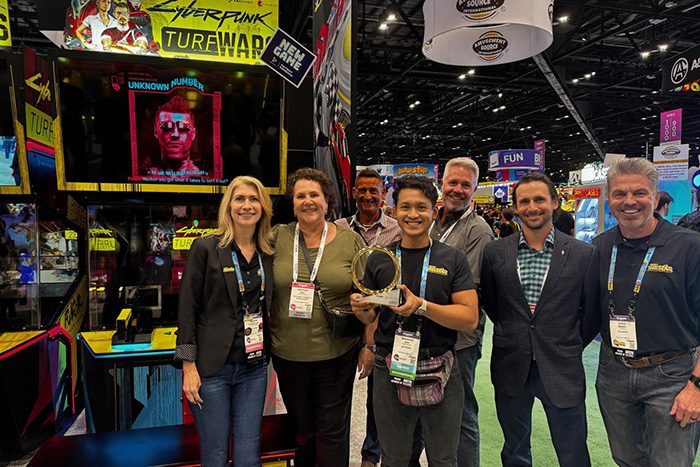
“My job title is 3D artist, but I do a variety of rewarding work in other areas. A recent project I’ve completed is an arcade game set in the world of Cyberpunk 2077.
“Through this project, I’ve worked on 2D art, animation, UI and UX work, product design, trailer production. I even got to suit up in motion capture gear for a mocap performance.
“The game recently won the Brass Ring Award at the IAAPA Expo in the US. It was a very rewarding project for me and I’m excited to see it roll out around the world.”
The future of creatives in an AI world
It wouldn’t be right to explore creative programs and careers without addressing the AI elephant in the room.
There is valid concern from the creative industry globally about AI ‘taking jobs’ and the consequences of removing the human experience from the creative process.
But Jonathan takes a pragmatic approach to the technology. AI is digital, he says, so it’s always been a part of the digital creative industry in some way, and it can be a useful tool that frees up creatives to do other work.
He does say, however, that he makes space for his students to discuss and learn about AI, including its ethical impacts in the creative sector.
“I think the challenge for us now and for our students is to ask, what is our creative value?”
“When you know your creative value, the humanity that you bring to AI, that’s the creative spark that makes the difference.”
(See how artists are responding to AI-generated art with clever projects like prompt brush, the first non-AI generative art model.)
Community is key to success
Knowing your worth as a young creative is a quality that Jonathan and his peers nurture in their students throughout the DCI program.
As students go out into the working world, they join not just an industry but a community: a dedicated, ever-evolving force made up of individuals bursting with talent, ideas and perspectives.
“Most of them are happy to help you out, to support and learn from each other,” Jonathan says.
“Yes, it’s a competitive place, but I always tell my students it’s one of the few jobs where you’re going to be paid to do what you love.”
The first group of Digital Creative Industries students are set to graduate in 2028. They’ll be armed with a digital toolkit and creative compass, ready to captivate audiences with new narratives.
Do you have creative ideas and want to bring them to life, or want immerse people in an unforgettable digital experience? Study the Bachelor of Digital Creative Industries.