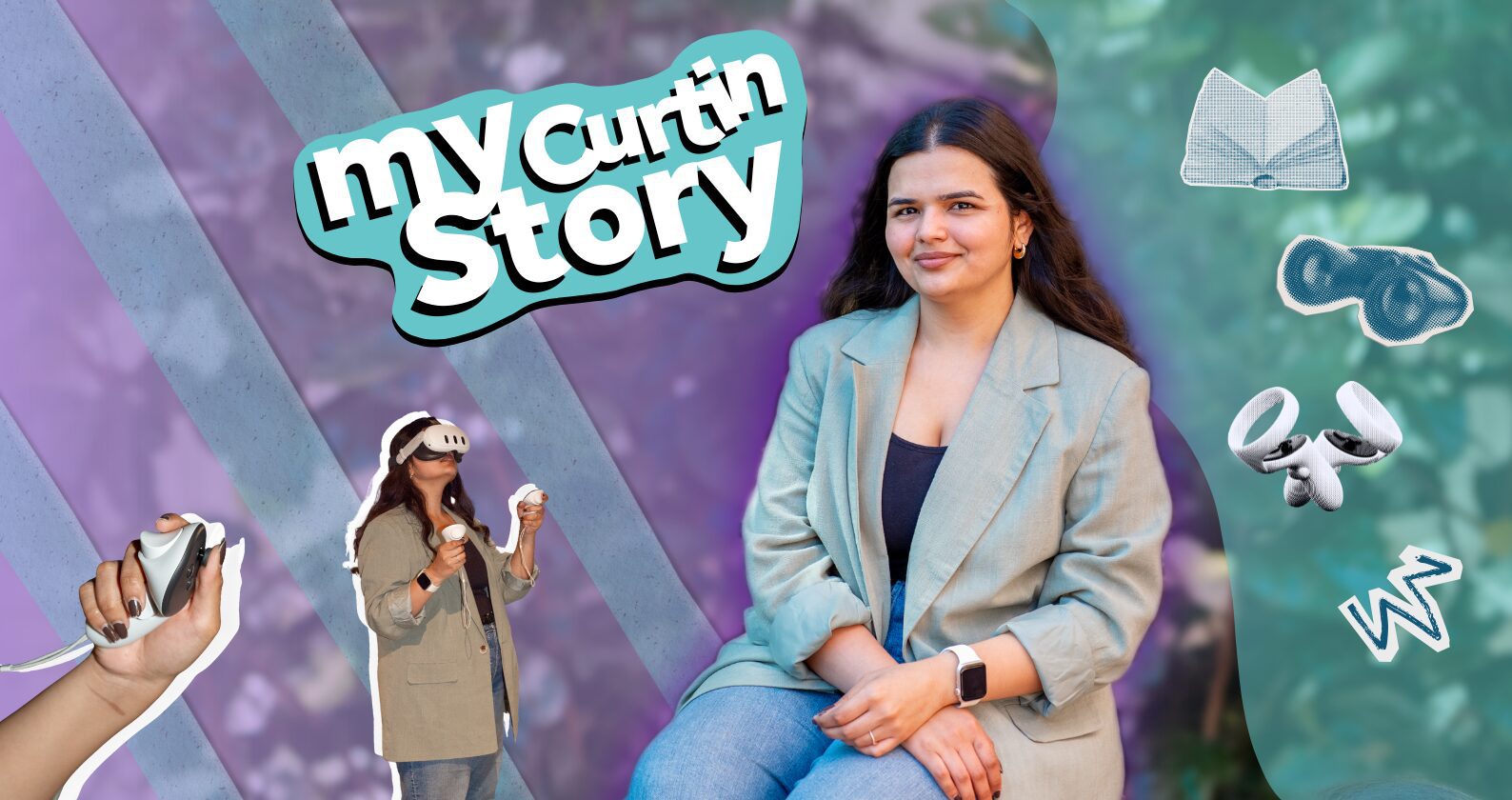
Anjali saw an opportunity to grow her knowledge in the start-up and innovation sector at Curtin. But what she didn’t expect to learn from her Masters of Innovation and Entrepreneurship was the power of visualisation at the Curtin HIVE. | Reading time: 3 minutes
With a background in marketing, sales and business development, Anjali saw how much opportunity there was across global markets in the start-up and innovation sector. Wanting to understand how innovative businesses ran, Anjali planned to pursue an MBA in London – until Covid travel restrictions put the idea on hold. Luckily, an even better-aligned opportunity was on the horizon, and Anjali followed her younger sister to Curtin to begin a Masters of Innovation and Entrepreneurship.
Anjali came in thinking about innovation and entrepreneurship in business terms – how does a start-up create value? How does their product come to market? Which segment does it go to? But what she quickly learned is the importance of people and culture over profit.
“When a start-up or innovator implements an idea, there is a story behind it and there are connected to it. When I meet innovators, they’re not innovating for the money, but because they want to help people.”
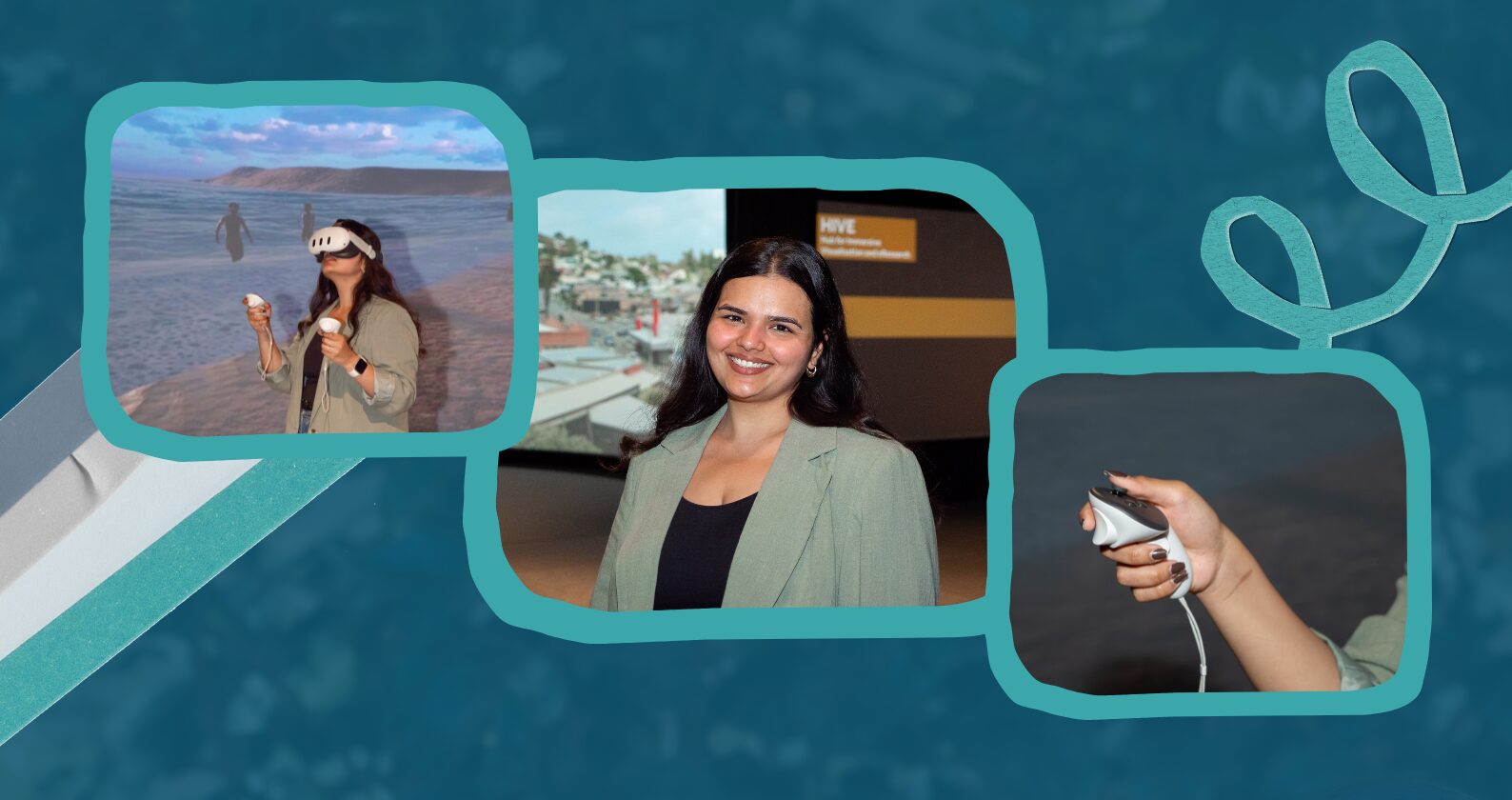
Another surprise learning was the power of visualisation. For Anjali, the most memorable part of her degree was a spontaneous visit to the Curtin Hub for Immersive Visualisation and eResearch (HIVE) in her first semester. Anjali volunteered at two visualisation sessions at the HIVE, which is a space on campus bringing together researchers, community, innovation and students through visualisation. Through visualisations and virtual reality, Anjali learned how Perth has evolved in innovation and technology over time, with a focus on First Nations perspectives.
The experience gave Anjali a realisation – innovation is not just about technology. It’s about how people evolve and how cultures are brought together. Part of Anjali’s role as a volunteer was to help facilitate reflection after the experience – what did participants notice and how did they feel? Coupled with how passionate and helpful the team at the HIVE are, hearing all the different observations that students had is what made the experience so special.
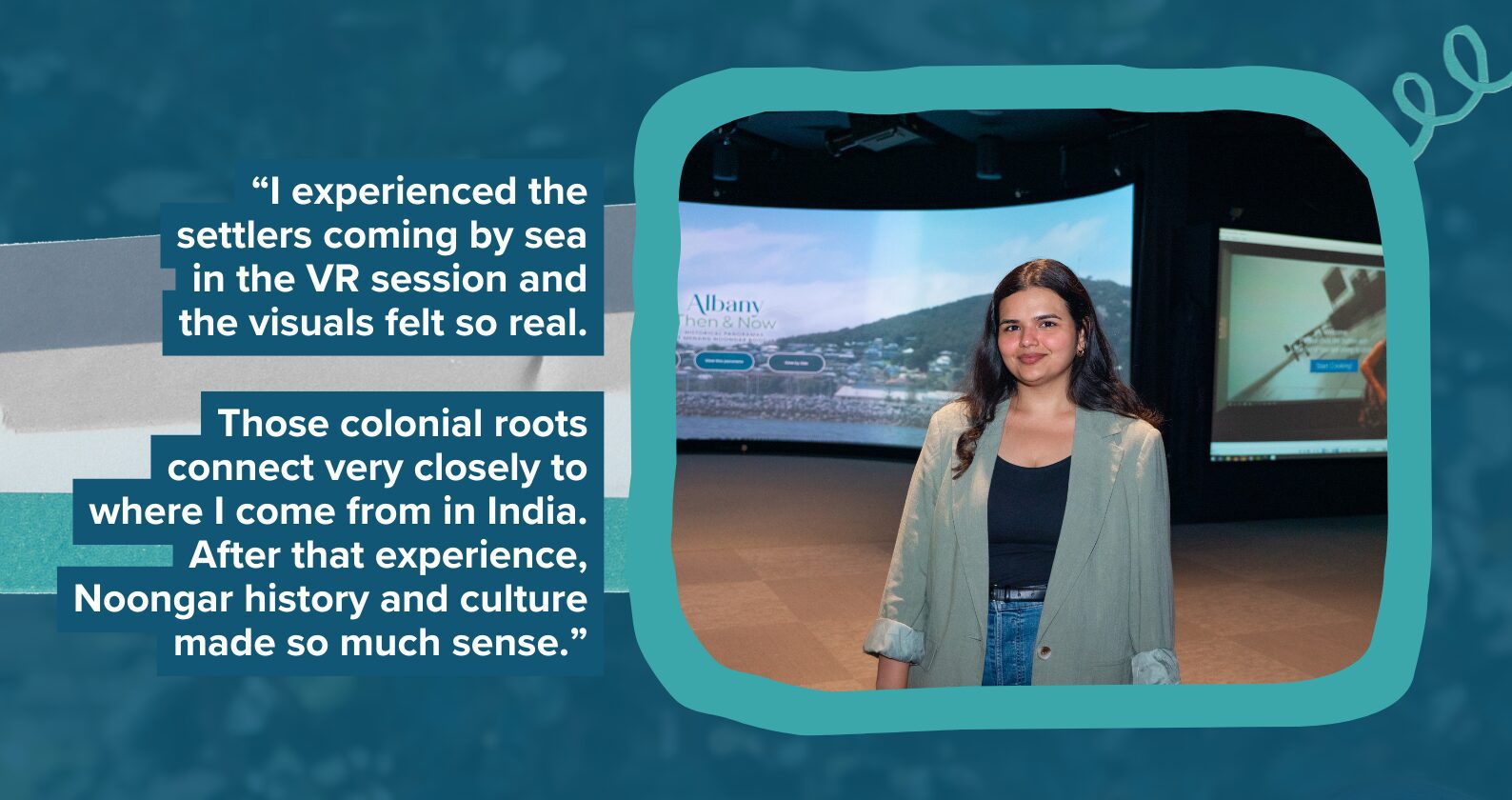
As an international student, Anjali feels her immersion at the HIVE was a much more effective way to learn than just reading about Aussie history. Through learning about the lasting impacts on colonisation on the Noongar community, Anjali came to better understand why First Nations cultures are so connected to land and water.
This is why she thinks the HIVE session is something every student should experience – especially if they’re new to Australia. For Anjali, being aware of the culture and history is a critical part of studying in a new country.
Looking to the near future at her career plans, Anjali feels that sales and marketing for innovators or startups is still the best fit for her. And, despite her visit being in her very first semester, the HIVE’s impact is still fresh in her mind. Anjali feels that it’s helped her a lot throughout her degree and often connected her learnings from the VR session with her coursework.
That’s why her advice is to take part in the many opportunities at Curtin – but the first one to start with is the HIVE. No matter how many students she’s met across her different units, she told them all to sign up and come in with an open mind.
“Don’t have assumptions of how it’s going to be, because you’re going to have a different experience to the person next to you. It’s amazing, mesmerising and will make you think and reflect and have questions.”