This internet browser is outdated and does not support all features of this site. Please switch or upgrade to a different browser to display this site properly.
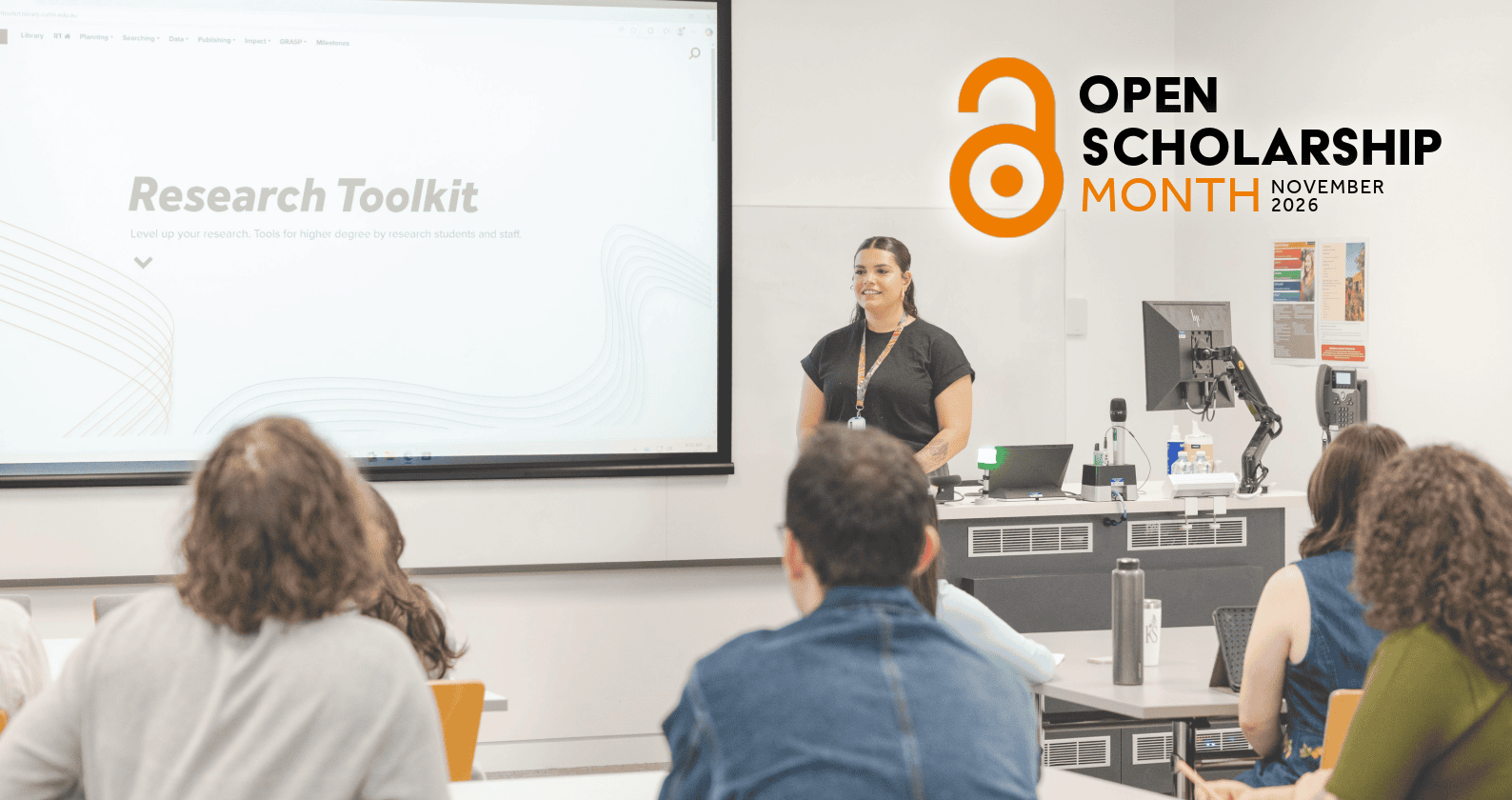
November is Open Scholarship Month at Curtin Library. Join us on a four-week journey exploring what Open Scholarship is, where to find open resources, how open publishing works and how to increase your research visibility.
Follow along each week and explore the resources available online.
🔎 Week 1: Open Research
What exactly is Open Scholarship? And why does it matter?
In the first week, we’re going back to basics – exploring the history of open research, what Open Scholarship means and why openness matters.
Open access and Open research: past and present Making research openly accessible is a condition of research funding, but this wasn’t always the case. Learn about how open access got started, the roadblocks to its realisation, and future of this growing movement.
Open Educational Resources: the next high impact practice
A recent report from AAC&U identifies Open Educational Resources (OERs) as a possible new High Impact Practice in tertiary education. Learn about what OERs are and why there is growing interest in OERs as alternatives to traditional textbooks.
Discover what’s out there, how to find open resources and how to use them in your research.
Adopt, adapt, overcome: incorporating Open Books into teaching materials
Open Educational Resources (OERs) present an exciting alternative to traditional textbooks. Often featuring interactive elements, or breaking out of the classical textbook structure, these titles can be incorporated into your unit materials as-is, or adapted for your specific context. Join this information session on how to find, incorporate, and even remix OERs for your unit readings.
What are Creative Commons licenses? How can they be used to create or re-use teaching materials? Learn about license terms, how to interpret them, and how to choose the right license for your situation.
You don’t have to reinvent the dataset: finding and reusing open data
Why start from scratch when someone may have already collected the data you need? This session walks you through where to find open datasets and how to evaluate whether they’re fit for reuse.
If you’re unfamiliar with copyright or open access, here is the place to start! Learn the basics of these important concepts and how they relate to teaching and research.
So, you want to publish your work openly, but you don’t know where to start? Join us for an explainer on the different open publishing options that are available to you and how the library can help support your journey!
You’ve done the research. Now help people find it.
Explore ways to increase your research visibility, understand metrics and make your work more discoverable.
Open Access Mythbusting
Your Open Scholarship questions answered! If it’s on the Internet, is it Open Access? How prestigious are Open Access journals? Can you peer review an OER? Join the library for a Q&A session on all things Open Scholarship.
Curtin’s Open Scholarship Policy: a local strategy for global impact
Did you know that Curtin University is part of a global movement to safeguard authors’ rights, preserve scholarly work, and make research publicly available? Learn about how the Open Scholarship Policy helps to make this happen.
The Open Access Advantage: increasing citation diversity
Want to give your research the best chance of reaching a wider, more varied audience? Join this online session unpacking a recent finding that shows open access research outputs attract more diverse citations, and discover how sharing your work openly can amplify its impact.
Want to learn more about Open Scholarship? Explore the Library’s resources and find out how you can make your research more accessible and easier to discover.