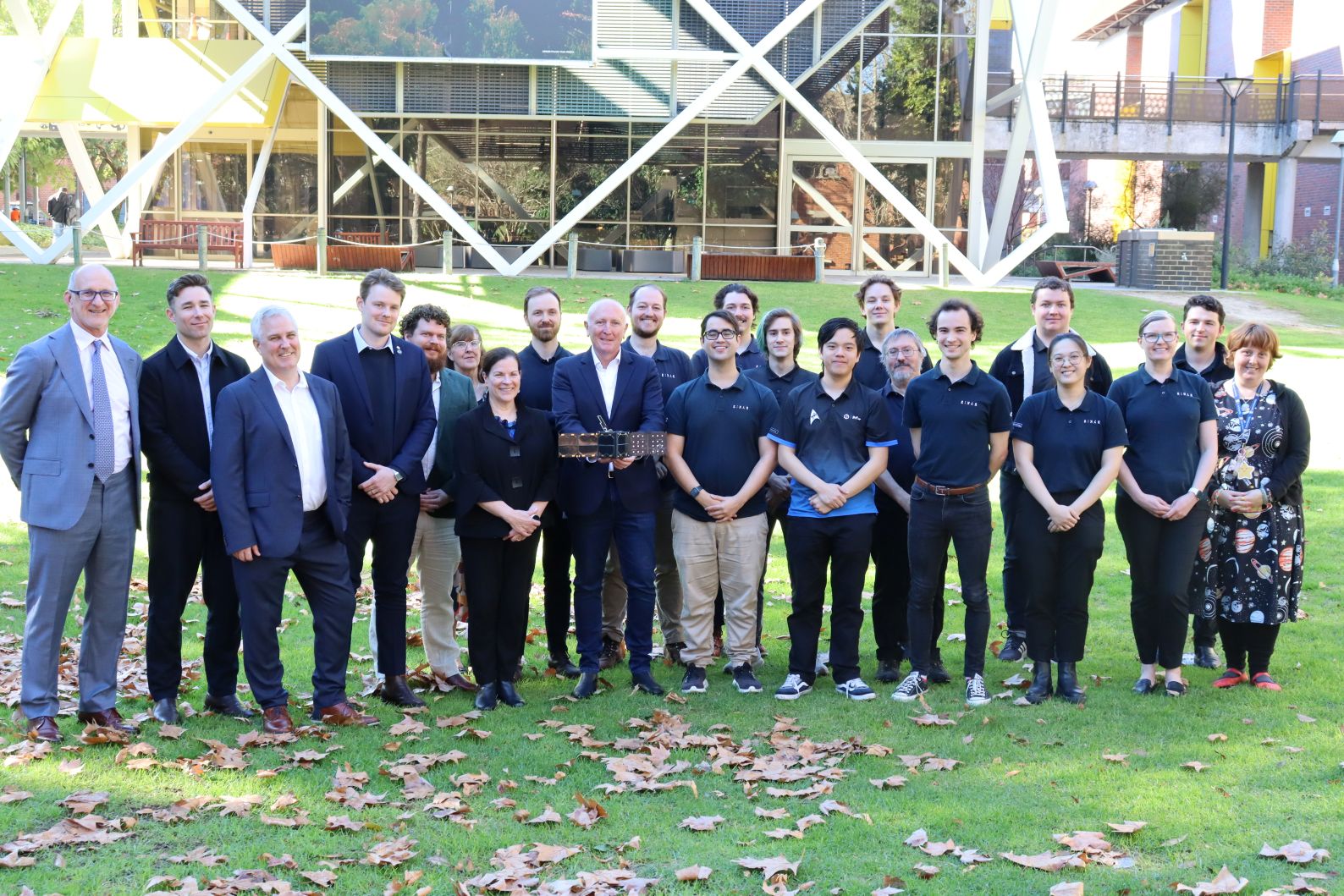
Western Australia’s homegrown spacecraft program will be expanded to deliver satellite missions that support school, industry and research engagement thanks to new support from the State Government.
Minister for Science and Innovation the Honourable Stephen Dawson announced that the Curtin-based Binar Space Program would be funded in partnership with Curtin University for another four years to 2030.
Curtin University Vice-Chancellor Professor Harlene Hayne welcomed the continued State Government support, adding it would take the WA-grown space program to new heights.
“This continued investment will help the Binar Space Program take its next giant leap and expand its reach to create even more opportunities for Western Australia,” Professor Hayne said.
“It will help inspire and equip students from primary school through to postgraduate levels with valuable STEM skills, while strengthening our research capability and growing partnerships with WA space companies that are helping to shape the future of the industry.”
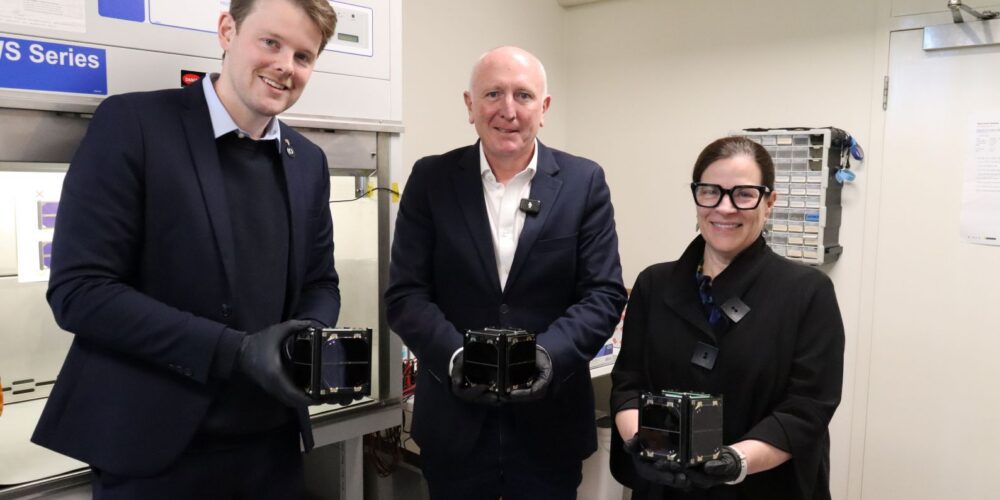
Binar Space Program Manager Dr Fergus Downey said the new funding would support the further development of WA’s space industry.
“Thanks to the support of the State Government, we’re going to continue training the next generation of the space workforce right here in WA, expand our research capabilities to develop more advanced engineering systems for small satellites and open our doors to industry to diversify their businesses and expand the State’s space industry,” Dr Downey said.
“Previous missions have taught us that space is relentless, and we’ve learnt a lot of valuable lessons about how to test and prepare our satellites for orbit, as well as how to train the next generation of satellite engineers to design systems to work in these environments.
“Our upcoming future missions will enable us to identify how we can support the WA industry to compete on the global stage and expand our research focus to bushfire prediction using satellite data.”
Curtin PhD student Mr Alex Conduit, aged 27, who has worked at the Binar Space Program as an undergraduate mechatronic engineering student and now as a postgraduate candidate, said it had been a dream come true.
“As a high school student interested in STEM, I would stare at the glow-in-the-dark stars on my bedroom ceiling and wonder how I might be able to help take humanity into space one day,” Mr Conduit said.
“Ever since working at the Binar Space Program as an undergraduate student to now in my PhD, I have to pinch myself that I’m lucky enough to work with such a brilliant and talented team building WA’s space industry right here.”
Launched in 2017, the Binar Space Program has already deployed four satellites and is now developing its next generation.
As well as carrying eight experiments designed, built and delivered by WA high school students, Binar-5, Binar-6 and Binar-7 will test advanced technologies for future deep space missions and demonstrate new Earth observation and navigation systems.
To view the Minister’s media release, visit here.