John Curtin Gallery presents two major exhibitions Christopher Pease: Terra Nullius and Reko Rennie: OA_RR on show from May 29 to August 23, 2026, bringing together powerful First Nations perspectives on history, identity and connection to Country.
Presented as part of the Gallery’s Makuru season program, the exhibitions foreground intergenerational memory and cultural resilience, across painting and immersive multi-channel video.
A combination of new large-scale paintings and loans from major public and private collections, Christopher Pease: Terra Nullius, reveals the Minang/Wardandi/Bibbulmun artist’s sustained interrogation of sovereignty, land and power.
Drawing on museum archives and 19th-century landscape painting, Pease reworks images that once cast Western Australia as empty and available for settlement, reinscribing Indigenous presence through bold Noongar iconography.
Shaped by themes of social justice, land use and Noongar identity, the artworkplaces Western art traditions in dialogue with Indigenous systems of knowledge to challenge colonial authority and reclaim space, transforming a doctrine of denial into a powerful assertion of survival, sovereignty and enduring connection to Country.
Pease said ‘Terra Nullius’ refers to land that is deemed to be legally unoccupied and was a term used by first settlement both on the east and west coast of Australia.
“This meant that the land could be legally claimed by the British colony,” Pease said.
“Admiral Sir James Stirling successfully lobbied the British Government to establish the new colony of Perth and part of the pretext for his proposal was ’Terra Nullius’.
“The canvas is often divided into sections much like the boodja (land) was divided into private property, other motives include multi-faceted iconography or scientific drawings, this layering provides underlying narratives for the viewers.”
Immersive in scale and sound, Kamilaroi/Gamilaroi artist Reko Rennie’s two major multi-channel video works, OA_RR (2016–17) and Initiation OA_RR (2021), foreground customised classic cars as powerful conduits of identity, memory and return to Country.
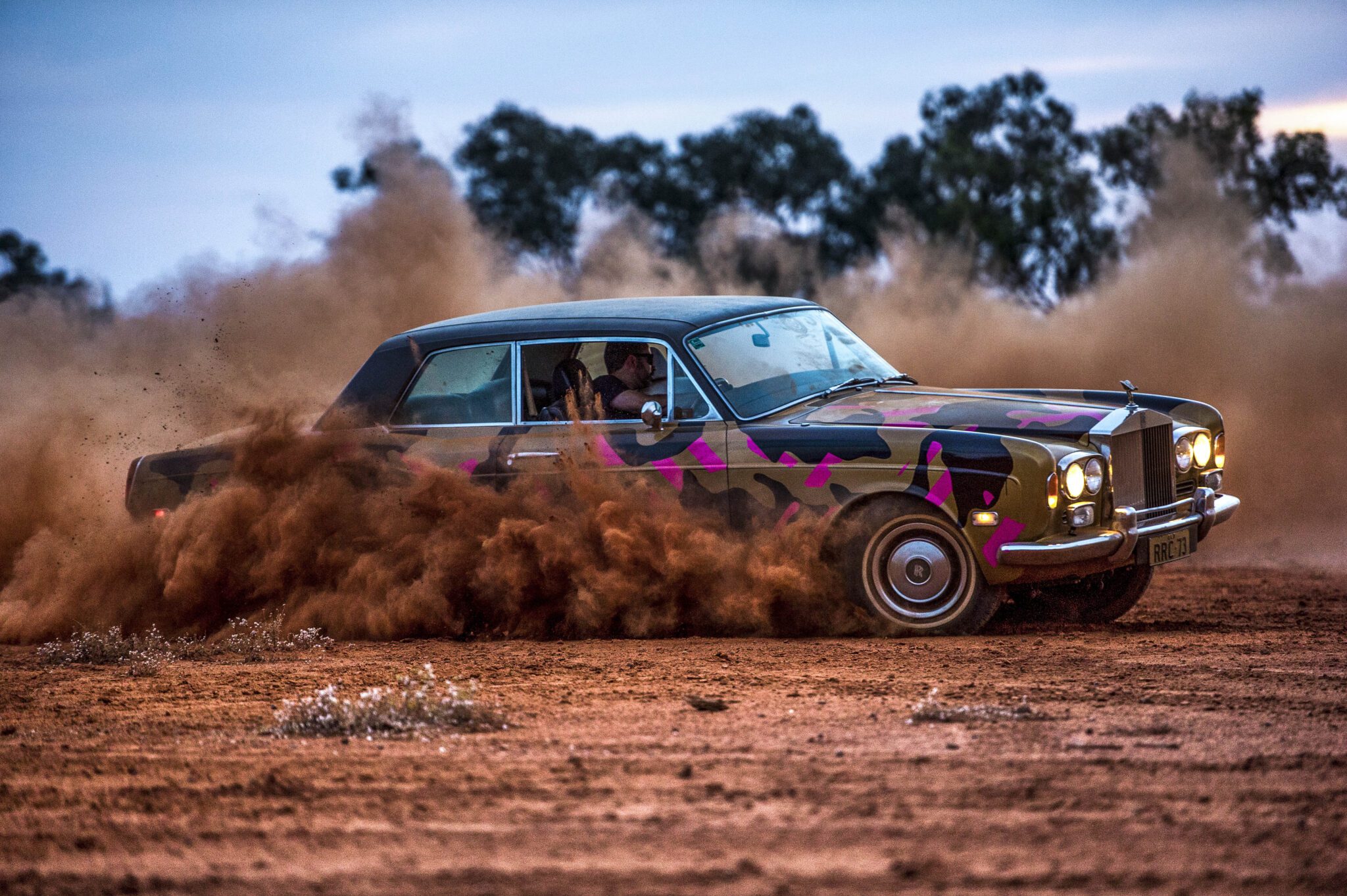
Soundtracked by Nick Cave and the Bad Seeds, OA_RR merges burnout culture with ceremonial mark-making, as Rennie takes a 1973 Rolls-Royce Corniche – hand-painted in his signature fluorescent camouflage and Kamilaroi diamond patterns – back to his grandmother’s Country.
Initiation OA_RR shifts to Footscray’s industrial streets, where a metallic pink 1973 Holden Monaro performs burnouts across an urban landscape tied to Rennie’s youth. Underscored by an operatic score by Deborah Cheetham, the work transforms car culture into a powerful expression of cultural continuity, remembrance and assertion.
Rennie said through his art he provokes discussion surrounding Indigenous culture and identity in contemporary urban environments.
“I was born in an urban environment where traditional notions of initiation were experienced in a completely different way to my ancestral home of the Kamilaroi/Gamilaroi people of Northwestern NSW,” he said.
Presented together, the exhibitions create a dialogue between place and perspective — from Noongar Boodja in Western Australia to Kamilaroi Country in New South Wales — highlighting both local and national narratives of resistance, survival and cultural continuity.
John Curtin Gallery Curator Lia McKnight said together, these exhibitions assert powerful, contemporary expressions of cultural continuity, resistance, and self-determination.,
“By bringing these projects into dialogue, the Gallery highlights two leading contemporary artists whose practices confront and reframe colonial histories,” she said.
“Rennie and Pease each activate landscape as a site of Indigenous sovereignty, memory, and connection to Country.”
Exhibition Details:
- Where: John Curtin Gallery, Curtin University, 200A, Kent St, Bentley WA
- When: May 29 – August 23 2026