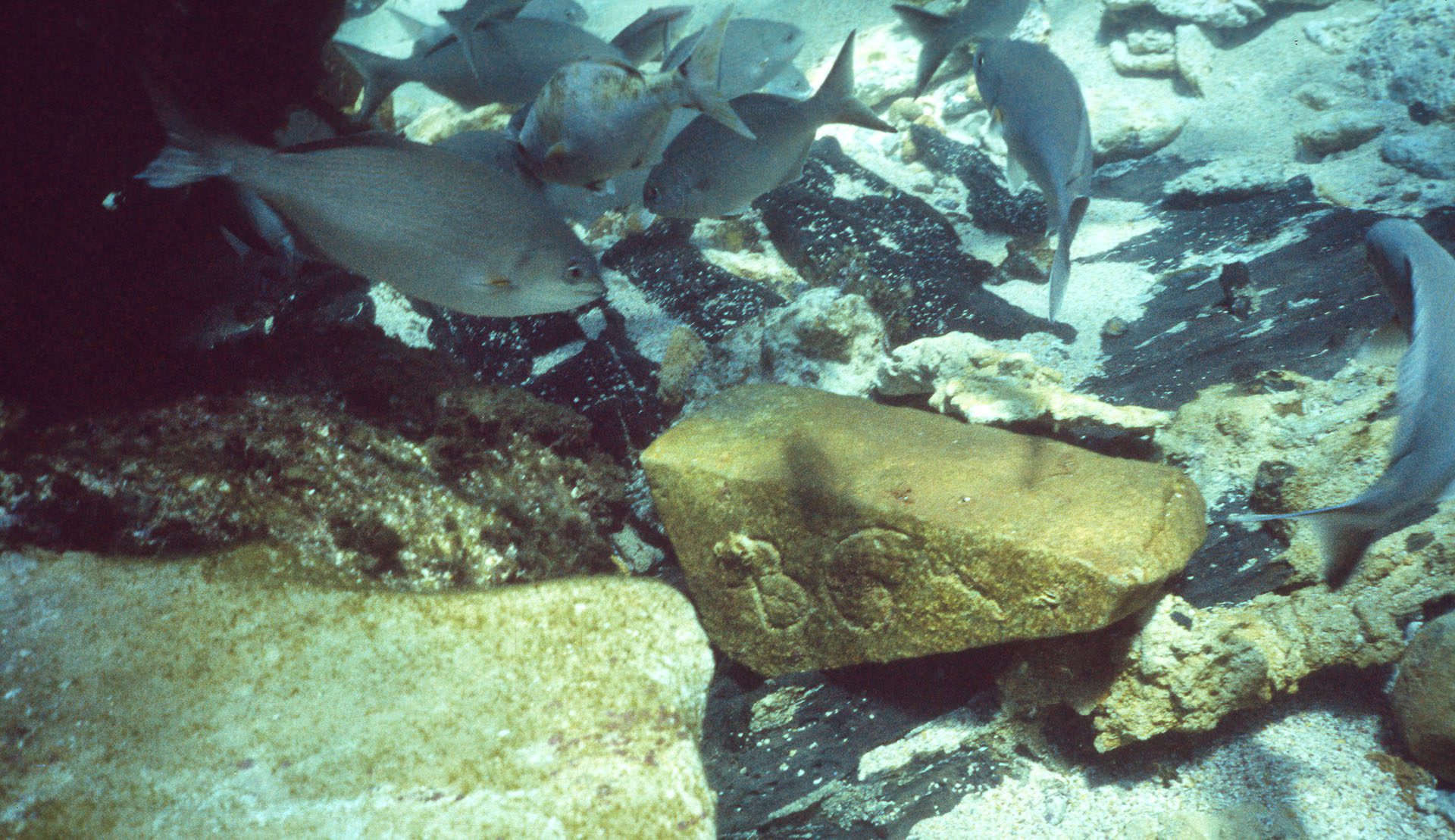
Using cargo recovered from one of Australia’s most infamous shipwrecks, new Curtin University-led research has revealed how surprisingly sophisticated global supply chains helped source and transport construction materials in the 17th century.
The study analysed stone blocks, bricks and ballast from the Dutch East India Company ship Batavia, which wrecked off the coast of Western Australia in 1629, revealing the materials came from multiple quarry sources in Europe — not a single site as previously assumed.
Lead researcher Dr Anthony Clarke, from the Timescales of Minerals Systems Group within Curtin’s School of Earth and Planetary Sciences, said the team set out to solve the long-standing mystery of exactly where the ship’s building stone came from, and whether it was sourced from one quarry or several.
“Historical records are incomplete, and after nearly 400 years underwater, these stones can look very similar, making them difficult to identify,” Dr Clarke said.
“We wanted to know if tiny mineral grains could give us a reliable fingerprint of where the stone formed, and help reveal how the Dutch East India Company sourced and transported materials across its global network.
“By analysing microscopic zircon minerals within the stone, we discovered that blocks which looked almost identical actually came from different quarry regions in what is now Germany.
“We found these stones were sourced from at least two different quarry areas, then brought together into a single shipment before being sent halfway around the world in a highly organised supply chain more than 400 years ago.”
Batavia was carrying prefabricated sandstone blocks likely intended for the Dutch East India Company’s main fortified headquarters in Jakarta, along with thousands of bricks and other building materials, when it wrecked in the Abrolhos Islands.
Using shipwreck samples supplied by the Department of Maritime Archaeology at the Western Australian Museum, researchers used advanced geochemical techniques known as detrital zircon U–Pb dating to trace the origin of the cargo — a method that can uncover hidden details even when materials appear identical.
Dr Clarke said the findings reveal parts of history that were undiscoverable through traditional records and visual analysis.
“Many shipping records have been lost over time, and the ocean can change how materials look,” Dr Clarke said.
“By studying these tiny zircon grains, we can uncover hidden details about where materials came from and how they were moved around the world centuries ago.
“The research also highlights the logistical complexity behind the Dutch East India Company’s expansion, including how building materials were sourced, consolidated and transported across vast distances to support colonial infrastructure.”
The Batavia shipwreck, discovered in 1963, is one of Australia’s most significant maritime archaeological sites and is well known for the dramatic mutiny and massacre that followed the wreck.
Research co-author, WA Museum Head of Maritime Heritage Dr Corioli Souter said the research highlights how much more can still be learned from historic shipwreck collections and the value of cross-institutional collaboration.
“Nearly 400 years after Batavia sank, the famous ship is still revealing new stories,” Dr Souter said.
“By combining museum collections with advanced scientific techniques, we’re uncovering hidden details about early global trade.
“Collaborations like this are vital for unlocking new insights from historic shipwrecks and sharing them with the broader community.”
The research team plans to analyse more stones from Batavia and other shipwrecks, comparing them with a wider range of European quarry sources to further map historical trade routes.
The paper ‘Bricks, Ballast, and the Batavia: Provenancing Dutch East India Company Cargo from a 1629 Shipwreck’, is published in the Journal of Archaeological Science: Reports.