We partner with governments and industries to drive defence-related research, innovation and workforce capability that strengthen Australia’s national resilience. This work is bound by our commitments to academic freedom, ethical research and the responsible use of knowledge.
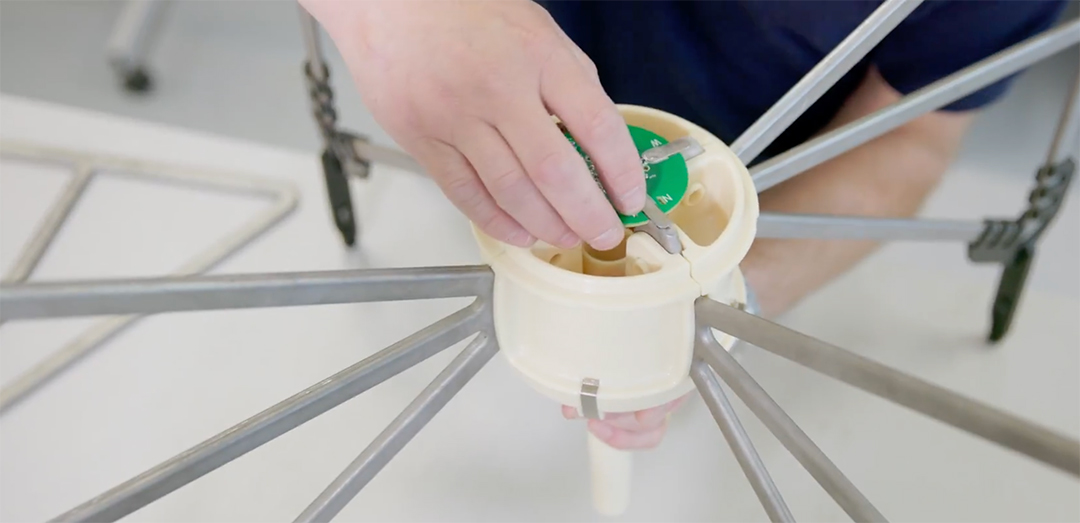
The portable radar that tracks without being tracked
Curtin researchers have harnessed their expertise in imaging distant galaxies to create a highly portable and ‘invisible’ radar system, with exciting potential applications for the defence and aerospace industries.
Defence
Several research teams are working in the areas of radar and radio, magnetic and infrared remote sensing, satellite technology, orbital object tracking and aerospace engineering. These include teams in the Curtin Institute for Radio Astronomy, Remote Sensing and Satellite Research Group and Space Science Technology Centre.
In partnership with Lockheed Martin and the Australian Government’s Defence Science and Technology Group (DSTG), we’re developing automated submarine decision support systems. Our Centre for Marine Science and Technology is also working on DSTG projects involving sonar array performance, sound propagation and new models for submerged sound.
In 2025, Curtin partnered with Greenroom Robotics, Australia’s leading maritime autonomy company, to advance the nation’s capabilities in autonomous systems, AI and innovation. The collaboration will build workforce skills, accelerate R&D and forge industry partnerships across space, energy, mining, agriculture and maritime, leveraging Greenroom’s AI software already used by AUKUS partners including Austal, the Royal Australian Navy and the US Department of Defense.
Space exploration
LifeSpringsMars is a Curtin-led, WA international mission concept targeting nodular opaline silica deposits found by NASA’s Spirit rover in the Columbia Hills of Gusev crater. These formations resemble Earth’s hot-spring deposits, known to preserve microbial biosignatures for hundreds of millions of years, making them a prime target in the search for ancient life on Mars. Led by Professor Martin Van Kranendonk, the concept proposes landing robotic assets to analyse these deposits in-situ, drawing on WA’s Pilbara region, home to some of Earth’s oldest stromatolite fossils (2.7–3.5 billion years old) used as Mars analogues.
The initiative unites Curtin’s Earth and Planetary Sciences school with industry partners Fugro and Uncharted AI, plus scientists from ECU, Arizona State and Auckland. In June 2023, Van Kranendonk led NASA, ESA, Australian Space Agency and CSIRO representatives on a Pilbara field expedition to study these fossils and inform Mars search strategies.
Assistive technology
Electronic Engineer, PhD candidate and sessional academic Shanelle Tennekoon has developed the “SmartWheel” – a lightweight AI-powered guidance system for powered wheelchairs, restoring independence of users with disabilities causing mobility impairments. By automating high-precision tasks like doorway traversal and hazard detection on low-cost edge devices, SmartWheel enables safer, independent navigation, reducing caregiver dependency, and improving quality of life for people with disabilities.
Mining
The Curtin Institute for Data Science (CIDS) has partnered with BHP to automate verification of drill hole locations, a process that was previously manual and only covered around 2% of holes due to the safety risks and time demands of field survey work. The phased system, built using post-drill aerial imagery and lidar-derived elevation models, now automatically detects drill collars, assigns them to specific rigs and flags calibration issues like GPS drift, lifting verification coverage to 80%+ with accuracy to within 7.2cm. Quality assurance time has dropped from two hours to under five minutes per check, translating into an estimated $962,000 in annual savings across 55 drill rigs.

Looking for a researcher?
Where we work

Curtin Institute for Data Science
The Curtin Institute for Data Science is an interdisciplinary knowledge accelerator to address the increasing demand for data science and high-performance computation.
Learn more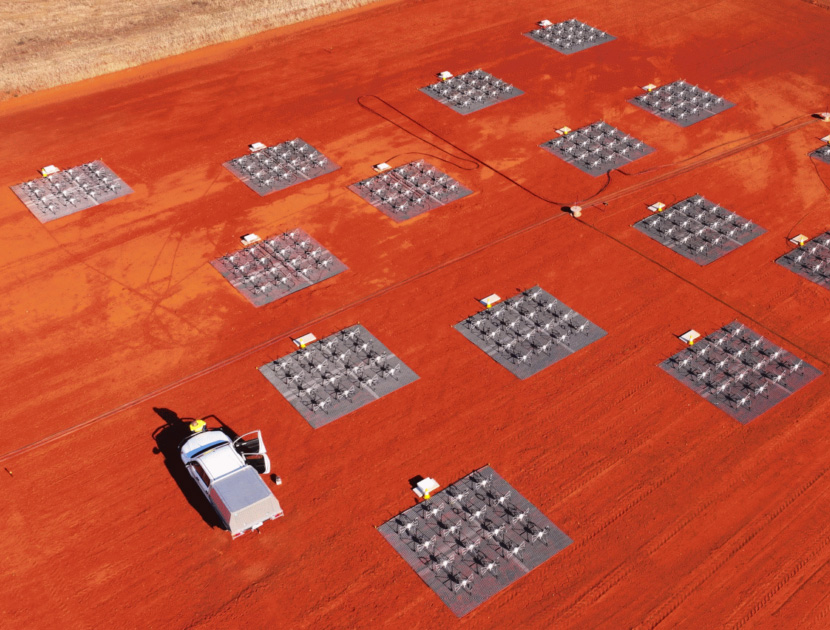
Curtin Institute for Radio Astronomy
As the driving force behind the Murchison Widefield Array, CIRA leads the way in low-frequency radio astronomy from remote Western Australia.
Learn more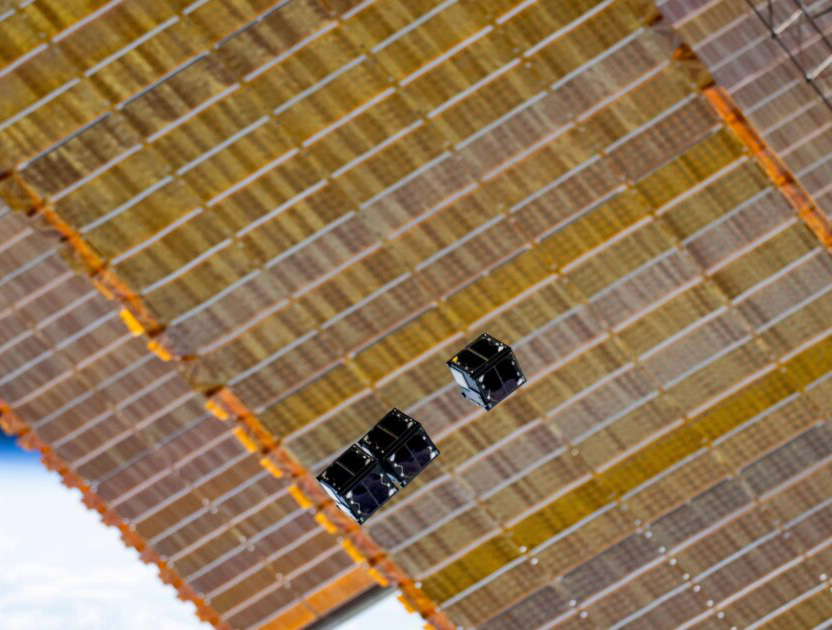
Space Science and Technology Centre
We do fundamental and applied space science research to build a strong future in space for Australia with the next generation of planetary explorers.
Learn morePartner with us
By partnering with Curtin, you’ll gain access to a network of experts and specialised facilities that can help your business become more efficient, sustainable and profitable. There are also opportunities for investment, licensing, mentoring and employment.
Reach out to Curtin’s Research Partnerships Team using the form below.
In the news
Project puts WA on path to become a global critical mineral hub
Cutting edge technology and devices across the world may soon use Western Australian gallium, with Curtin University and Nimy Resources…
New geoscience hub to play critical role in cleaner minerals future
A new Curtin University institute will connect government and industry with leading geoscience expertise to help transform WA’s economic future in…

Curtin study reveals rapid shift in public trust towards AI ‘chatbot therapists’
Public attitudes toward ‘chatbot therapists’ shifted dramatically during the rapid rise of generative artificial intelligence in 2023, according to a…

Google Maps founder finds his way to Perth for West Tech Fest
Western Australia will next month welcome some of the business world’s brightest minds, as thousands of delegates descend on venues…