Curtin MBA applications open
Take the next step in your career. Apply now to start your Master of Business Administration (MBA) in May 2026.
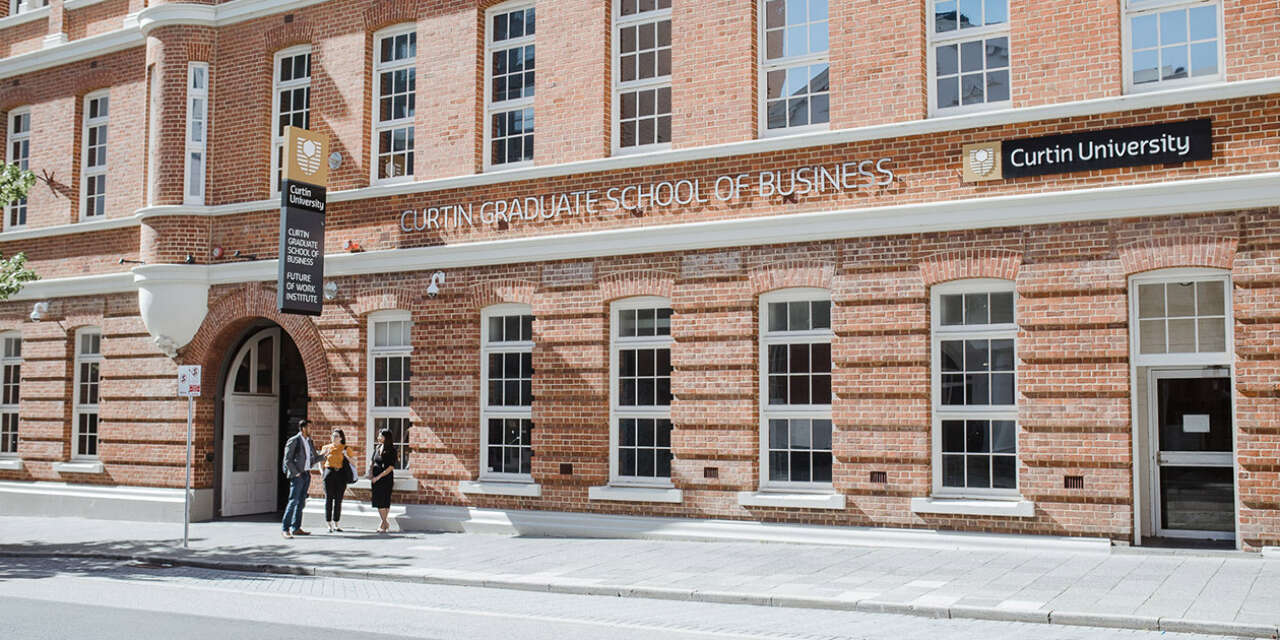
Take the next step in your career and become a confident leader with an MBA that integrates the principles and practices that are defining the era of globally responsible business.
| Intake | Application open | Application close |
|---|---|---|
Trimester 1, 2026 |
1 September 2025 |
Applications now closed! |
Trimester 2, 2026 |
Applications now open! |
20 April 2026 |
Trimester 3, 2026 |
18 May 2026 |
17 August 2026 |
Trimester 1, 2027 |
31 August 2026 |
17 December 2026 |
Trimester 2, 2027 |
11 January 2027 |
15 April 2027 |
Trimester 3, 2027 |
17 May 2027 |
12 August 2027 |


Take the next step in your career. Apply now to start your Master of Business Administration (MBA) in May 2026.
Take the next step in your career and become a confident leader with an Master of Business Administration (MBA) that integrates the principles and practices that are defining the era of globally responsible business.
Our MBA not only gives you the fundamental skills in financial management and economics, but also in the business leadership, decision-making and organisational strategies that underpin sustainable business practices. These areas of expertise align with contemporary practices and challenges in industry and reflect the unpredictability of global business markets.
Achieving a Master of Business Administration (MBA) from Curtin University means that you hold an internationally respected qualification from an elite global business school – recognised through triple accreditation by EQUIS, AACSB International and EFMD (Accredited MBA). Curtin is also respected as a signatory to the United Nations Principles for Responsible Management Education.
If you’re looking to advance from a technical role or change careers, this MBA will equip you with the skills, confidence and business knowledge to take the next step.
Curtin's MBA also gives you the opportunity to specialise in Business Administration, Digital Finance or Leadership.
As part of the Aberdeen-Curtin Alliance, students studying the Business Administration specialisation can study optional units online with the University of Aberdeen. This unique learning opportunity aims to connect entrepreneurs, strategic thinkers and change-makers in two of the world’s energy cities.
If you don't yet meet the admission criteria for the MBA, complete our Graduate Certificate in Business or Graduate Certificate in Business Futures as a stepping stone. This pathway won’t take you any longer, as completing the units in those graduate certificates will provide course credits towards your MBA.
Specialise in Leadership, Business Administration or Digital Finance.
You can complete your MBA over only four trimesters (about 15 months).
Curtin Business School is recognised as an elite global business school through accreditation by EQUIS, AACSB International and an EFMD Accredited MBA.

Embarking on an MBA at Curtin was the strategic move I needed to overcome career hurdles in banking. The program's comprehensive curriculum and hands-on projects have sharpened my strategic thinking and leadership – which has been essential for my growth at Westpac. It's been a challenging yet rewarding journey, broadening my knowledge and igniting my passion for leadership.
What you need in order to get into this course. There are different pathway options depending on your level of work and education experience.
For entry into the MBA, applicants require a relevant undergraduate degree from a recognised tertiary institution and at least three (3) years of relevant work experience. Alternatively, applicants to the MBA may have a relevant Graduate Certificate or Graduate Diploma with a Course Weighted Average of 65%, and three (3) years of relevant work experience. Entry to the course is competitive and applicants will be required to undertake an interview as the final stage of application assessment.
Applicants will be assessed for English based on the supplementary documentation you supply, for further information contact the MBA.Programs email address.
Curtin requires all applicants to demonstrate proficiency in English. The personal statement written and provided by applicants will be used as an assessment to meet the English language requirement for the course.
You may demonstrate English proficiency using the following qualifications and tests.
Writing
6
Speaking
6
Reading
6
Listening
6
Overall band score
6.5
Please refer to our application requirements before applying for this Curtin course.
Entry to the course is competitive and applicants will be required to undertake an interview as the final stage of application assessment.
For start dates, please view the academic calendar.

All endeavours are made to ensure location information for courses is up to date but please note they are subject to change.
The University reserves the right to withdraw any unit of study or program which it offers, to impose limitations on enrolment in any unit or program, and/or to vary arrangements for any program.
Please review information on how to apply for the campus of your choice
Please note that each campus has different application deadlines. View our application deadlines page for further information.
Apply nowThe offering information on this website applies only to future students. Current students should refer to faculty handbooks for current or past course information.
The information on this page may be subject to change. In particular, Curtin University may change the content, method or location of delivery or tuition fees of courses.
While Curtin uses reasonable efforts to ensure that the information provided on this page is accurate and up to date, errors and omissions sometimes occur. Curtin makes no warranty, representation or undertaking (expressed or implied) nor does it assume any legal liability (direct or indirect) for the accuracy, completeness or usefulness of any information.
You might find your answer in our frequently asked questions.
Submit your question via our online form and we’ll get back to you.
1300 222 888
8:30am to 4:30pm weekdays (Tuesday from 9:30am)
You’ll find Curtin Connect in building 102 on the Perth campus.
8:30am to 4:30pm weekdays (Tuesday from 9:30am)
For invitations to events, study tips and info on navigating your way to uni, join the Curtin community.
Look out for emails from us in your inbox.