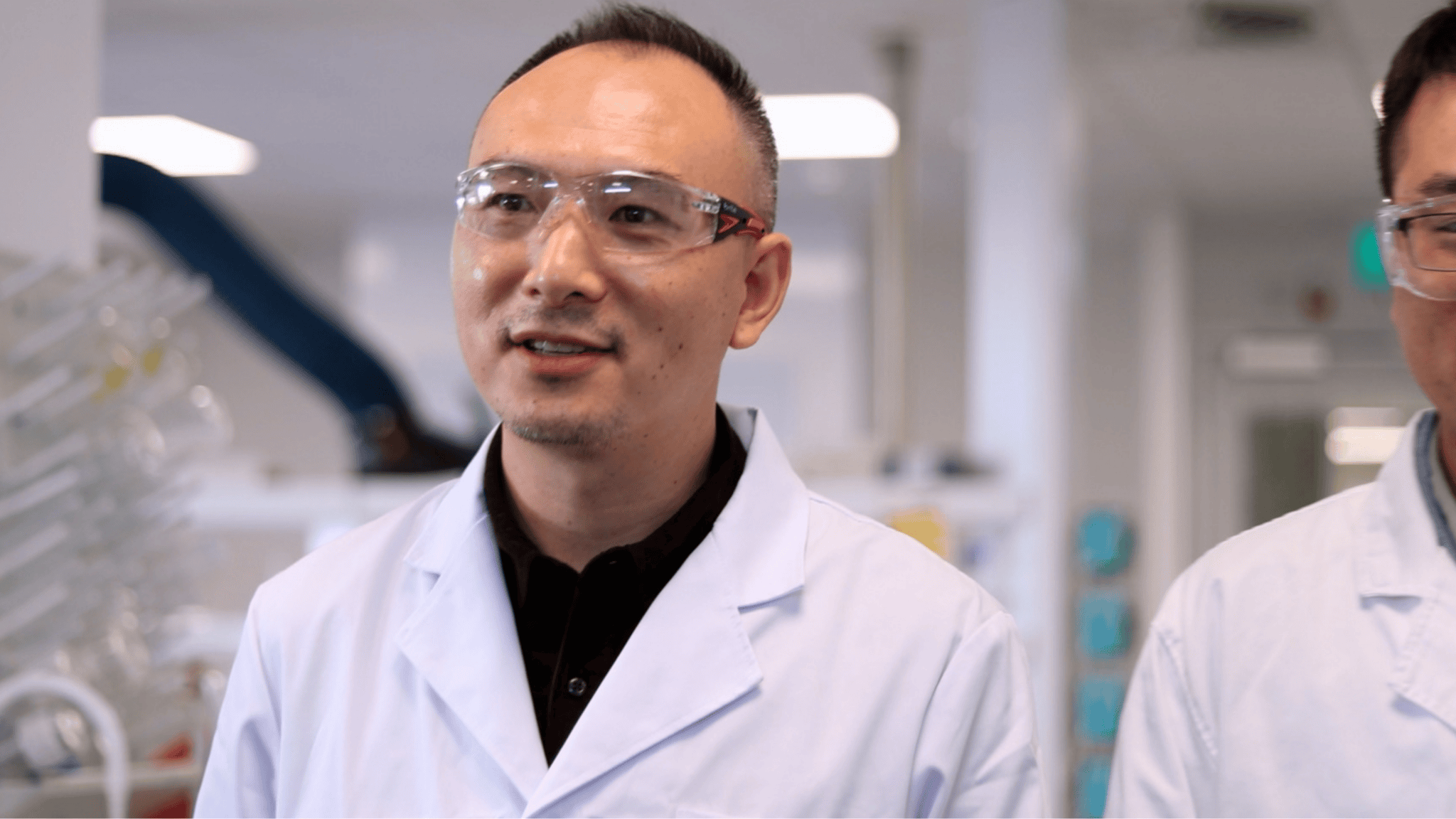
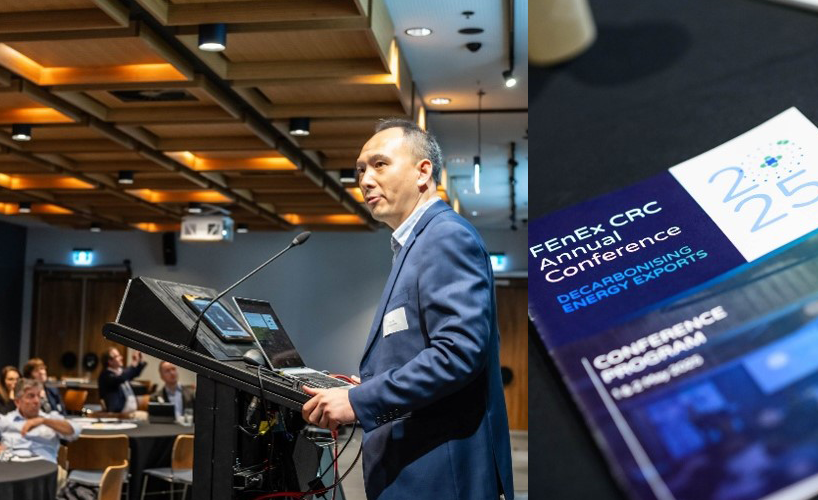
Meet Associate Professor Sam Xie from the Western Australian School of Mines (WASM). His work explores how hydrogen can be safely stored underground to support a cleaner energy future. Sam is passionate about mentoring the next generation of researchers and believes that good research starts with curiosity, collaboration and asking the right questions.
Describe your research in 3 words
Sustainable. Energy. Storage.
Tell us briefly about your field of research
My research focuses on how the subsurface can support the clean energy transition. I work on underground hydrogen storage, hydrogen–rock–fluid interactions, and emerging areas such as natural (geological) hydrogen systems. By combining laboratory experiments, modelling, and field-scale thinking, I aim to understand how renewable energy can be safely stored and recovered underground to support reliable, affordable, low-carbon energy systems.
At its core, my work sits at the intersection of geoscience, energy engineering, and sustainability, with strong links to industry needs and real-world deployment.
Research highlight
A key highlight of my recent work is advancing the understanding of hydrogen behaviour in geological formations, particularly how hydrogen interacts with water, rocks, and fractures at multi-length scale. This knowledge is critical for designing safe and efficient underground hydrogen storage, a technology expected to play a major role in decarbonising industry, power systems, and heavy transport.
More recently, I have been exploring natural hydrogen systems, including how hydrogen may be generated, migrate, and accumulate naturally in sedimentary basins such as the Perth Basin. This emerging research area has the potential to reshape how we think about future clean energy resources and positions Western Australia at the frontier of global hydrogen innovation.
I strongly integrate this research into teaching and student projects, ensuring that our graduates are industry-ready and trained in future-facing energy challenges.
If you could sit in with any Faculty for a day, which would you pick
I would love to spend a day with the Faculty of Humanities, particularly colleagues working in policy, communication, and social sciences. The energy transition is not just a technical challenge, but also a social one. Understanding how communities perceive risk, trust new technologies, and engage with change is just as important as engineering solutions. I believe stronger collaboration across faculties is essential for translating research into real societal impact.
What are your passions/hobbies outside of work?
Outside of work, I enjoy spending time with my family, reflecting on parenting and personal growth, and thinking deeply about how values shape both education and leadership. I’m also passionate about mentoring students and early-career researchers, particularly helping them find confidence and purpose in technically demanding fields.
What’s a fun fact about you that your colleagues would probably not know?
I’ve written a parenting book that bridges science, psychology, and values. It reflects my belief that whether in research, teaching, or parenting, people do their best when they are supported, understood, and trusted.
What’s the most valuable thing you’ve learnt in your career so far?
That impact takes time, and good research is built on curiosity, humility, and collaboration. I’ve learned that asking the right questions is often more important than having quick answers, and that meaningful progress happens when we listen carefully to students, colleagues, industry partners, and the community.
What’s a piece of advice you would give to your fellow colleagues, and students alike?
Stay curious, be kind to yourself, and don’t be afraid to work across boundaries. The most exciting ideas often sit between disciplines. For students especially, you don’t need to have everything figured out, but focus on learning how to think, ask questions, and adapt. Those skills will carry you much further than any single technical solution.
– – –
This piece was featured in Impact Focus – a quarterly newsletter bringing you the latest in Curtin research. Sign up here to get it delivered straight to your inbox!