Reading time: 4 minutes
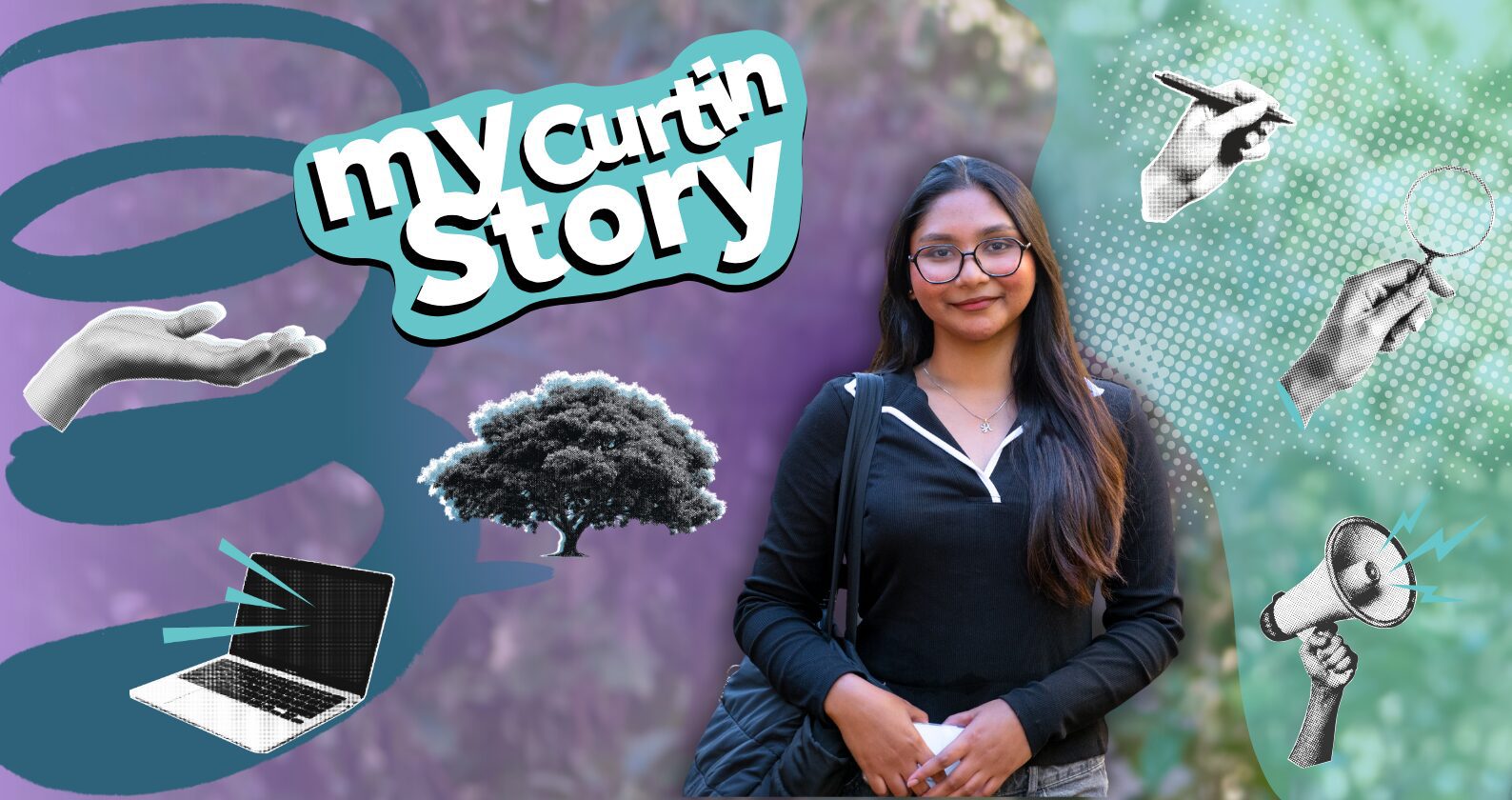
Habiba didn’t initially want to go into the environmental field. But with the support of other academics and her supervisors, she is excited to continue pursuing a career in academia and hopes to influence policy through research.
At the beginning of her bachelor’s degree in civil and environmental engineering in Bangladesh, Habiba was sure she wanted to work in structural engineering in the real estate industry. But when her environmental chemistry professor introduced her to the possibility of getting involved in research, she became a research assistant, which led her to pursue an environmental-related master’s program instead.
Now studying a master’s in environment and climate emergency at Curtin, and with a greater understanding of the effects of studying the environment, Habiba wants to use this knowledge to improve waste infrastructure and the circular economy in Bangladesh.
“We’re working with people, with plants and animals, with infrastructure and rivers; everything that we see and need in our regular life is impacted by the environment, and it’s something that should be treated really nicely.”
Habiba wished people knew more about how her degree balances practical and research work. As a coursework-based master’s, she completes a dissertation but also has the option to undertake an internship alongside it.
“It’s interesting because it keeps both options open for us. Later on, if we want a PhD, we can do that, and if we want to work within the industry, we can also do that.”
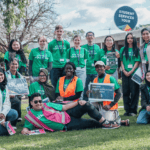
Habiba also highlights the environmental opportunities at Curtin beyond the assigned course structure; she undertook the Sustainability Challenge intensive unit for credit. Being able to work closely with academics and interact with different students she wouldn’t have before was a major bonus.
“It was so good because we had a multidisciplinary team, and all of us had our own ideas, and we got to work within our own expertise, so it was really fun.”
After completing her master’s, Habiba plans to work in academia by pursuing a PhD. Though she sometimes finds it hard to stay motivated, she remembers the hurdles she overcame that brought her to Curtin and reminds herself to push through no matter what.
“I’m living here alone without my family and everything. There’s a reason I’m here, so I should try to make the most out of it.”
Habiba hopes that her research in academia can be used not only for other research but also for policy and industry.
“I feel like it would be nice to see some way where actual publications or academic work get used within policy. And I think that’s something that I’ve seen happening here, within our field at least.”
Habiba has even heard that the dissertation she’s currently working on may be used or translated for policy in Western Australia.
“This is something that I wanted to experience, and that’s actually a possibility now. So, I’m looking forward to that.”
Habiba’s advice to other students, especially international students, is to know what you want out of your degree and to plan ahead.
“I did a lot of research into what units I wanted to take and figured out a couple of options because I knew all of the units were not always offered within every semester. I made sure I knew what options I wanted to explore if something’s not available or something doesn’t go how I planned.”
She also emphasises that students make the most out of their time during their degree and ask for help from academics.
“I want to make sure that the time that I have here and whatever I’m doing for my master’s and studies, I’m doing it the right way, and it actually ends up being useful to me. I just hope people ask for help and are not afraid.”
Not only is talking to academics a great way for students to consolidate their learning, but Habiba also became involved in a project for her dissertation after asking a research professor for help.
“I went to my research professor back then to ask for help with a unit. But then that got us talking, and then he was like, ‘We have a project coming in. It may not be an internship, but it might be your dissertation.’”
The project, a blend of civil and environmental engineering, aligned well with Habiba’s previous research experience and studies, making it the perfect project for her dissertation.
Habiba is deeply thankful for the academics who helped her get to where she is now, and she looks forward to continuing her pursuit of a career in academia.