A community-led education project is showing the power of Aboriginal knowledge in schools
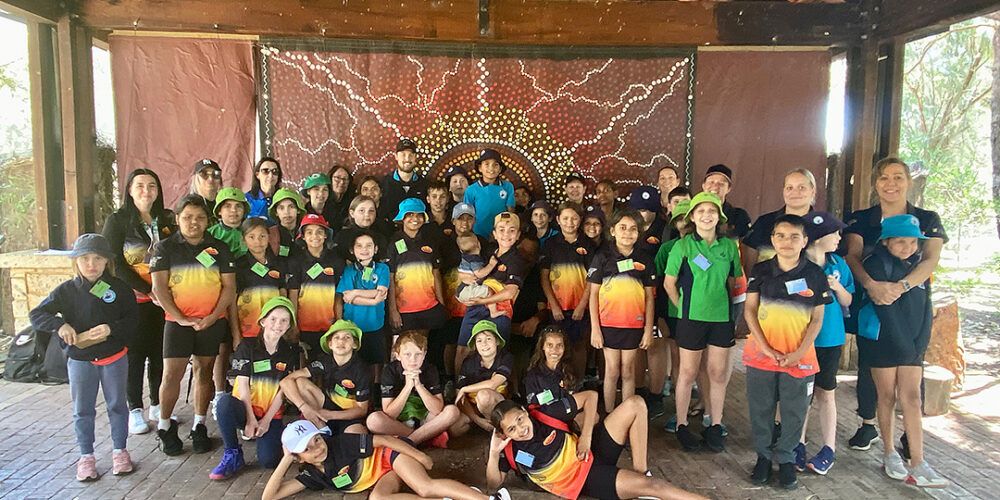
(Moombaki in action with On Country Learnings at Yanchep National Park with cultural educator Derek Nannup.)
What happens when children see their culture authentically echoed in the classroom?
For Aboriginal students involved in the Moombaki Cultural Learnings Project, the answer has been greater confidence, stronger connections and a deeper sense of belonging.
Named after the Noongar phrase, ‘where the river meets the sky’, the Moombaki project combines a virtual reality experience with classroom lessons that explore Noongar languages, culture and history.
Led by Curtin University, the project was developed alongside Elders, families, educators and children. Over the past few years, project researchers have worked with schools across Boorloo (Perth) to explore how Aboriginal knowledge, language and cultural practices can become a meaningful part of everyday learning.
The result is a model that is helping Aboriginal children thrive while strengthening understanding and respect across entire school communities.
Lead researcher Professor Cheryl Kickett-Tucker AM said the project was built on a simple principle: communities know what works best for their children.
“Moombaki has shown that when Aboriginal Elders, families and educators work together, children thrive,” Professor Kickett-Tucker said.
“Noongar values such as humour, trust, warmth and connection must be at the heart of schools if we are serious about creating environments where Aboriginal children feel safe, valued and supported.”
The project has brought together Aboriginal and non-Aboriginal educators, local Elders and families to co-design learning experiences that reflect culture, Country and community.
Storytelling, language, cultural knowledge and shared experiences have become powerful tools for learning, helping the children strengthen knowledge and pride in their identity while creating stronger connections with their classmates and teachers.
Among the project’s innovations is a virtual reality learning experience, Moombaki Noongar Quest that introduces Aboriginal knowledge and storytelling in new and engaging ways, while a Cultural Integrity Audit provides schools with practical guidance to help create culturally safe learning environments.
Professor Kickett-Tucker said the project demonstrates the importance of genuine partnerships and recognising Aboriginal knowledge as a strength.
“By embedding Aboriginal knowledge and practices such as storytelling, ceremony and language revival, we can build stronger identities, healthier children and more respectful classrooms for everyone,” she said.
As NAIDOC Week celebrates 50 Years of Deadly, the Moombaki Cultural Learnings Project highlights the enduring value of Aboriginal knowledge and the role it continues to play in nurturing future generations.
To find out more about Indigenous education and research at Curtin, visit curtin.edu/karda-research.