Major overview
This course is one of 16 majors offered in the Bachelor of Science.
Biochemists study the molecular structures and processes that form the foundation of living matter.
In this course, you will study the core principles of chemistry, molecular structure and chemical reactivity, and how they are applied to biological molecules.
You'll study biological, medicinal and natural-product chemistry, plus complementary units in cell biology, molecular biology and molecular genetics.
You’ll investigate molecular systems that regulate cell growth – including signalling and defence, and related metabolic pathways. You’ll also study molecular recognition and its applications in biosensors, drug design and optimisation, and monitoring the impacts of exogenous compounds on living systems.
Within Biochemistry, you can choose to specialise in either Chemistry or Environmental Biology (read more about these specialisations in the Course structure tab).
How to study this major
A major is a set of eight or more units you complete as part of a degree, including at least two in your final year. To study this major, you’ll need to apply for one of the degrees listed below.
Double degrees
Some units vary between degrees but provide similar core knowledge and learning experiences.
Career outcomes
Biochemists in Australia enjoy a dynamic career landscape, with opportunities in healthcare, pharmaceuticals, agriculture, environmental science and other sectors.
Careers
- Biochemist
- Biotechnologist
- Forensic scientist
- Medicinal scientist
Industries
- Biotechnology
- Agriculture
- Healthcare
Professional accreditation and recognition
This course with the Chemistry specialisation is accredited by the Royal Australian Chemical Institute (RACI).
Why study at Curtin?
Professional recognition
Graduates specialising in Chemistry may be eligible for membership of the Royal Australian Chemical Institute (RACI).
Specialist pathways
Our Chemistry specialisation delves into bionanotechnology, IT and biocompatible materials; or you can specialise in Environmental Biology to focus on the environmental applications of biochemistry.
Advanced teaching and research labs
At Curtin's Resources and Chemistry Precinct, you can engage with practising chemists working in advanced analytical facilities.
Course and career advice
Get guidance on choosing your course and planning your career with advice written to support your next step.
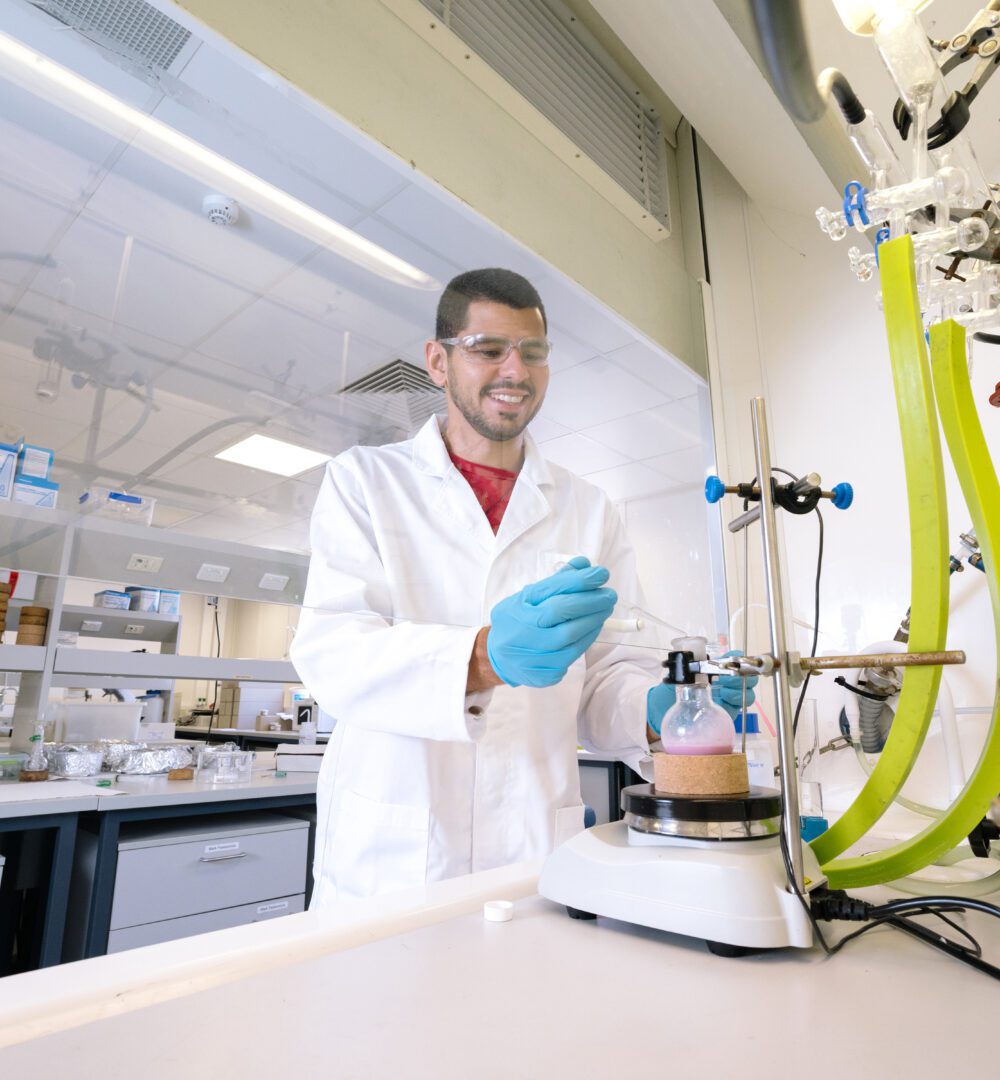
How to become a scientist
No-one will ever ask, what’s the point of a science degree? What they’ll ask is, which science degree is right for me? Who doesn’t feel…
Major structure
Choose your specialisation
Within Biochemistry, you can choose to specialise in either Chemistry or Environmental Biology.
Chemistry
In this specialisation you will study advanced aspects of chemical science. You’ll use complex equipment and procedures to understand the science that underpins biochemistry; and make, analyse and monitor chemicals in the environment.
Environmental Biology
Environmental scientists are needed to understand ecological functions and apply this knowledge to solve issues related to land degradation, urban and regional development, impacts of resources extraction and processing, biodiversity loss and pollution.
This specialisation focuses on the environmental applications of biochemistry. You'll develop skills in experimental design, statistics, critical thinking and communication – gaining the expertise to undertake environmental research and apply it to real-world challenges.
Detailed course structure and unit information
For detailed information and course structure, visit our Handbook.
How to apply
This major is part of a degree. To apply, choose the degree you want to study and review its entry requirements. Then, prepare any required documents and submit your application before the deadline for your chosen intake.
After you receive and accept your offer, you can enrol in this major either at the start of your degree or later in your studies, depending on your course structure.
Choose your degree
To study this major, you'll need to apply one of the degrees listed below.Double degrees

For full entry requirements, fees and information for international students, visit the course page.
Explore more
Find more resources to help you take the next step in your Curtin journey.