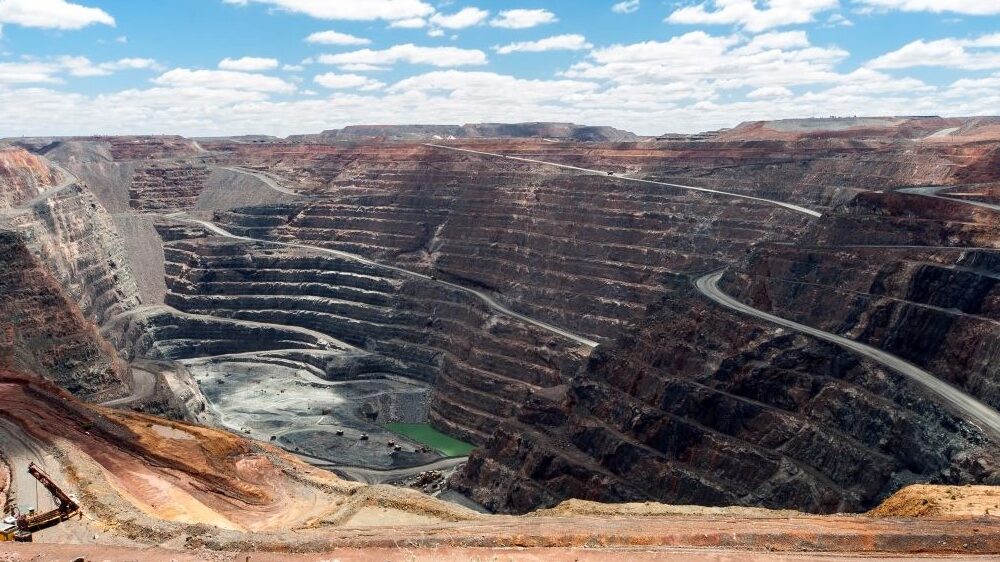
Iron ore tailings in the Pilbara remain difficult to rehabilitate because moisture, salinity buffering, and microbial activity cannot be sustained at the root–substrate interface under arid conditions. Current rehabilitation approaches rely heavily on bulk amendments and empirical trial-and-error strategies, resulting in inconsistent vegetation establishment and high closure costs.
This project introduces a new mechanism-driven framework for mine rehabilitation based on “spatially engineered reactive interfaces.” Rather than treating soil as a passive medium, the project investigates how engineered carbon–mineral interfaces can actively regulate moisture persistence, ionic buffering, and microbial activation directly at the rhizosphere scale.
The research is centred on a transport–reaction coupling parameter (Ψ), which links moisture transport and interfacial reaction kinetics to biological activation in tailings systems. The project will experimentally determine how Ψ governs the transition between biologically inactive and self-sustaining rhizosphere conditions, enabling predictive design of amendment systems for iron ore tailings rehabilitation.
The work combines materials engineering, transport phenomena, soil-interface science, and biological validation to develop a predictive framework for ecosystem establishment in extreme substrates relevant to Western Australian mining environments.
Aim
The project aims to establish a predictive engineering framework for rhizosphere activation in iron ore tailings by quantitatively linking moisture transport, interfacial reaction kinetics, and biological establishment processes.
Objectives
The candidate will:
- synthesise engineered biochar–mineral interface systems with tunable transport and buffering behaviour,
- quantify effective moisture diffusivity and interfacial reaction kinetics under partially saturated conditions,
- experimentally determine the transport–reaction coupling parameter (Ψ),
- evaluate plant establishment and microbial activation across different coupling regimes,
- identify threshold conditions associated with successful rhizosphere activation,
- develop structure–function relationships linking interface architecture to biological outcomes.
The project will involve laboratory experimentation, mesocosm validation, materials characterisation, and reactive transport analysis.
Significance
This project addresses a major challenge facing mine closure and rehabilitation in Western Australia: achieving reliable, self-sustaining vegetation establishment in iron ore tailings under extreme climatic conditions.
The research introduces a step-change from empirical amendment selection toward predictive, parameter-driven rehabilitation design. By establishing measurable transport–reaction thresholds governing rhizosphere activation, the project aims to reduce reliance on repeated field trials and improve first-pass rehabilitation success.
The outcomes are directly relevant to major mining operators including Rio Tinto, BHP, and Fortescue, particularly in reducing topsoil dependence, lowering rehabilitation costs, and improving long-term closure performance.
Scientifically, the project advances a new interface-engineering framework for ecosystem establishment in extreme substrates, with broader relevance to mine rehabilitation, soil functionality, and engineered environmental systems.
Ideal Candidate
We are seeking a motivated PhD candidate with a background in chemical engineering, environmental engineering, materials science, environmental science, soil science, or related disciplines. The ideal applicant should have strong analytical, modelling (e.g. MATLAB), and problem-solving skills, with an interest in environmental materials, mine rehabilitation, transport phenomena, or reactive systems. Experience in laboratory experimentation, materials characterisation, environmental testing, or data analysis will be advantageous. The candidate should be capable of working independently as well as within an interdisciplinary research team and must satisfy the eligibility requirements for enrolment in a PhD program at Curtin University.
This project is open to International and Domestic applicants.
Internship
This project provides opportunities for interdisciplinary research training in mine rehabilitation, engineered soil systems, and environmental materials engineering. The candidate may engage with researchers and external stakeholders working in areas related to tailings rehabilitation, soil functionality, biochar systems, and environmental restoration. Training opportunities may include laboratory experimentation, mesocosm-scale validation, advanced materials characterisation, and development of predictive transport–reaction models relevant to rehabilitation of iron ore tailings under Western Australian conditions.
Scholarship
If you are identified as the preferred candidate for this project, you may be considered for an RTP scholarship.
Enquires and How to Apply
For enquires about this opportunity contact Dr Arun Vuppaladadiyam at arun.kv@curtin.edu.au
To formally apply submit an Expression of Interest to Dr Arun Vuppaladadiyam during the Central Scholarship round (July 1st – July 31st 2026)