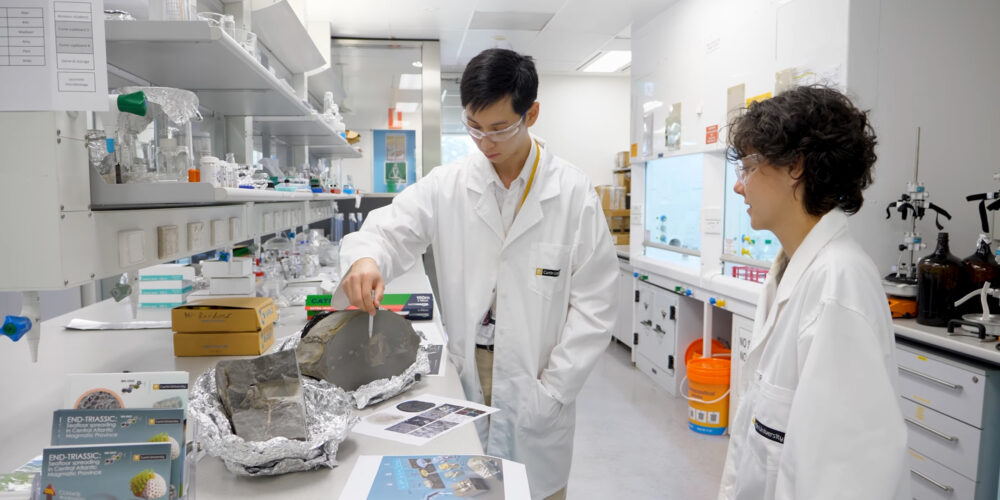
The project will investigate the developmental morphology of mineralised cartilage in shark embryos and across ontogenetic sequences, using a combination of comparative anatomy, histology, high-resolution imaging, and micro-computed tomography (micro-CT). By integrating developmental data from extant species with insights from the fossil record, the project aims to reconstruct how skeletal tissues have evolved following the loss of endochondral bone in this major vertebrate lineage.
Chondrichthyans (sharks, rays and chimaeras) are unique among jawed vertebrates in lacking endochondral bone, despite evidence that this tissue was present in their ancestors and subsequently lost during evolution. Instead, they possess a distinctive form of mineralised cartilage that performs many of the same structural and functional roles as bone. This tissue is lightweight, mechanically resilient, and adapted to demanding environmental conditions, including large pressure gradients associated with vertical migrations and reproductive movements across depth zones. Understanding how this tissue forms during development, and how its structure varies across species, is essential for interpreting both its evolutionary origins and functional properties.
The project will adopt a comparative developmental approach, focusing on embryonic and juvenile stages to identify the processes underlying cartilage mineralisation. The successful candidate will work with a combination of newly generated and existing specimen collections, including embryos, developmental series, and fossil material. Analytical techniques will include histological sectioning, advanced imaging (including micro-CT scanning and 3D reconstruction), and quantitative morphological analysis. The integration of palaeontological and developmental datasets will enable a deeper understanding of how skeletal tissues have been modified across evolutionary time.
Aims
The overarching aim of this project is to characterise the morphology and developmental trajectory of mineralised cartilage in extant chondrichthyans in order to better understand its evolutionary origins and functional properties.
Specifically, the project seeks to:
• Investigate the micro- and tissue-level architecture of mineralised cartilage across selected chondrichthyan taxa
• Identify developmental features associated with mineral deposition and tissue organisation
• Contribute to a broader understanding of how endochondral bone loss has been compensated by alternative skeletal strategies in vertebrates
• By addressing these aims, the project will generate foundational data linking phenotype (morphology) with genotype (gene expression), an essential step in advancing evo-devo research in non-model vertebrates.
Objectives
To achieve the project aims, the successful candidate will undertake the following objectives:
- Comparative Morphological Analysis
Conduct detailed histological and microscopic analyses of mineralised cartilage from selected chondrichthyan species, using histology and light and confocal microscopy, micro-CT. - Characterisation of Mineralisation Patterns
Identify and describe patterns of mineral deposition, tissue organisation and structural variation across developmental stages and taxa. - Developmental Interpretation
Infer key developmental processes involved in cartilage mineralisation, including cellular organisation and potential growth mechanisms. - Integration with Molecular Datasets
Collaborate with existing transcriptomic studies to align morphological observations with gene expression patterns, enabling hypotheses about the regulation of mineralisation. - Evolutionary Contextualisation
Situate findings within an evolutionary framework to understand how the loss of endochondral bone has shaped chondrichthyan skeletal biology.
This project will provide training in advanced imaging, morphology, and interdisciplinary research at the interface of evolutionary biology and palaeontology.
Significance
This project addresses a fundamental question in vertebrate evolution: how skeletal systems adapt following the loss of a key tissue type. By focusing on chondrichthyans, it explores a natural experiment in evolutionary innovation, where bone has been replaced by a mechanically effective alternative.
The outcomes will be significant in several ways:
• Advancing evolutionary developmental biology
The project will contribute critical data linking developmental processes with evolutionary change, addressing a major gap in our understanding of vertebrate skeletal diversity.
• Enabling genotype–phenotype integration
By providing detailed morphological characterisation, the work will enable meaningful interpretation of transcriptomic datasets, strengthening the integration of molecular and anatomical approaches.
• Informing biomaterials research
Insights into the structure and function of mineralised cartilage may inspire the development of novel lightweight, resilient materials for medical applications, including bioprosthetics.
• Building foundational knowledge
Given the historical emphasis on adult morphology, this project will shift the field towards a developmental perspective, establishing a baseline for future comparative and functional studies.
This is an excellent opportunity for a high-achieving Honours graduate to undertake a PhD project with both fundamental and applied relevance, contributing to cutting-edge research at the intersection of evolution, development and materials science.
Internship
Internship opportunities at the Western Australian Museum through an MOU with Curtin University.
Ideal Candidate
We are looking for an interdisciplinary applicant who is self motivated and interested in learning new techniques and workflows. Good laboratory skills and/or imaging skills are desired. Candidates must be eligible to enrol in PhD programs at Curtin University.
This project is open to Domestic applicants only.
Scholarship
If you are identified as the preferred candidate for this project, you may be considered for an RTP scholarship.
Enquires and How to Apply
For enquires about this opportunity contact Assosiate Professor Catherine Boisvert at Catherine.Boisvert@curtin.edu.au
To formally apply submit an Expression of Interest to A/Prof Catherine Boisvert during the Central Scholarship round (July 1st – July 31st 2026)