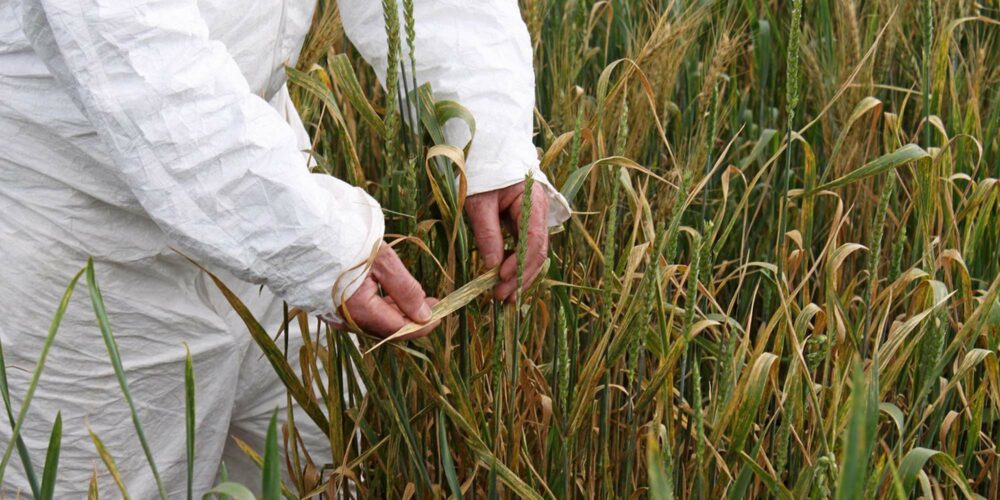
Triticum aestivum (wheat) is the most important cash crop in Australia. To improve wheat productivity, losses caused by fungal diseases, such as Septoria nodorum blotch (SNB) should be kept to minimum. It was reported that SNB alone causes $108 million in yield loss of wheat per year (Murray and Brennan, 2009) and can reduce yield up to 20%, even with fungicide applications and previous resistance breeding efforts (Tan et al., 2015). The most efficient and environmentally sound method to control the disease is through genetic resistance. SNB is caused by Parastagonospora nodorum, the pathogen induces necrosis and chlorosis on leaves as well as discoloration and necrosis on the glumes leading to reduction in photosynthesis capacity and grain quality. The disease is dictated by multiple interactions between effectors secreted by the pathogen and corresponding receptors of the host. Thus far there is not any report on resistance to SNB. However, recent studies on the disease incidence on wheat CIMMYT (the International Maize and Wheat Improvement Center) germplasm and IWGSC (International Wheat Genome Sequencing Consortium) genetically diverse collections have shown evidence of SNB dominant resistance (Phan et al., 2018). This source of resistance can be identified and used for future breeding purposes. In this study, such dominant resistance will be sought after using two double haploid populations which are segregating for the resistance identified from the CIMMYT and IWGSC collections.
Aim
To enhance genetics resistance of commercial wheat cultivars to septoria nodorum blotch, one of the most economically important fungal diseases in Australia
Objectives
The objectives of the project are:
- Identify genomic locations of identified resistance to SNB from either CIMMYT or IWGSC collections
- Identify and select short-list candidates genes through RNAseq and QTL mapping
- Identify which candidate is/are the resistance genes reside in the QTL intervals
- Validate and confirm the candidate(s) using various reverse genetics techniques
Significance
It was reported that SNB alone causes $108 million in yield loss of wheat per year (Murray and Brennan, 2009) and can reduce yield up to 20%, even with fungicide applications and previous resistance breeding efforts (Tan et al., 2015). The most efficient and environmentally sound method to control the disease is through genetic resistance. Therefore output from this study will be available to Australian breeders to reduce losses due to this devastating disease of wheat.
Ideal Candidate
We are looking for a self-motivated PhD candidate with excellent organisation, problem-solving and project management skills. Candidates with strong quantitative skills, including familiarity with molecular techniques and bioinformatics are desired for this project. Additionally, the applicants should meet the eligibility criteria for entry into a PhD program at Curtin University.
This project is open to International and Domestic applicants.
Scholarship
If you are identified as the preferred candidate for this project, you may be considered for an RTP scholarship.
Enquires and How to Apply
For enquires about this opportunity contact Professor Mark Gibberd at M.Gibberd@exchange.curtin.edu.au
To formally apply submit an Expression of Interest to Professor Mark Gibberd during the Central Scholarship round (July 1st – July 31st 2026)