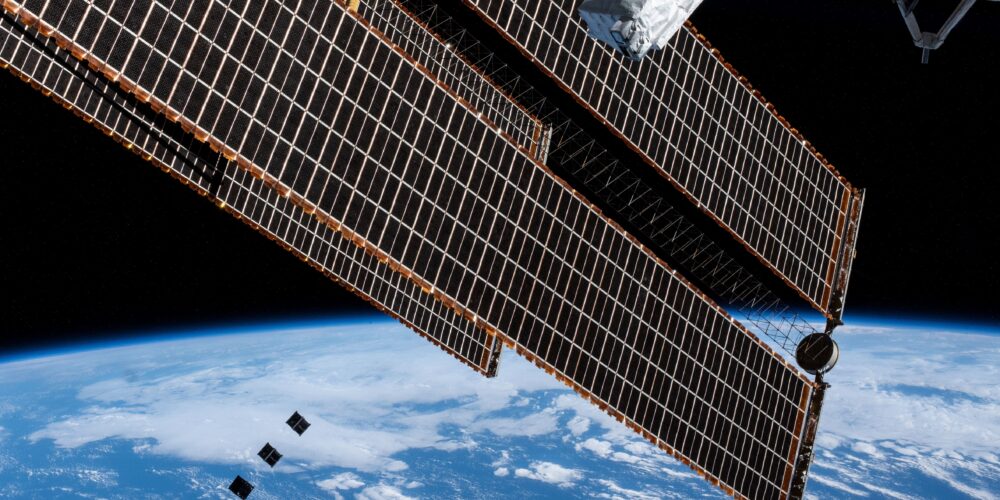
The Space Science and Technology Centre at Curtin University builds highly capable small spacecraft within our Binar Space Program. With four spacecraft delivered to date and three more in the final stages of preparation for launch in Q4 2026 we have a proven track record of spacecraft development and delivery. Due to the tight mass, volume and power constraints, the attitude of determination and control capabilities of small spacecraft are often limited compared to larger spacecraft. This project aims to leverage recent advances in image sensors and low power processing hardware to develop compact and power efficient attitude determination technologies to enhance the mission capabilities of small 1-3U small spacecraft platforms. This work will build upon recent Binar Space Program into attitude control and employ the same miniaturisation and integrations approaches allowing the Binar 1U platform to achieve a payload fraction of around 70% of the volume available for mission payload.
Aim
The aims of this research project to develop more compact and power efficient attitude determination systems for very small spacecraft leveraging advances in image sensors and processing hardware to achieve improved power and volume efficiency compared to traditional solutions. The research will build upon recent SSTC research in attitude control and align with other ongoing research into improved fault tolerance in small spacecraft implemented at the system level.
Objectives
The objectives of the research are to develop a proof-of-concept prototype attitude control system for 1-3U spacecraft incorporating power efficient state-of-the-art commercial sensors and processors. Once implemented, the project will validate performance though simulation and ground testing, integrate the prototype with the Binar Space Program’s next spacecraft platform and collect on-orbit operational and performance data.
Significance
The outcomes of this work will guide the future directions of the Binar spacecraft development which aims reduce the barriers to space activity and space exploration. The novel attitude determination solutions developed, will increase the mission capability available in small spacecraft platforms for future Australian and international commercial and exploration missions.
This project will present opportunities to build hardware and develop software that will fly in space and opportunities to engage with SSTC’s industry partners.
Ideal Candidate
This project is ideal for an applicant interested in building more capable small spacecraft (CubeSats) with a keen interest in embedded electronics, imaging, image processing, computer vision, or attitude dynamics. The suitable applicant will be a self-motivated candidate with excellent communication and teamwork skills who understands the bigger picture. The suitable applicant is likely to have a background in embedded systems, electronics, computing, distributed systems, software, communications or mechatronics engineering. The applicant should have achieved first-class honours in a relevant undergraduate engineering degree and be able to demonstrate experience conducting a successful project. Additionally, the applicant should meet the eligibility criteria for entry into a PhD program at Curtin University.
This project is open to Domestic applicants only.
Internship
This project will present opportunities to complete an internship at SSTC’s existing industry partners (in particular Fugro SpAARC or AVI Pty Ltd) but the selection of the partner and the details will be determined after milestone one.
Scholarship
If you are identified as the preferred candidate for this project, you may be considered for an RTP scholarship.
Enquires and How to Apply
For enquires about this opportunity contact Dr Robert Howie at Robert.Howie@curtin.edu.au
To formally apply submit an Expression of Interest to Dr Robert Howie during the Central Scholarship round (July 1st – July 31st 2026)