18/03/2026. By Carmelle Wilkinson.
For many people in their early 40s, writing a gift into their Will is something reserved for much later in life.
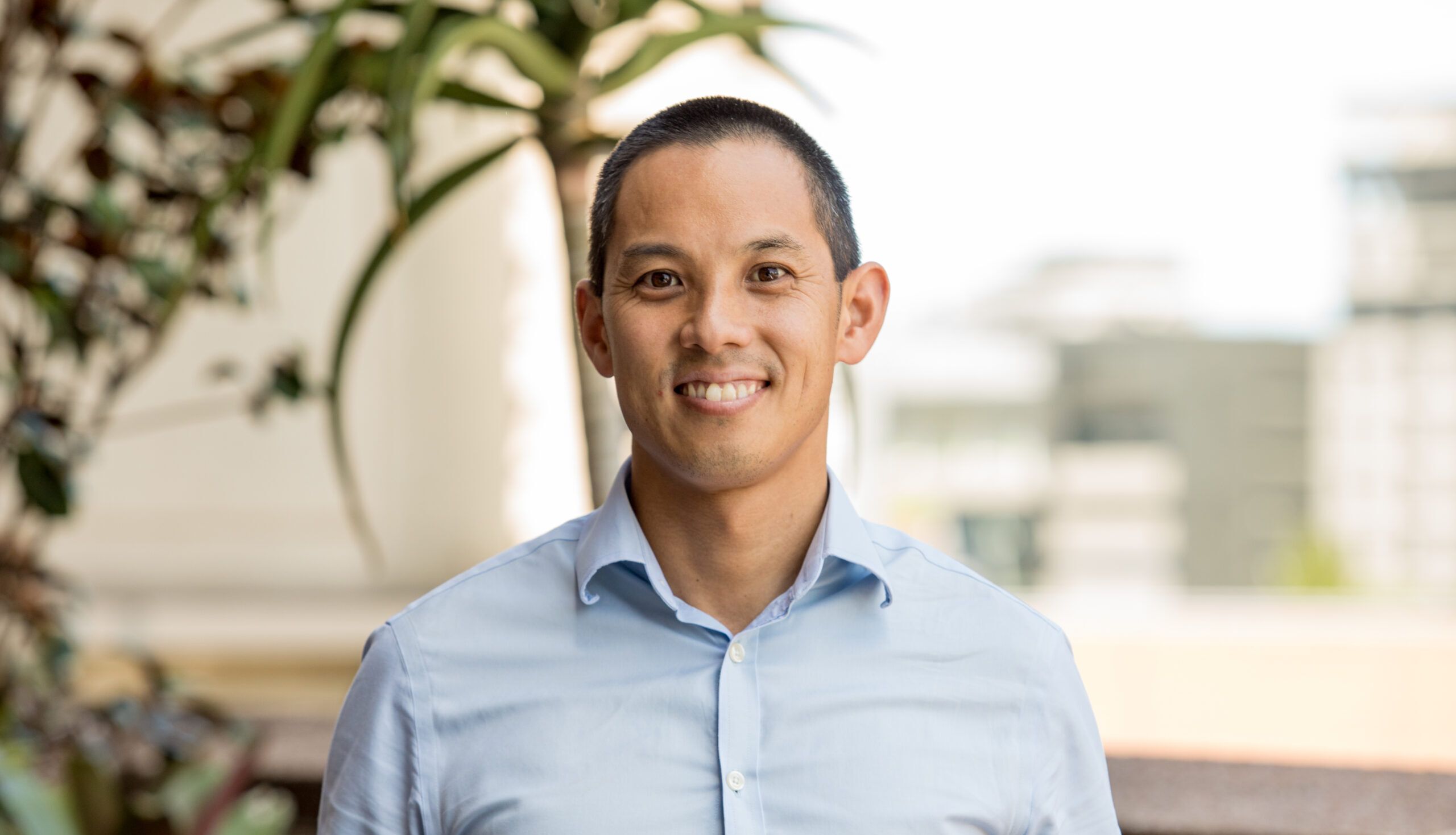
However, for Curtin MBA alumnus Roger Chao, that is something worth acting on now.
A distinguished governance expert, entrepreneur, board strategist and advocate for social justice, Roger has spent much of his life thinking deeply about responsibility – not just to his profession, but to society.
That thinking inspired him to make an extraordinary commitment: to leave a significant gift to Curtin University in his Will, investing in the students, researchers and ideas that will shape a better future long after he is gone.
It is a decision grounded not in recognition, but in gratitude, duty and a conviction that one generation should leave society stronger for the next.
Born in Australia to immigrant parents, Roger has always been deeply aware of the opportunities education made possible in his own life.
“I’ve benefited from my education, from university and from the social infrastructure around it,” Roger said.
“And that’s not because I’m better than someone else. Much of that comes down to luck – luck in where you’re born, the education you can access, the safety and stability around you. Not everyone gets that.”
That belief has shaped the way Roger sees the world.
Across a career spanning more than two decades, he has worked across corporate, public and not-for-profit sectors in areas including health, education, sustainability and emerging technologies – fields he is drawn to because they help determine whether a society is merely productive or genuinely decent, and whether prosperity is built without quietly stealing from the future.
Yet beneath the titles and achievements sits a simple guiding question: who is better off because I did this work?
It is the same question that sits at the heart of his decision to support Curtin through a legacy gift – if education widened opportunity in his own life, what would an honourable response look like for those who come next?
For Roger, education is one of the most powerful forces for fairness in society. It can widen opportunity, soften disadvantage and unlock talent that might otherwise go unrealised.
“A lot of structural inequality can be mitigated through education,” he said.
“If you truly value something, you don’t leave your support for it to chance.”
Roger completed a Diploma of Business and MBA at Curtin University, drawn to the University’s broad subject offerings and flexible delivery, which allowed him to study while working full-time. But what stayed with him most was not only the academic content – it was the mindset Curtin fostered – that intellectual attainment carried civic obligations, and that competence without integrity is not merely hollow but dangerous.
He speaks warmly of the diversity of people he encountered through the program, from different industries and backgrounds, and of the realisation that education is never just about personal advancement.
“Learning isn’t separate from responsibility,” he said.
“It’s not just about acquiring knowledge for its own sake. It’s about what you do with that knowledge once you have it, because other people’s lives sit downstream of your decisions.”
That long-view thinking has become central to how Roger leads.
In high-stakes environments, he believes leadership is not about ego or numbers, but about staying calm in complexity, seeking truth with discipline, and never losing sight of the people behind the data.
“Every number is a person,” he said.
“It’s a patient, a student, a staff member, a family, a community. Good leadership means asking who is affected, how they are affected, and what we owe them.”
That same people-first philosophy underpins his gift to Curtin.
Roger hopes his future bequest will do more than inspire. He wants it to make a practical difference – helping ease the burdens that can quietly derail a student’s potential and creating room for research that may one day transform lives.
“Sometimes the difference between continuing your studies and dropping out is rent, transport, childcare, healthcare costs, or a laptop,” he said.
“When those pressures ease, even slightly, students can show up more fully and meet their potential.”
He believes the same principle applies to research, where the public good often depends on whether people are given room to ask difficult, unfashionable and ethically necessary questions.
Good research, he says, requires time, courage and the freedom to ask difficult questions – including the ones that do not fit neatly into current funding priorities.
“Some of the most valuable work starts with a question that doesn’t fit into any category and isn’t of immediate interest at the time,” he said.
“Talent is spread everywhere, but opportunity is not. That’s the gap I want to help bridge.”
At a life stage when many are focused on building careers and raising families, Roger is also thinking generations ahead.
Not because he believes legacy belongs only to the wealthy or the elderly, but because he believes values should be acted on while there is time and clarity to do so.
For years, he admits, legacy was something he assumed he would think about later. But witnessing how quickly life can change shifted his perspective.
“I used to assume legacy was something you ponder later in life,” he said.
“But what changed for me was realising that everything we do now shapes the future. The question isn’t what should I do when I’m older – it’s what should I do now?”
Roger does not describe his gift as generosity. Instead, he sees it as duty – a way of strengthening the same institutions that helped him succeed, so others can have the same chance to thrive.
“I don’t think about it as generosity for generosity’s sake,” he said.
“I think about the difference it can make. Individuals benefit through education, but society benefits too, because those individuals go on to shape healthcare, technology, communities and the future.”
For Roger, legacy isn’t what you leave behind – but who is better off because you were here.
For more information or to discuss the possibility of leaving a gift to Curtin University, please contact Alana Hammond on alana.hammond@curtin.edu.au or +61 8 9266 3839.
___