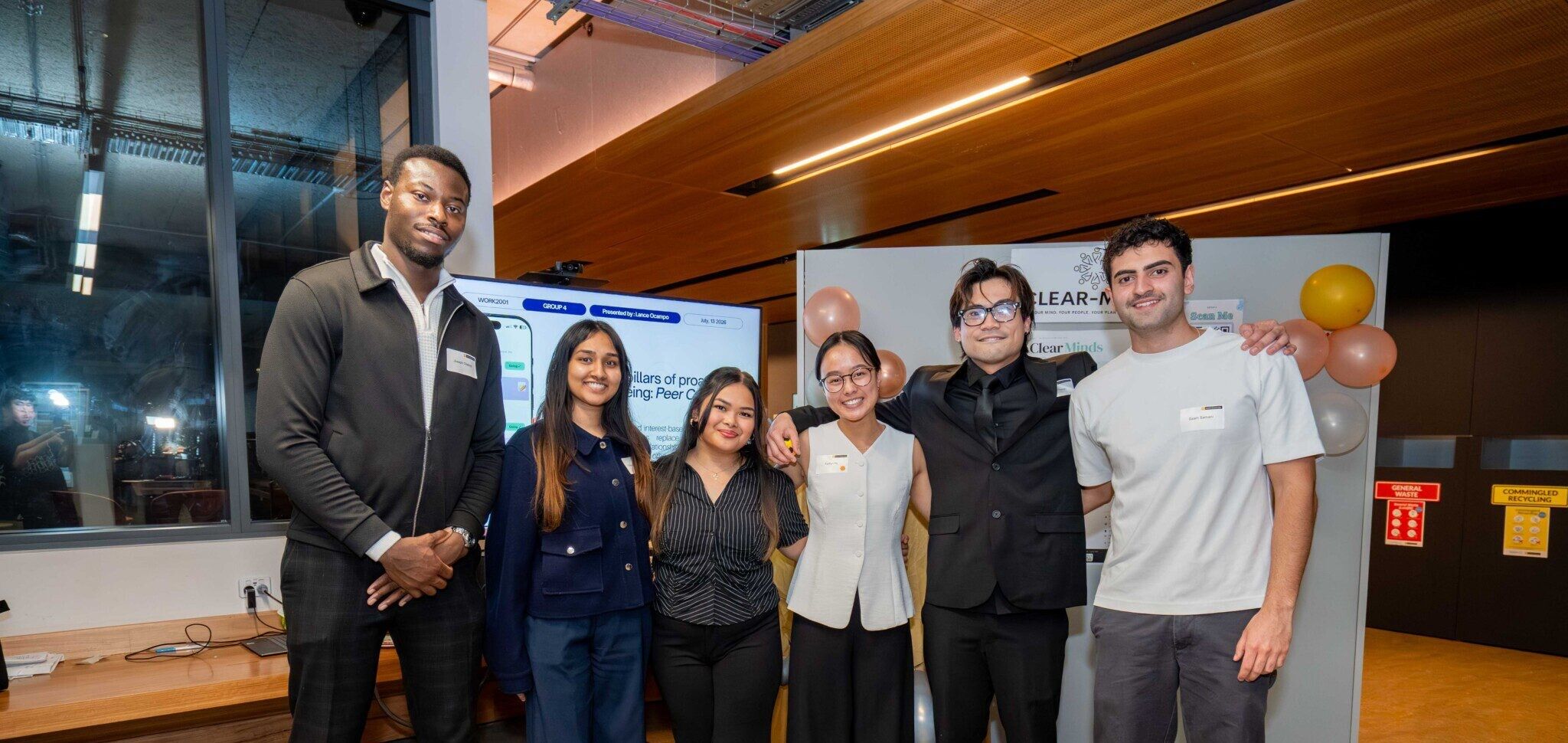
From AI-powered immersive 3D scenarios for teacher education to virtual reality workplaces, Curtin University students spent a week reimagining the future of education as part of the 2026 Learning Futures Challenge: AI Unleashed.
The intensive program brought together students from different courses, disciplines and backgrounds to explore how artificial intelligence could improve learning, respond to challenges facing students today and shape the future of education. Working in multidisciplinary teams, participants were tasked with identifying a real-world problem and developing an innovative solution using AI and emerging technologies.
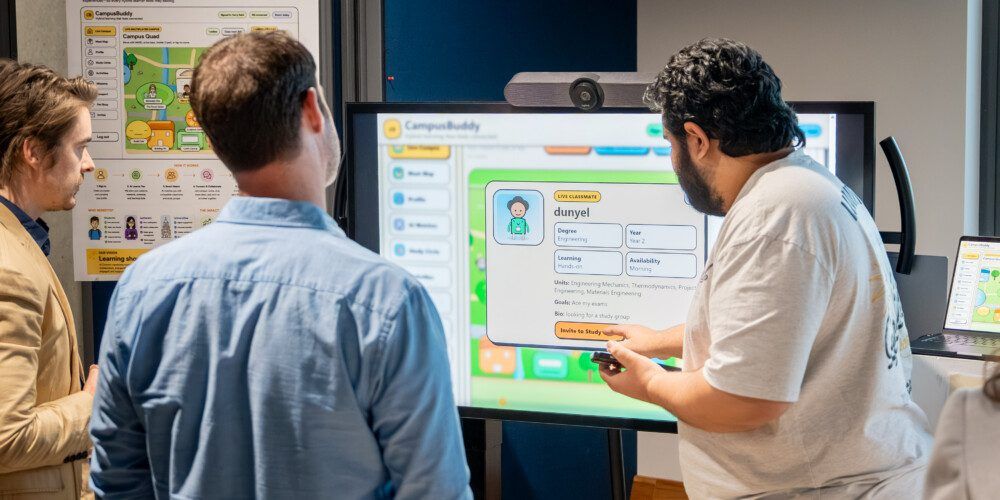
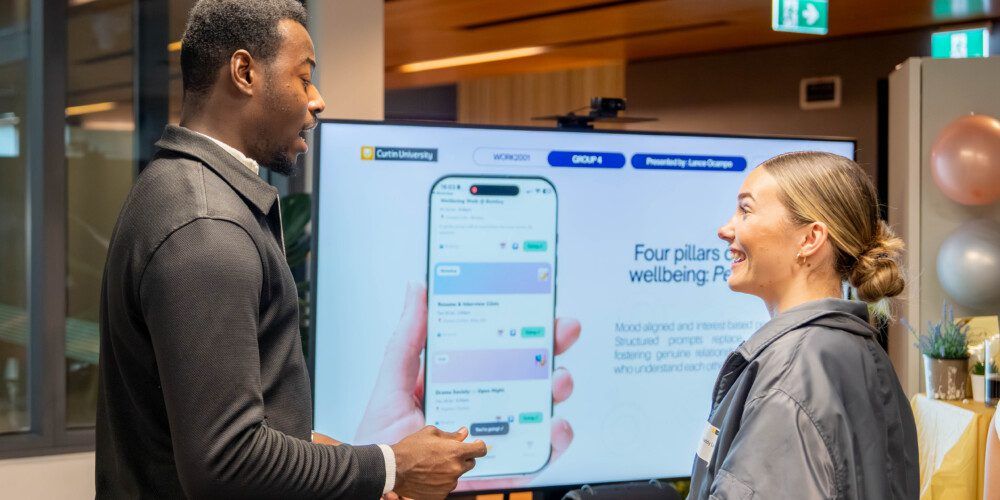
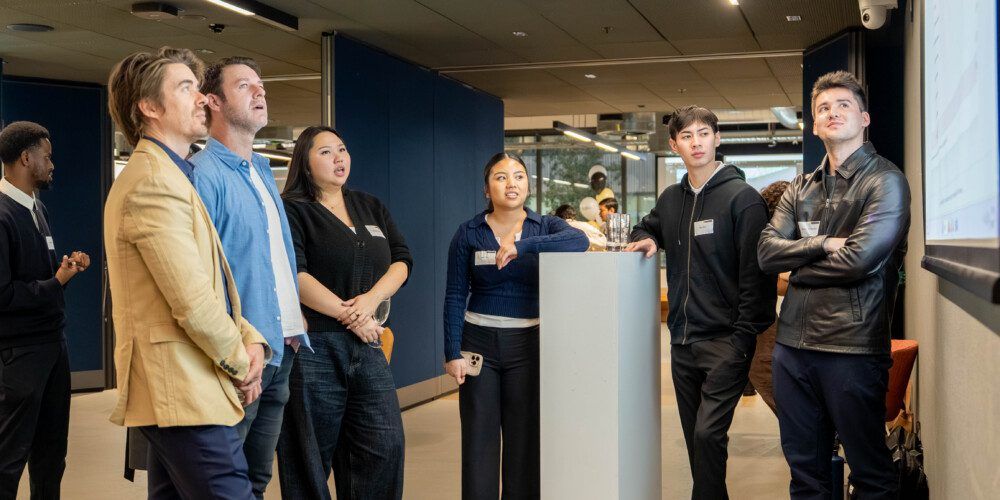
Throughout the week, students participated in workshops, collaborated with academic mentors and industry partners, and transformed early ideas into practical concepts and prototypes. The Challenge culminated in a showcase event where teams presented their work to staff, peers, industry representatives and members of the wider Curtin community.
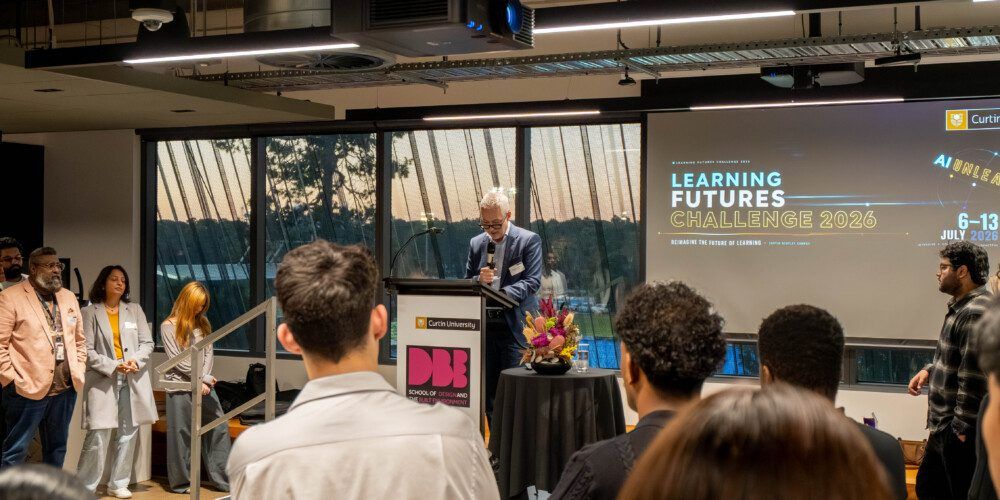
Faculty of Humanities Pro Vice-Chancellor Professor Richard Blythe welcomed guests to the showcase and reflected on the role universities play in preparing students to contribute to the future.
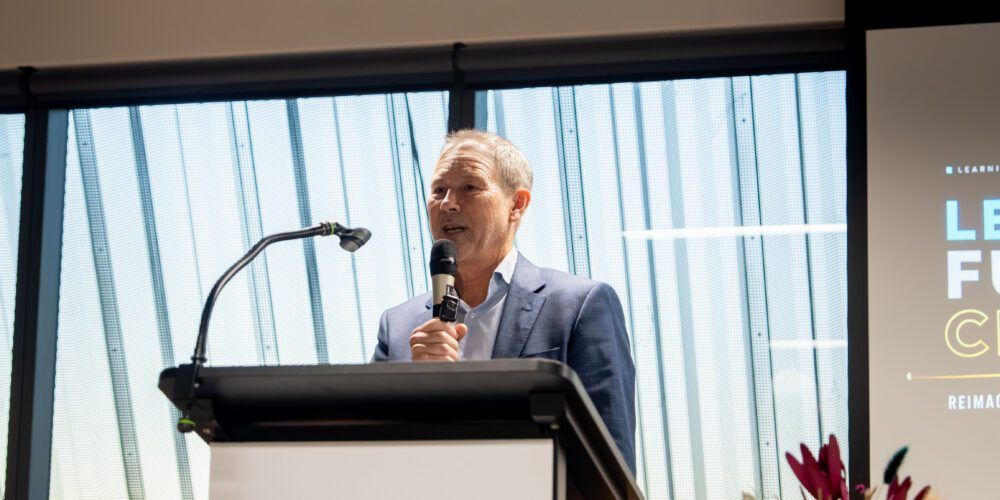
“Our purpose should be here for you to exercise that hope, to take that opportunity, to learn the skills that you need to engage with the forefront of human knowledge,” Professor Blythe said.
“You are the custodians of the future, and that’s what our purpose is and what we’re here for.”
Professor Blythe encouraged students to embrace the discomfort that comes with learning and growth. He noted that meaningful learning often begins when people move beyond what they already know and challenge themselves to engage with new ideas, perspectives and possibilities.
“All learning is about just being prepared to take that little step beyond what you currently know,” he said.
“If you keep doing that consistently, in the end you’ll get to a point where you’re taking a step on behalf of all humankind and helping us get there.”
He also highlighted the importance of collaboration, describing it as one of the most valuable aspects of the Challenge experience.
“The most impactful thing that you can think about is how you learn with others,” Professor Blythe said.
“You’ve been learning how to be a teammate, you’ve been learning how to help others get somewhere further. They are some of the greatest graduate attributes you could obtain.”
The showcase celebrated the work of three standout teams: BridgED AI, Skillit and Skillscape. While each project approached the challenge from a different perspective, all three shared a common goal: preparing students for a future where technology and human capability work hand in hand.
BridgED AI
Developed by Group 5, BridgED AI sought to address one of the most common challenges faced by university students: the gap between classroom learning and workplace experience.
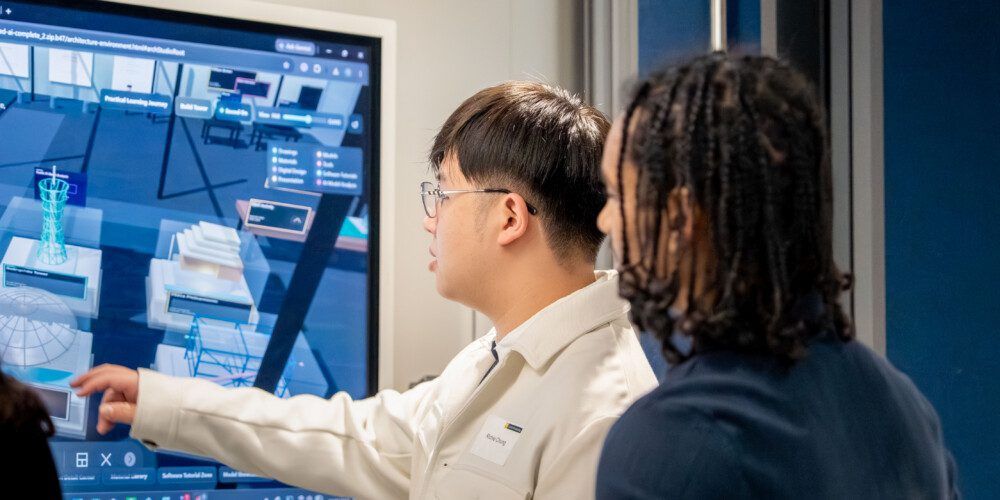
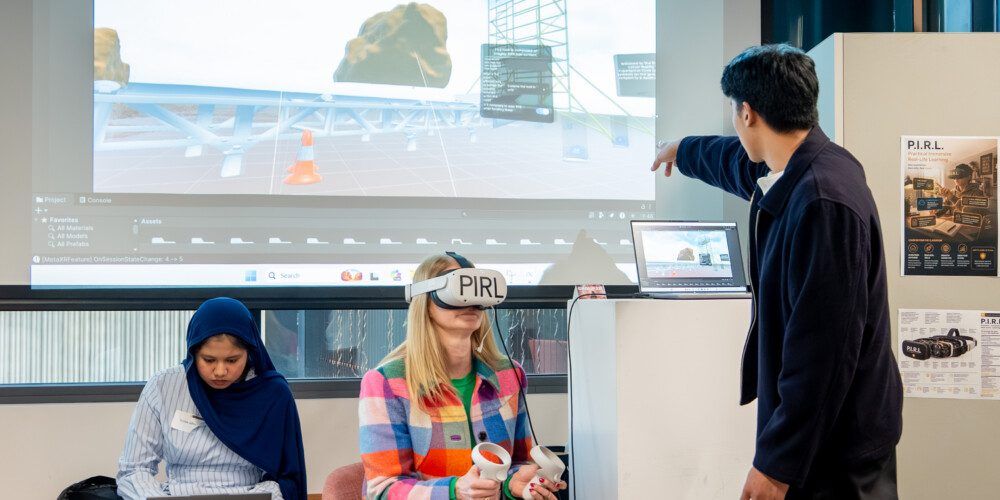
The team proposed an AI-powered experiential learning platform that transforms theory into interactive, discipline-specific scenarios that students could experience immersively. Education students could practise classroom management and parent communication, architecture students could explore design decisions and software tutorials, and engineering students could engage with technical simulations in realistic environments.
The platform leveraged 3D game technology to provide an interactive experience for students in an environment that mimicked real-world scenarios. Rather than replacing industry placements, the platform was designed to complement them, helping students build confidence, professional judgement and practical skills before entering the workforce.
Dean of Learning Futures Jonathan Pillai praised the ambition of the project and the team’s ability to expand the concept across multiple disciplines.
“The thing that really shocked me about BridgED AI was when I sat down with the team and they showed me something for education,” Jonathan said.
“I thought that was amazing enough, but they went further — responding, ‘Well, we’ve done it for three disciplines.’ Amazing work.”
Skillit
Group 9 presented Skillit, a gamified learning platform designed to help students develop practical software skills and gain recognised industry certifications, bridging the software skills required across various disciplines.
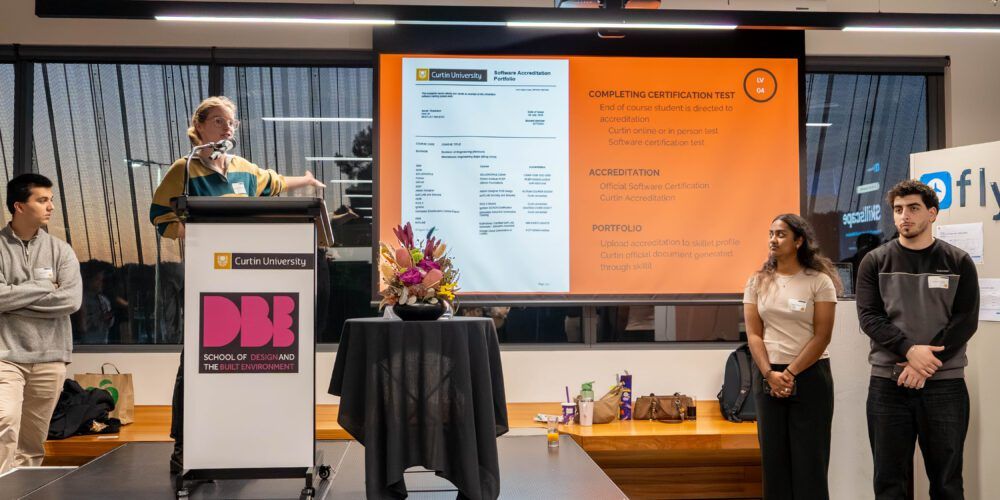
Recognising that students are expected to constantly adapt to new software and technologies, the team created a platform that turns learning into an interactive experience. Users can select a discipline, complete workplace-inspired tasks and receive feedback throughout the process while building a portfolio of certifications that can be shared with future employers.
Using a game-based approach to learning, the team described Skillit as a way to close the gap between academic learning and industry expectations while making skill development more engaging and accessible.
“Skillit is an interactive game where students can close the gap, develop their skills and become accredited in the things they want to learn,” the team explained.
Skillscape
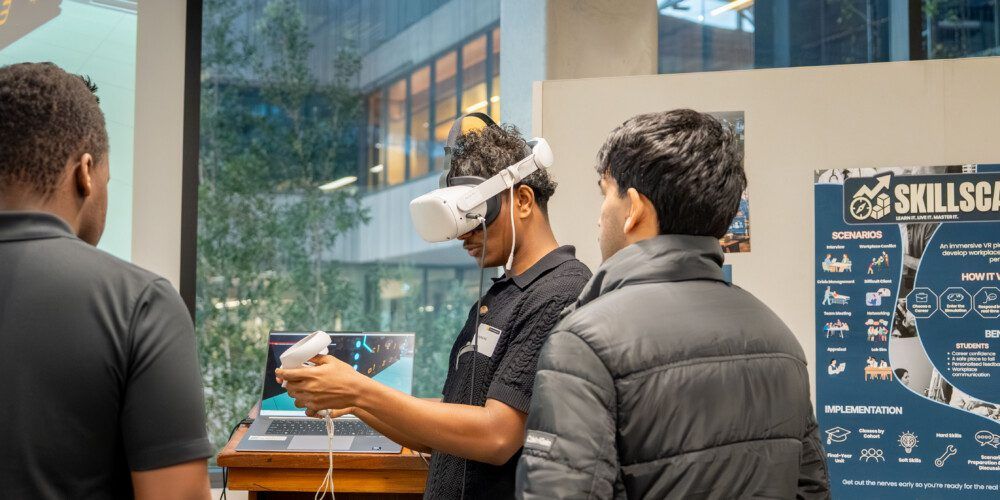
Group 18 introduced Skillscape, a personalised virtual reality learning platform designed to help students build workplace confidence before entering industry.
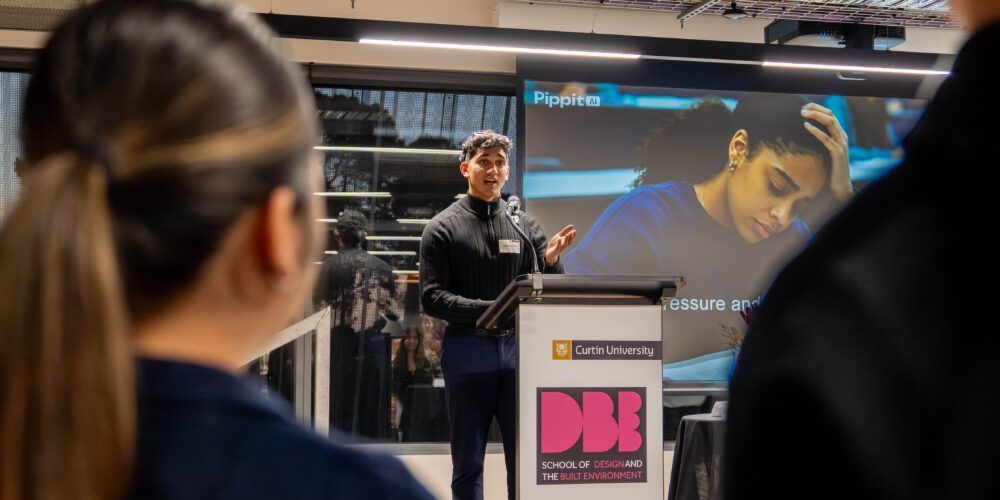
The team argued that traditional classrooms cannot fully replicate the pressures and unpredictability of professional environments. Through Skillscape, students can practise realistic scenarios including job interviews, networking events, client meetings and technical challenges, receiving personalised AI coaching and real-time feedback throughout the experience.
As students progress, they develop communication, leadership and decision-making skills while gaining practical experience in a safe and supportive environment.
“Classrooms can’t replicate the complexity, pressure and unpredictability of professional environments,” the group explained.
Their solution was captured in a simple but powerful statement: “Graduate with experience, not just a degree.”
Reflecting on the week, Jonathan praised students for their willingness to embrace uncertainty, collaborate with others and push their ideas further than they thought possible.
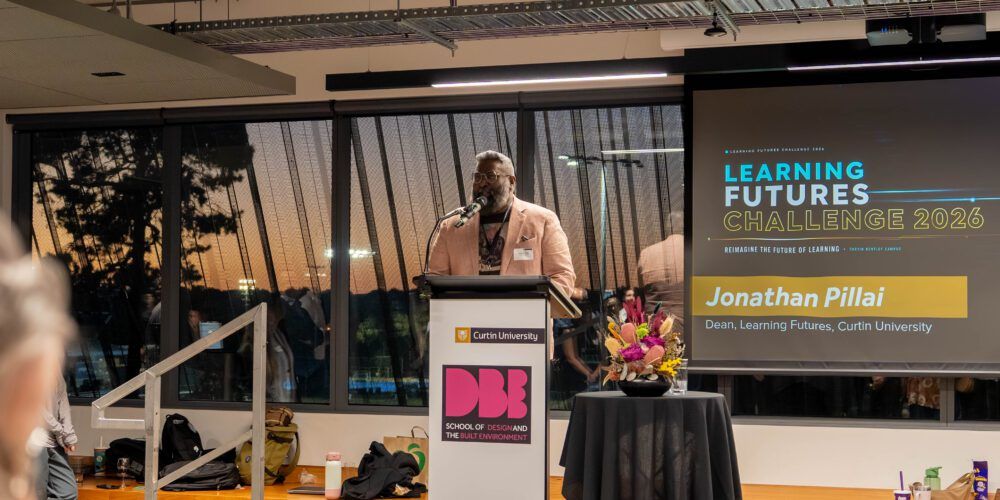
“When we started this Challenge, one of the things I really wanted was for us to be brave,” he said.
“I think all of you have done that. Every day you’ve rocked up, and it’s been a privilege not just to be on this journey with you, but to witness the great work that you’ve done.”
He also acknowledged the peer-to-peer learning that emerged throughout the program.
“The learning has gone beyond just sitting next to someone and learning from the people teaching you,” Jonathan said.
“You’ve been learning from each other as well. It’s been amazing to see the way that you’ve all learned through this journey.”
For Bachelor of Engineering student Joseph Olaleye, the experience reinforced the importance of teamwork and collaboration.
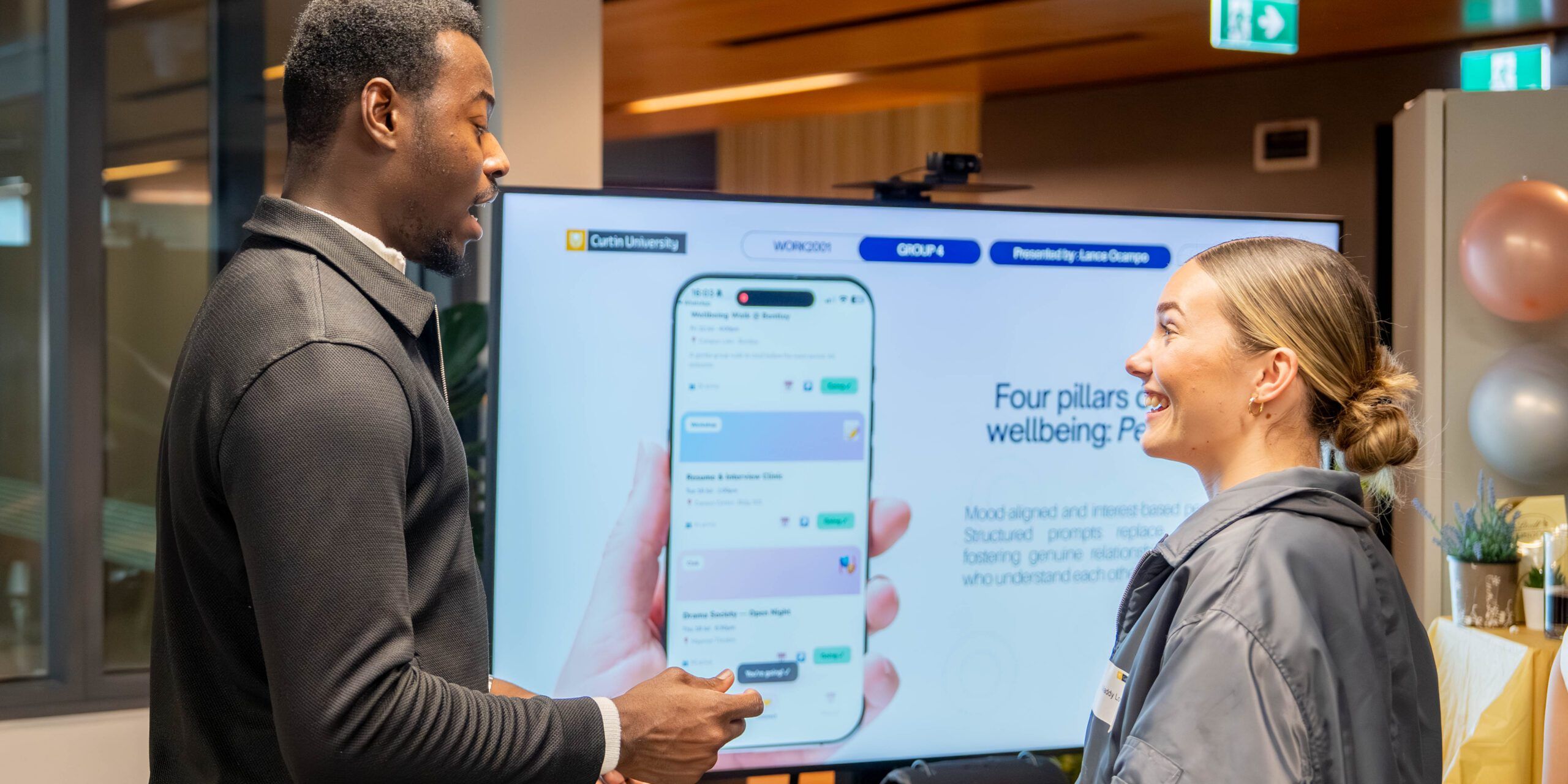
“My biggest takeaway would be the learning environment and the ability for everyone to actually work in a team with strangers,” Joseph said.
“Everyone came out with something amazing, or something that you could actually use in the real world.”
The 2026 Learning Futures Challenge demonstrated the power of challenge-based learning to bring together diverse perspectives, foster innovation and encourage students to tackle complex problems with confidence. While artificial intelligence was at the centre of the Challenge, the strongest ideas were ultimately about people: how they learn, connect, collaborate and prepare for the future.
The showcase concluded a week of bold thinking and experimentation, celebrating students who stepped beyond their disciplines and developed practical solutions for the future of learning.
Watch the Highlights Video Here
Event Gallery

Upcoming Learning Futures Challenges
To learn more about upcoming Learning Futures Challenges, please contact humanities-futures@curtin.edu.au