A research hub for a more sustainable and resilient urban future
The Urban Climate and Disaster Risk Reduction Hub, a collaboration between Curtin University and Oxfam Bangladesh, was created to drive urgent climate action where it matters most: our cities.
Cities are home to over half the world’s population and generate 80% of global greenhouse gas emissions. That makes them both the frontline of climate challenges and the greatest opportunity for change. We’re here to help cities transform into sustainable, inclusive, and climate-resilient communities.
We unite world-class researchers, industry leaders, NGOs, and local communities to co-create practical, scalable solutions for climate mitigation and adaptation. By focusing on urban areas, where the impacts of climate change are most concentrated, the Hub sparks innovation and empowers locally grounded responses to global challenges.
Together, we’re building a future where cities can lead the way in resilience, equity, and sustainability in the face of climate change.

About the Hub
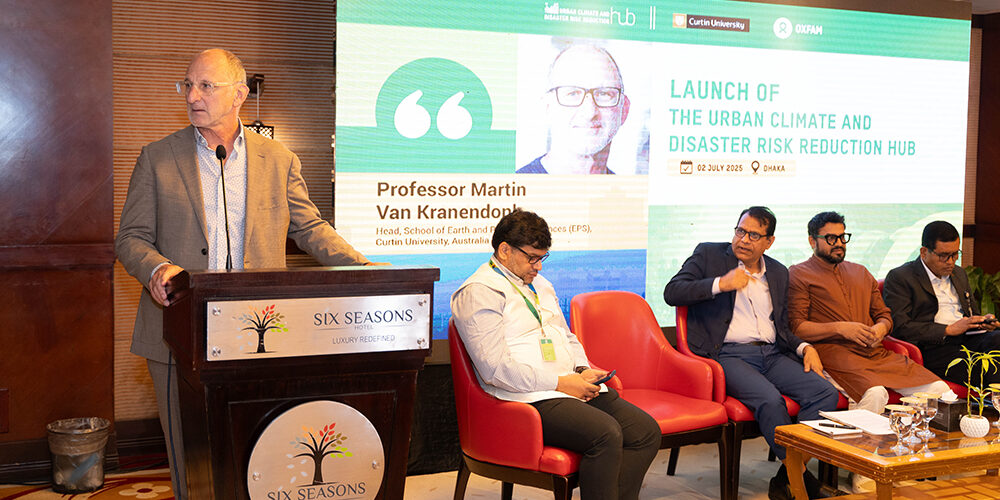
In July 2025, Curtin University in collaboration with Oxfam in Bangladesh launched the UCDRR Hub to facilitate collaborative research by bringing together opportunities, researchers, industry and government in collaborative programs and projects. The Hub provides a highly engaged team environment that develops innovative and relevant solutions to address growing urban challenges.
Our vision
The vision for the hub is to serve as a collaborative platform that engages external stakeholders including industry partners, global universities and Curtin researchers, to promote scientific research, advocacy, capacity building, and coordinated action to address growing climate risks, particularly in urban areas.
What we do
Collaborative research
Partnering with universities, NGOs and communities to advance understanding of urban climate challenges and solutions.
Actionable innovation
Conducting applied research on heat stress, urban flooding and pollution to develop practical tools and strategies.
Policy impact
Supporting the integration of adaptation and mitigation strategies into urban development policies, nationally and locally.
Our people
Our academic staff include:
School of Earth and Planetary Sciences
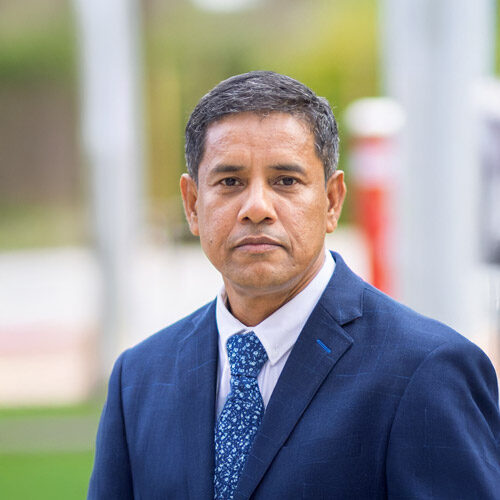
Ashraf Dewan is Director of Research at Curtin University’s School of Earth and Planetary Sciences in Western Australia. His work spans climate science, geospatial intelligence and urban and environmental geography—critical fields, in addressing climate change, rapid urbanisation, heat risks and disaster vulnerability. By bridging global and local perspectives, his research informs both developed and developing regions.
Renowned for leading multidisciplinary teams and fostering international collaborations, Ashraf also serves as Editor in Chief of Geomatica. In 2025, he was nominated by the Australian Government to the Intergovernmental Panel on Climate Change.
Contact: a.dewan@curtin.edu.au
Head of Climate Justice and Natural Resource Rights at Oxfam Bangladesh
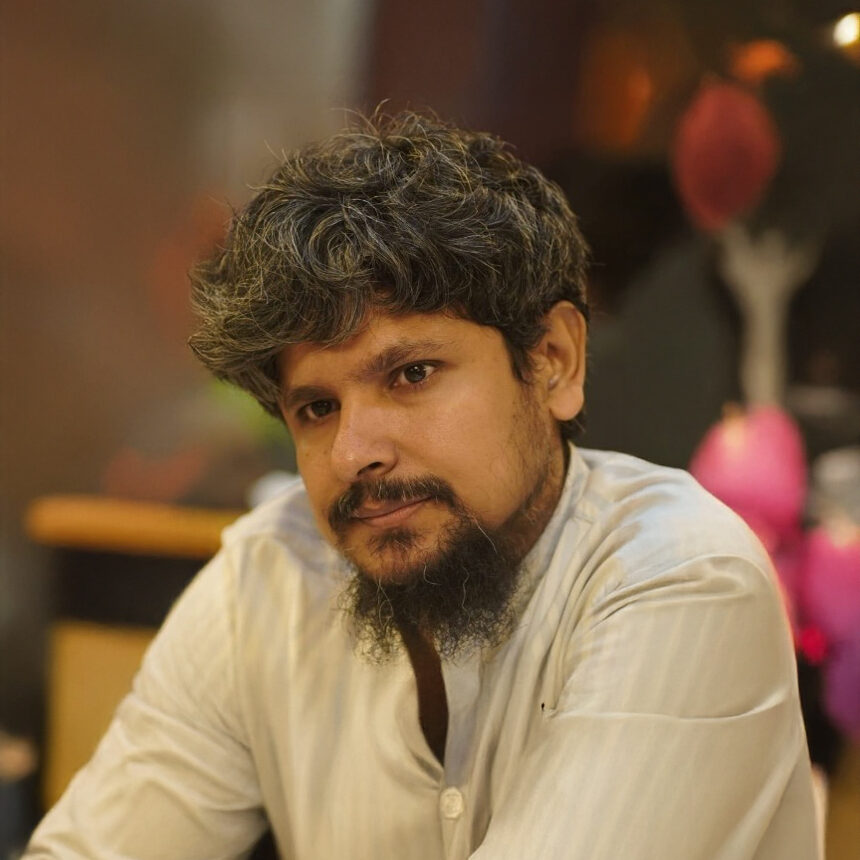
Mohammad Emran Hasan, PhD is Head of Climate Justice and Natural Resource Rights at Oxfam Bangladesh and co-lead of the UCDRR Hub. He provides strategic leadership on adaptation, mitigation, ecosystem restoration, natural resource rights, and Just Energy Transition (JET), with a strong emphasis on equity and justice.
Dr Hasan integrates Earth Observation, AI, and spatial decision systems to transform complex data into actionable insights for climate-resilient development and ecosystem-based solutions. His work prioritises empowering marginalized communities and Indigenous Peoples through rights-based, inclusive approaches that challenge structural inequalities and promote just transitions.
Contact: mehasan@oxfam.org.uk
Research themes
Our research is grounded in ten thematic areas critical to the future of urban climate resilience:
-
Urban Biodiversity – Restoring green space to reduce heat and improve wellbeing.
-
Climate-Resilient Tree Species – Using modelling to identify trees suited to hotter climates.
-
Geospatial Science – Mapping and managing urban climate risks through spatial data.
-
Climate Justice & Inequalities – Prioritising the most vulnerable in climate adaptation.
-
Energy Transition – Advancing renewable energy and reducing urban pollution.
-
Urban Pollution & Heat Stress – Tackling air quality and the urban heat island effect.
-
City Structure & Modelling – Understanding how built form shapes climate outcomes.
-
Climate Modelling – Neighbourhood-scale models to support heat risk response.
-
Early Warning Systems – Tools for monitoring heat, flooding, and other hazards.
-
Resilient Cities – Designing inclusive, sustainable, future-ready urban environments.
Contact us
Partners