Before she joined Team Academia, Professor Cheryl Kickett-Tucker AM played basketball for the WAIS Rockets in the Women’s National Basketball League from 1986 to 1987. Now she combines her love of basketball with research that helps Aboriginal children build confidence and connect with culture.
Growing up, the 2019 WA Local Hero found a second home at her local youth centre where her talents on the court thrived. By age fourteen, she was representing WA in state and national competitions.
“Basketball was my saviour. It gave me a sense of purpose and the confidence to believe I could achieve any goal I set my mind to.
I trained almost every night. And when I wasn’t training, I’d be coaching junior players or umpiring games to pay for my uniform and other expenses that my family couldn’t afford.”
“But my mum had her reservations. She told me ‘you can’t eat a basketball’. She knew how much I loved the sport but didn’t want it to be my whole life. She wanted more for me and my future – and so did I.”
So, on her mother’s advice, Professor Kickett-Tucker went on to pursue a tertiary education, graduating with a degree in sport science. Driven by a hunger for knowledge, she then completed a postgraduate degree that took her to the United States on an academic scholarship. It was here that she discovered her academic calling.
When she returned home, Professor Kickett-Tucker had one goal in mind – to help her people.
A proud Wadjuk Noongar woman, she found a way to keep sport at the centre of her research, examining the identity and self-esteem of Aboriginal children participating in school sport.
“At the time, there wasn’t much research on Aboriginal identity relating to sports.
“As I got further into my research, I realised there were no psychometric measures developed by or for Aboriginal people. So, I made one.”
Funded by a National Health and Medical Research Council (NHMRC) Postdoctoral Fellowship,Professor Kickett-Tucker developed a toolkit called ‘IRISE-C’ to explore the components of kids’ identity and self-esteem. Today, this toolkit is used as part of the Moombaki Cultural Learning project.
Moombaki Cultural Learning is a research project funded by the Australian Research Council (ARC) and Curtin University. It is designed to strengthen Aboriginal children’s wellbeing by connecting identity, culture, country and kin.
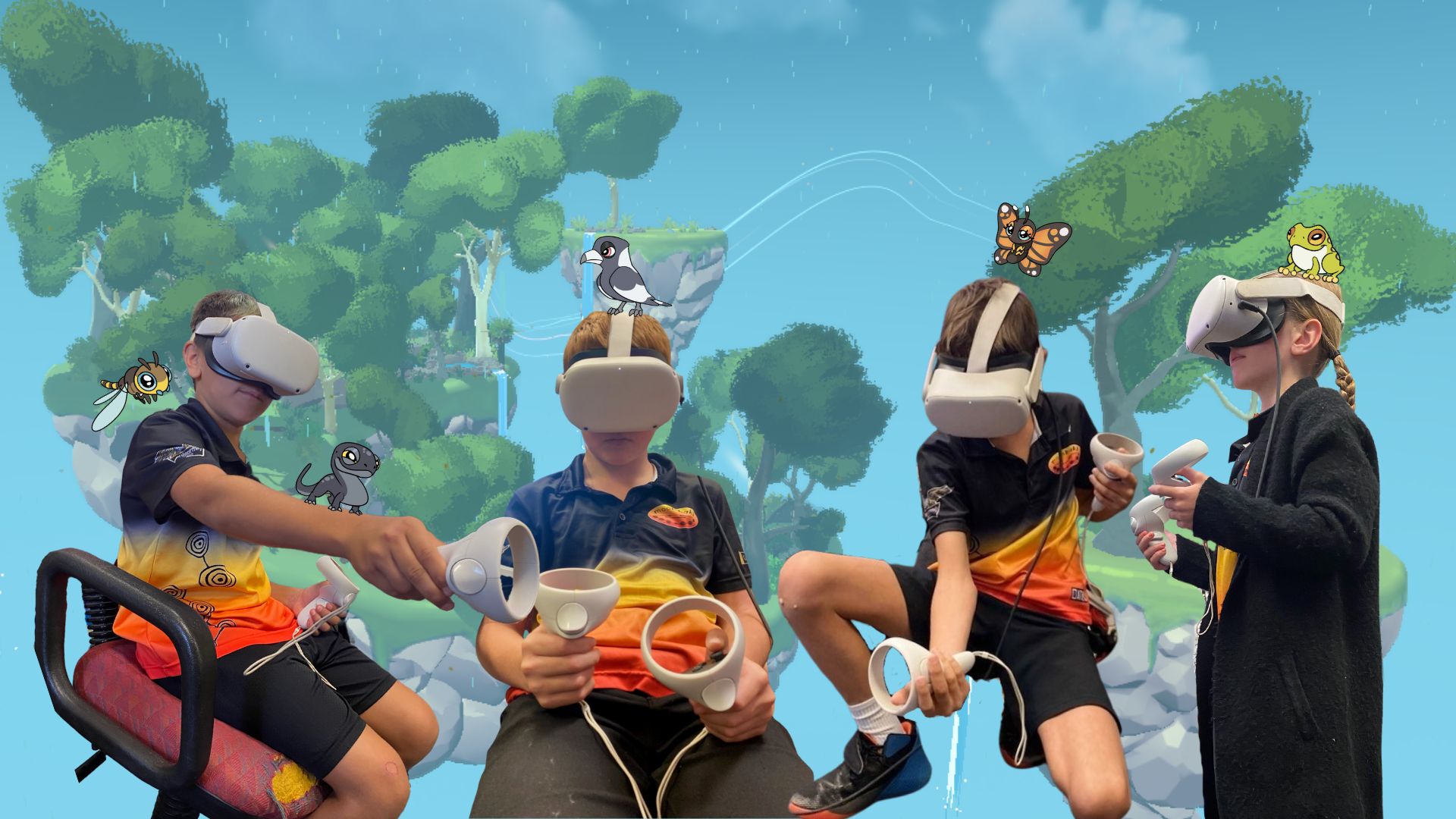
Noticing a cultural learning gap in the school curriculum, the local Aboriginal community and primary school students worked with the Moombaki Project team to co-create much-needed local place-based resources about Noongar culture, language and history on boodja (Country).
“Moombaki (which translates to ‘where the rivers meet the sky’) is a multimodal, research-based program that combines virtual reality (VR), the classroom and on country learnings. We worked with children across three primary schools situated in Weeip’s Maali Boodja (the City of Swan) where I grew up and still live.
“It’s local place-based learning, so each school received resources tailored to the traditional owners lands on which they are situated. It’s not a one-size fits all because Aboriginal culture is very diverse.
“What our research has shown us so far is that the more Aboriginal children know about where they come from, the more self-confidence they have – and that’s what they take with them through life.
“You can’t underestimate the power of belonging, and equally important, the proactive response of acceptance.”
To deliver Moombaki in classrooms, the team engaged local cultural educators from Koya Aboriginal Corporation, an Aboriginal Community Controlled Organisation founded by Professor Kickett-Tucker’s late father, respected Aboriginal Elder Mr Allan Kickett. Professor Kickett-Tucker has also helped develop Koya community programs for more than 20 years and has a strong connection to community basketball.”
“Over the weekends, we bring the kids together to shoot hoops and yarn. It gives them the chance to connect with their mob, in a culturally safe environment, and express their strengths.
“One young lady who I met at Koya eight years ago worked alongside me as a research assistant on the Moombaki project. It’s such an honour to see our kids thrive.”
Even in her free time, community is on her mind. In 2015, Professor Kickett-Tucker founded Kaat Koort n Hoops, a basketball lifestyle program where she continues her love of coaching junior players, both on and off the court.
“Sports had such a huge impact on the trajectory of my life. It gave me opportunities beyond what I thought possible growing up in a disadvantaged area.
“Reciprocity is important in Aboriginal culture. You have to give back, and this was the best way I knew how.”
Professor Kickett-Tucker and the team are now working on Moombaki 2.0 which will look at delivering the program to high school students.
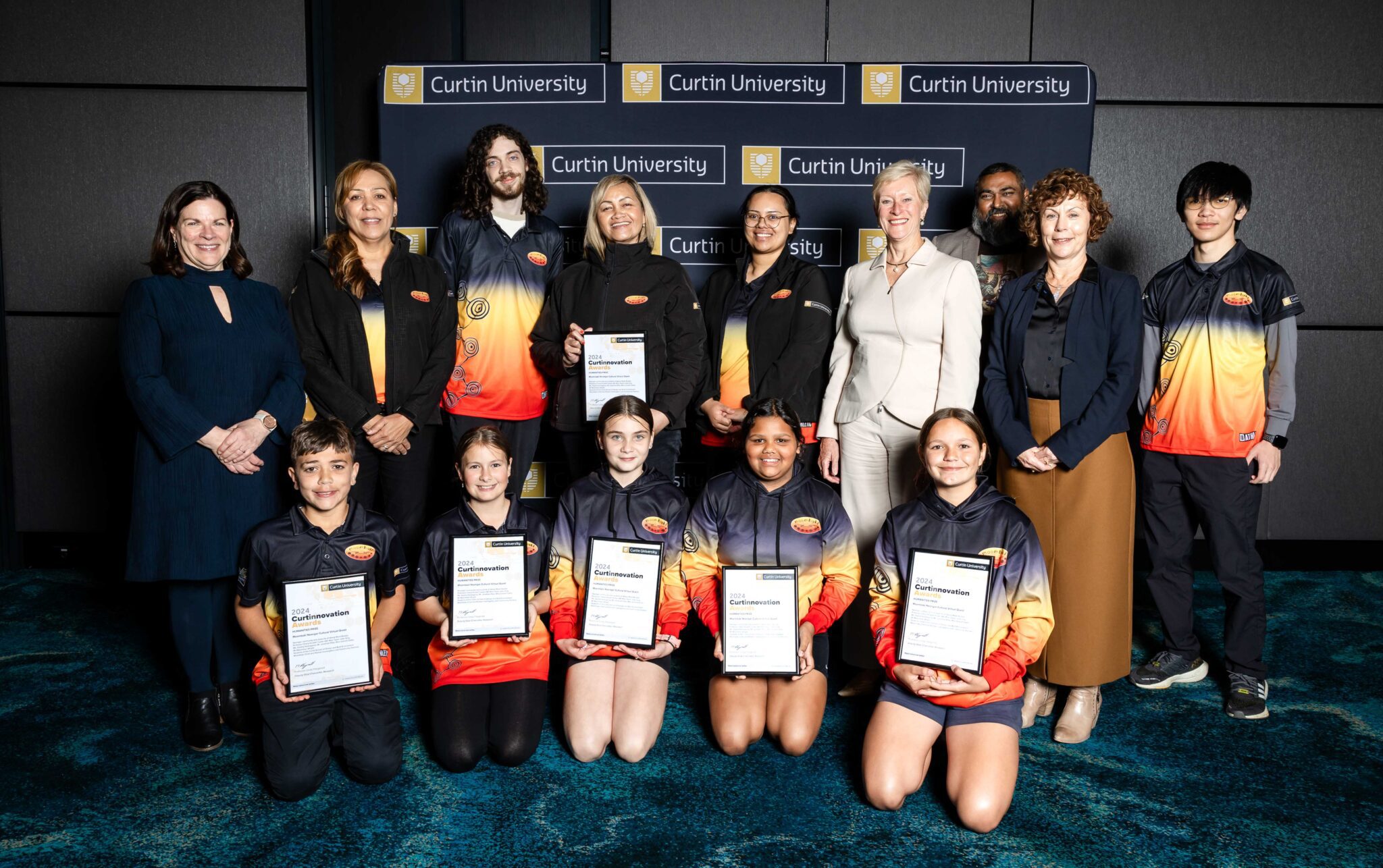
Moombaki won the 2024 Curtinnovation Humanities Award.
Interested in where sport could take you? Explore Curtin study areas.
—
This piece was featured in Impact Focus – a quarterly newsletter bringing you the latest in Curtin research. Sign up here to get it delivered straight to your inbox!