Growing up, Johanna Barron-Perry dreamed of becoming an engineer after watching her father, a mechanical engineer, help build most of Australia’s major power stations.
But in school, she was told that girls couldn’t be engineers.
She proved them wrong.
Jo went on to study engineering at university, where she was one of four women in her first-year cohort – the largest female intake the course had ever seen.

Johanna studied engineering at university, where she was one of four women in her first-year cohort.
More than 30 years later, she has built an impressive career in leadership, holding senior roles with global mining companies including Rio Tinto and BHP, as well as the Victorian Government.
On the surface, she was excelling in her career.
But underneath, Jo was a ticking time bomb.
At the time, she was navigating a new role after years of job uncertainty, menopause, relocation to a new state, a difficult divorce with financial stress while raising her daughter and managing her ongoing high blood pressure.

Johanna working underground at BHP Olympic Dam.
“I had developed gestational hypertension during a high-risk pregnancy that was expected to resolve after my daughter’s birth, but my blood pressure never fully returned to normal,” Jo said.
“Looking back, my condition worsened because it was not managed consistently, both by me and within the healthcare system, due to the challenges of living remotely with limited access to specialist care and competing life priorities.”
As the years passed, this personal burden compounded.
One day while she was unpacking from a weekend interstate trip visiting her daughter, a lingering headache persisted.
Not thinking much of it, she brushed it off and went to bed.
A few hours later, she woke to a sharp pain at the base of her head.
Then, her mouth went numb, followed by a tingling sensation that travelled down her left side from the top of her head to the tips of her toes.
“At first, I thought I was having an allergic reaction, but when I tried to get out of bed, I couldn’t,” she said.
“It took a few minutes to make the effort to do it, and then I could barely stand up, like I was drunk.”
Staggering to the bathroom, she tried to make sense of what was happening.
“Looking in the mirror, I noticed a slight facial droop, and when I tested my balance, I nearly fell over,” Jo said.
Grabbing her phone, Jo began searching her symptoms before recognising the FAST’ warning signs of a stroke – Face, Arms, Speech, Time.
Instantly, she called 000.
“At 50 years old, I couldn’t believe this was happening to me,” she said.
Following an urgent CT scan, Jo discovered that she had a haemorrhagic stroke, otherwise known as a bleed on the brain.
Years later, the effects of the stroke linger, including permanent dullness down the left side of her body, which worsens when she becomes tired or her blood pressure increases.
“Because I don’t always feel pain properly, particularly with my left hand, I have cut and burnt myself on several occasions without realising it,” she said.
Even simple everyday activities, like enjoying a hot coffee or stepping into a hot shower, require her to consciously adapt to the loss of sensation.
The reality of living with these changes has been tough.
But one of the hardest parts of recovery has been the invisible changes.

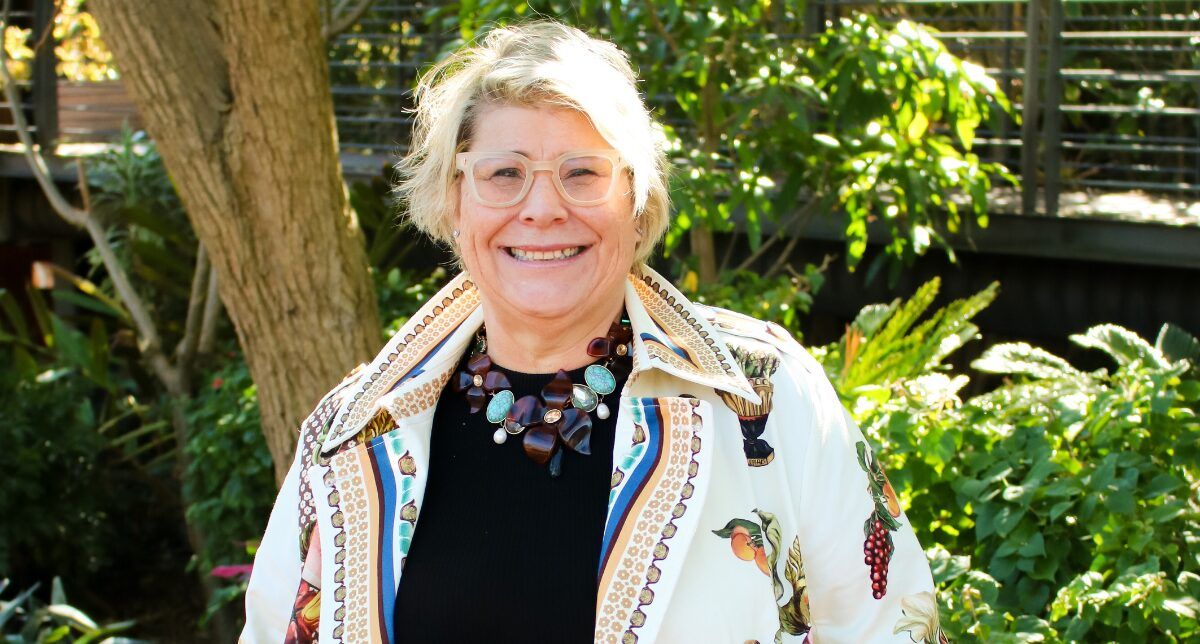
Curtin graduate Jo Barron-Perry at Curtin Bentley campus.
“People often assume I’m fine because I look well, but they don’t see the fatigue, cognitive overload or numbness that I have to manage every day,” she said.
Now, Jo is contributing her lived experience as a stroke survivor to help support medical research.
“My involvement in medical research has opened another path for me,” she said.
“It has shown me that I can continue to make a difference.”
Alongside Curtin senior lecturer and researcher Dr Jessica Nolan, Jo has been involved in planning research to improve stroke rehabilitation and promote best-practice care in WA.
“My perspective is particularly valuable because I’ve lived and worked across remote mining communities such as Kalgoorlie, Newman, Paraburdoo, Roxby Downs and spent many years working on FIFO rosters across Australia,” she said.
“I understand the unique challenges people face when they’re recovering from a stroke outside of major cities.”
While Australia aims for gold standard stroke rehabilitation, many Australians living in rural and remote areas often face disparities in accessing the same services compared to those living in the city, affecting their long-term recovery.
Through her lived experience, Jo is passionate about raising stroke awareness to help save lives.
“I encourage everyone to know their blood pressure numbers because early detection can save lives,” Jo said.
“Looking back, I was fortunate that I had many years of emergency training experience, so I was able to recognise my symptoms quickly and call an ambulance when I did.”