For Curtin paramedicine graduate Karen Hollings, becoming a paramedic wasn’t part of the plan. Neither was founding a charity that’s changing the lives of first responders.
Like many, Karen’s path to success wasn’t linear.
At just 29, she became a single mother following the breakdown of her marriage.
“I was on a single-parent pension, and I wasn’t happy in that space,” Karen said.
“I desperately wanted to give back to the community that was supporting me.”
While working at a party shop to make ends meet, Karen began studying to become a paramedic with St John WA.
“I remember studying while doing balloon orders. My notes were stuck all over the walls in the back of the shop,” she said.
Qualifying as a paramedic marked more than the beginning of a career it transformed her family’s future.
“The first thing I bought with my first pay cheque was private health insurance for my girls,” Karen said.
“Becoming a paramedic allowed me to give my daughters opportunities I never imagined possible as a single mum.”
“I wanted to show them that anything is possible.”

For more than a decade, Karen witnessed both the best and worst of humanity on the front line.
Then, in 2014, her own life changed in an instant.
While on shift, she was violently assaulted in the back of an ambulance by a patient affected by drugs and alcohol.
“I remember my body slamming against the wall inside of the ambulance,” she said.
“He was sitting on me with his legs locked against the metal frame of the stretcher, and I could feel this intense pressure on the left side of my back.
“In that moment, I genuinely thought my ribs were going to break.”
Although Karen escaped the immediate danger, the impact of the assault remained long after the physical injuries healed.

Her recovery spanned years and included three surgeries with extensive rehabilitation to her right wrist and, eventually, a diagnosis of post-traumatic stress disorder (PTSD).
“At the time, I just thought what I was experiencing was normal,” she said.
“But when I returned to work, some concerned colleagues noticed something had changed and I was guided to seek help.”
With support from her doctor and a life coach, Karen began to heal. It was during this time that she discovered the profound impact therapy dogs could have on mental health.

“When I was consumed by all these horrible thoughts, one of the few moments of happiness I felt was visiting my GP clinic to spend time with Olav, the therapy dog,” she said.
“In those moments, I felt safe enough to accept what I was going through, talk about it and simply be.”
That simple but powerful observation inspired a much bigger idea.
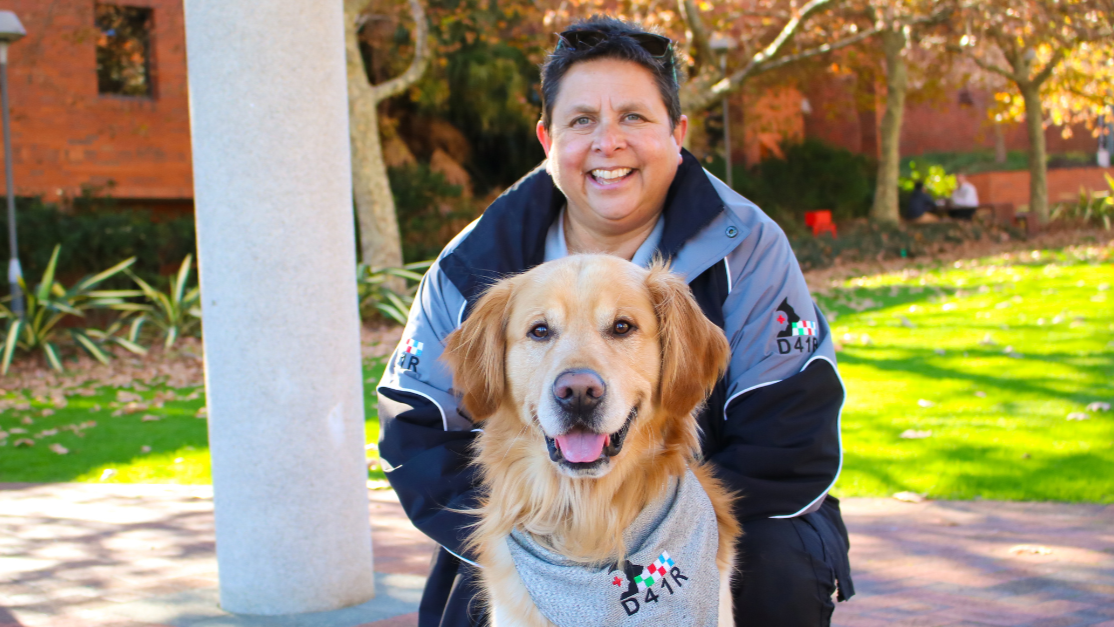
Almost a decade after the assault, Karen founded Dogs for First Responders, a charity providing frontline mental health support through trained therapy dogs and experienced first responders.
Six-year-old golden retriever Angus became the program’s first therapy dog.

Since then, Karen has recruited four additional therapy dogs and their handlers, each with at least 15 years’ experience as a first responder.
“Because we’re mobile, we can meet first responders where they are, while they’re on shift, and assist in the prevention of mental health decline, compassion fatigue, burnout, self-harm, suicide and PTSD,” Karen said.
“Our goal is to bridge the gap between First Responders doing their job and seeking support.”
With rates of PTSD among emergency service workers continuing to rise, Karen believes peer-led support is more important than ever.

“The first responder world is unique because we put enormous pressure on ourselves to be OK,” she said.
“Having lived that experience makes it easier to connect. They know I understand, often without many words being spoken.”

Throughout the challenges of raising two daughters while building a career, karate has become Karen’s constant.
Now a sensei, she credits the discipline with helping build the resilience that has carried her through life’s toughest moments.
“I truly believe my resilience as a paramedic is connected to my karate practice,” she said.
“My advice is to build a fulfilling life outside of work. If all your identity is tied to one thing and you lose it, you risk losing yourself too”.
“And above all, approach life with kindness. You can collect trophies, medals, accolades and titles but they should never define who you are.”